

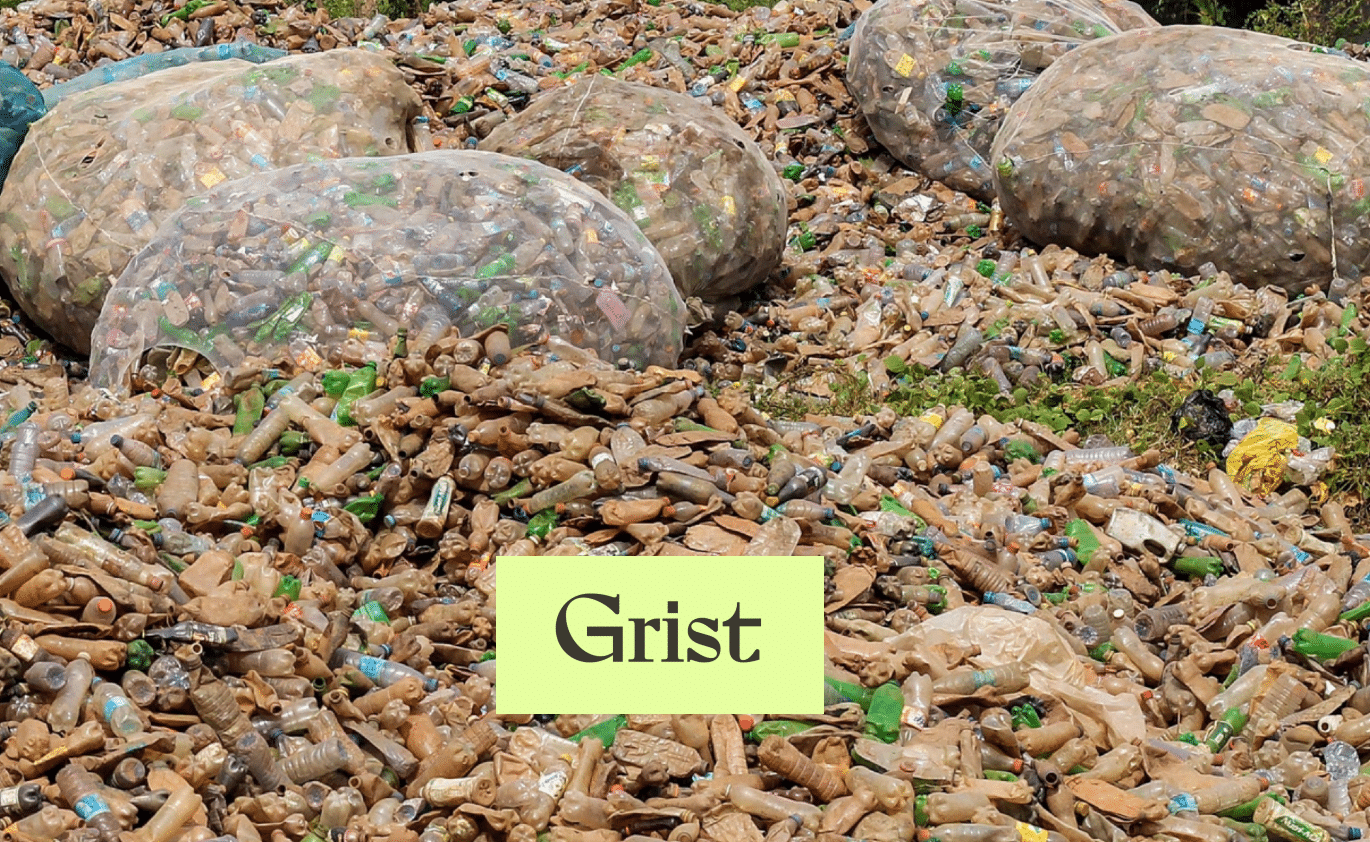
As petrochemical companies continue to inundate the world with cheap plastic products and packaging — much of which is designed to be used once and then thrown away — they’ve been heavily promoting one solution called “chemical recycling.”
This catch-all term refers to processes and technologies that break plastics into their molecular building blocks and turn them into new products. In theory, chemical recycling is a promising way to deal with so-called “hard-to-recycle” plastics like wrappers and bags, which can’t be recycled using conventional methods.
But a new report from the nonprofits Beyond Plastics and the International Pollutants Elimination Network, or IPEN, says chemical recycling is a “dangerous deception” that will only exacerbate pollution and environmental injustice while failing to address the plastics crisis.
Beyond Plastics and IPEN’s 159-page report begins with an overview of the plastic pollution crisis and companies’ “undeniable” failure to address it through conventional recycling methods. According to the Department of Energy, the U.S. plastics recycling rate is still only about 5 percent, despite decades spent trying to scale it up.
“The only thing actually being recycled is the myth that recycling will solve the plastic pollution crisis,” the new report says. It raises concern about a spate of state-level laws backed by the American Chemistry Council, an industry lobbying group, to promote chemical recycling, including by loosening air emissions controls and eliminating monitoring requirements. At least 20 states have passed such deregulation laws.
Read the full story in Grist.
 English
  简体中文
简体中文  Français
  Bahasa Indonesia
  Русский
  Español
  العربية
  Shqip
Shqip  Հայերեն
  Azərbaycan dili
  Беларуская мова
  Български
  Cantonese
  Hrvatski
  Čeština
  ქართული
  Deutsch
  Ελληνικά
  हिन्दी
  Қазақ тілі
  한국어
한국어  Кыргызча
  Bahasa Melayu
  नेपाली
  Português do Brasil
  Kiswahili
  Svenska
  Tagalog
  தமிழ்
தமிழ்  ไทย
ไทย  Українська
  Tiếng Việt