

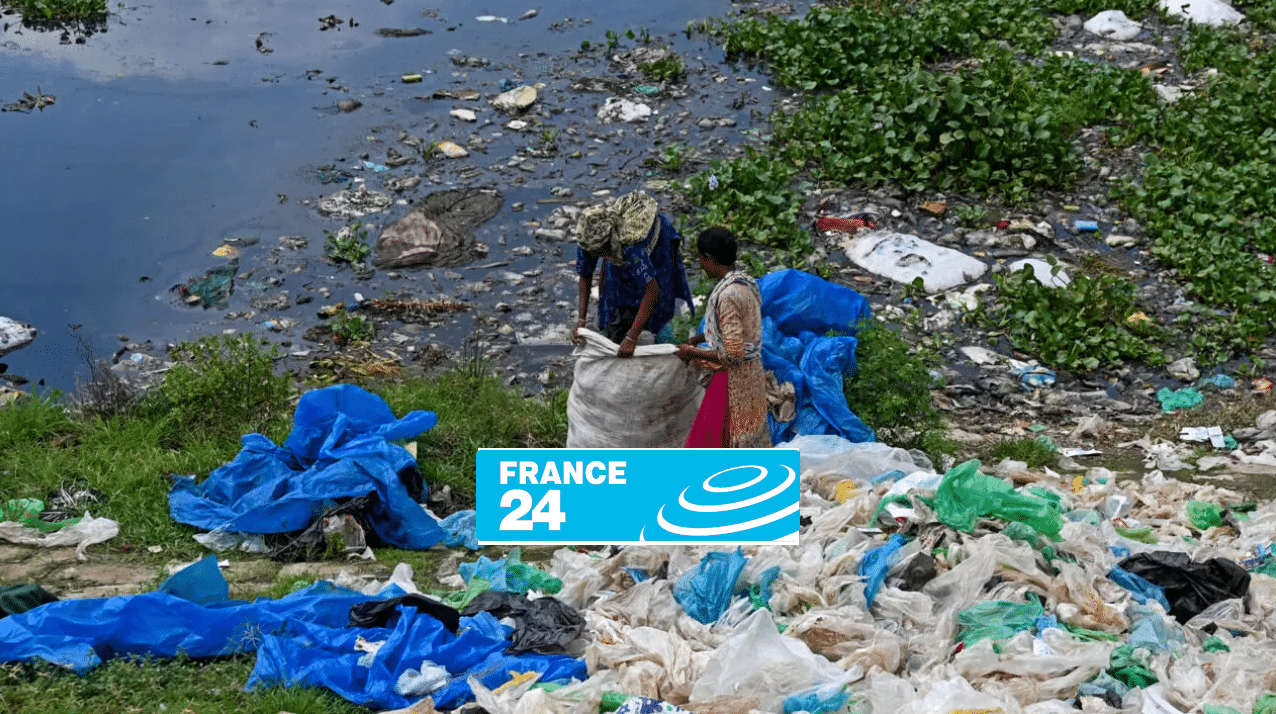
In Agence France Presse/France24, a story notes that today, in one of the most economically fragile countries on the planet, plastic is everywhere: lining the streets, strewn across beaches, clogging the drains.
Alamgir Hossain, a member of an association affiliated with the International Alliance of Waste Pickers, showed photos on her phone. Beghum wants non-recyclable plastics banned, pointing out that she cannot resell them and they have no market value.
“No one collects them,” she said.
Single-dose “sachets” of shampoo, laundry detergent or sauces are a scourge, said Yuyun Ismawati Drwiega, an Indonesian who co-chairs the International Pollutants Elimination Network NGO.
“They are the smallest plastic items with which the industry has poisoned us — easy to carry, easy to obtain; every kiosk sells them,” she told AFP.
In Indonesia, collection and sorting centres specialising in sachets have failed to stem the tide, mostly shutting down not long after opening.
In Bali, where Ismawati Drwiega lives, she organises guided tours that she has nicknamed “Beauty and the Beast”.
Podívejte se na celý příběh tady.
 English
  简体中文
简体中文  Français
  Bahasa Indonesia
  Русский
  Español
  العربية
  Shqip
Shqip  Հայերեն
  Azərbaycan dili
  Беларуская мова
  Български
  Cantonese
  Hrvatski
  Čeština
  ქართული
  Deutsch
  Ελληνικά
  हिन्दी
  Қазақ тілі
  한국어
한국어  Кыргызча
  Bahasa Melayu
  नेपाली
  Português do Brasil
  Kiswahili
  Svenska
  Tagalog
  தமிழ்
தமிழ்  ไทย
ไทย  Українська
  Tiếng Việt