

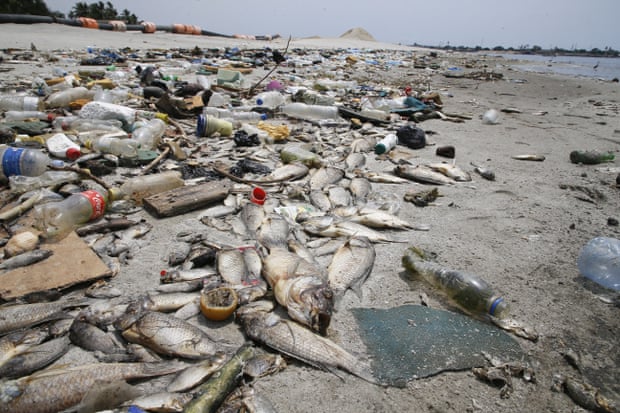
Jakarta, Indonesia The international waste trade watchdog organization Basel Action Network (BAN) together with Indonesian environmental organizations Ecoton, WALHI, and Nexus3 today in calling the waste import situation in Indonesia dire and “out-of-control” which can only be resolved by the Indonesian Government dealing more responsibly with the illegal shipments that have already arrived at their shores, while enacting a full prohibition on future imports.
Last week the activists revealed that many of the illegal, contaminated shipments of paper scrap the government promised to send back to the United States were instead exported again to India, Vietnam, Thailand, Mexico, Netherlands, Canada and South Korea.
“Under the Basel Convention, Indonesia should have taken strict control over the re-export of the illegal waste shipments,” said Yuyun Ismawati Drwiega of Nexus3. “Yet, not only did the government break their promise to return them, it appears they failed to notify the receiving country governments or ensure that they would be managed in an environmentally sound manner as required by the treaty.”
According to the environmentalists, Indonesia is required to:
a) notifying the recipient government of the onward re-exported shipment including a proper description of the contaminated waste.
b) work with the country of origin to either have them take back the waste for environmentally sound management, or to ensure such management in an alternate country.
c) receive consent from the importing country prior to re-export.
d) ensure, with the importing country, that the receiving facility is known and known to be an environmentally sound recycling or disposal facility.
e) criminally prosecute anybody involved in the trafficking of these wastes if their movement and final management, does not conform with the obligations of the Convention.
“Without properly involving the country of origin, or taking the steps to prosecute Basel Convention violators, the criminality will just continue, and more containers will keep coming to pollute Indonesia,” said Jim Puckett, Director of BAN.
The waste invasion of Indonesia began soon after China banned the import of almost all wastes two years ago. China’s solution to pollution has now become Indonesia’s nightmare.
“The mountains of plastic, paper and electronic waste from the United States, Europe and Australia is piling up and much of it is simply set afire throughout our countryside,” said Daru Setyo Rini of Ecoton. “China banned this stuff for a reason. We must do the same.”
“We urge President Jokowi to conduct a complete investigation of the waste import business, including all ministries and corporations involved,” said Nur Hidayati of WALHI. “We are calling on President to revoke the permits of polluters and enact a total ban on waste imports.”
The environmentalists are calling on Indonesia to:
- Act with urgency to be sure that illegally imported waste already sent to Indonesia is sent back to the countries of origin in full accordance with the rules of the Basel Convention.
- Adopt the same import restrictions as China to ensure Indonesia is not seen as the new global waste dumping grounds.
- The diverted shipments violated government order and as such are illegal and fraudulent. Such activity must be brought to justice and the victim countries communicated with – some of these shipment will involve further illegality in the receiving country.
- The government must ask for the actual shipping papers that accompanied the shipment of those container numbers (Bill of Ladings). These can be obtained from the shipping lines involved as well as from the re-exporter.
- Both the notification papers and the bills of lading of the re-exportation need to be made public to ensure full transparency.
- The country of origin’s competent authority (Basel Convention or equivalent) as well as the general public (placed on website) needs to be informed at the time of export of the container number, the ship, and route, and ETA of the return.
- An independent monitoring committee should now be established to ensure the import/export of waste and their re-export complies with all regulations and government orders.
 English
  简体中文
简体中文  Français
  Bahasa Indonesia
  Русский
  Español
  العربية
  Shqip
Shqip  Հայերեն
  Azərbaycan dili
  Беларуская мова
  Български
  Cantonese
  Hrvatski
  Čeština
  ქართული
  Deutsch
  Ελληνικά
  हिन्दी
  Қазақ тілі
  한국어
한국어  Кыргызча
  Bahasa Melayu
  नेपाली
  Português do Brasil
  Kiswahili
  Svenska
  Tagalog
  தமிழ்
தமிழ்  ไทย
ไทย  Українська
  Tiếng Việt