Protecting human health and the environment from toxic chemicals
Plastics are materials made of complex mixtures of chemicals, often including chemicals that are known to be hazardous to human health and to ecosystems at the global level.
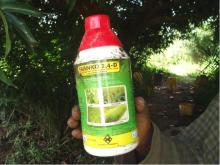
Over 27% of pesticides approved in Togo are highly hazardous pesticides (HHPs). Eight (8) of these highly toxic pesticides were registered by the National Committee of Plant Protection Products of Togo and are commonly used in the country even though they are formally banned in Europe and other countries of the world. Find out more in this national report on HHPs and alternatives in Togo from the Organization for the Environment and Sustainable Development (OPED).
This project relates to Sustainable Development Goals 2, 3, 6, 8, 12, 13, 14, and 15.
In line with the UNEP-IPEN partnership, the aim of this report is to show the impact chemicals have on women as a vulnerable group highly exposed to hazardous chemicals and gender inequalities related to decision-making around the management of chemicals and waste. The report also means to provide concrete steps that can be taken to safeguard the health of women and empower women in decision-making and in their roles as agents of change.
This joint report of the Endocrine Society and IPEN provides the current best knowledge about the effects of endocrine-disrupting chemicals (EDCs) on human health. It discusses chemicals known to be hazardous to human health yet actively used in plastics, exposures, the problem of microplastics, and the issues surrounding alternative plastics.
PFHXs, Used as a Substitute for Banned PFOS and PFOA, Recommended for Global Ban
Friday, 04 October 2019
Rome, Italy An U.N. expert committee decided unanimously to recommend a complete global elimination for another toxic fluorinated “forever chemical.” Fluorinated chemicals are widespread pollutants threatening drinking water sources, public health and the occupational health of firefighters. They do not break down in the environment and accumulate in the bodies of wildlife and people. They are used in a wide variety of products, including firefighting foam, waterproofing of textiles, and food packaging, as well as other industrial and consumer applications.
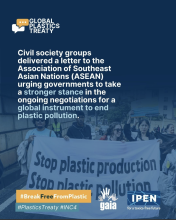
CSOs urge ASEAN leaders to take a strong stance in the ongoing negotiations to develop an international legally binding instrument to address plastic pollution, including in the marine environment.