Work by IPEN members EARTH (Ecology Alert and Recovery Thailand) and Arnika was featured in a news report by PBS Thailand, focusing on their findings of high levels of POPs in duck eggs in Chachoengsao, eastern Thailand, a site close to an e-waste disposal factory.
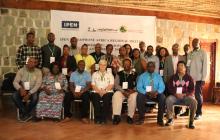
IPEN Participating Organizations (POs) in Southeast and East Asia gathered for a regional meeting in Thailand from February 4-5, 2023. Fourteen (14) members from 11 POs representing 9 countries participated.
IPEN believes that sound, independent science should determine national, regional, and international policies on chemicals and waste. The policies should be based on the precautionary principle, the industries’ duty to disclose information, and citizens’ right to know.
On Thursday the 6th of October, 2022, the first meeting of the ad-hoc open-ended working group (OEWG) on a Science-Policy panel on chemicals took place.
People of all gender identities must have the same rights and opportunities to participate fully in their communities, free from the health threats posed by toxic chemicals. It is especially important to understand the factors that put women at risk from chemical health threats.
The hybrid meeting of the fifth United Nations Environmental Assembly (UNEA-5), entitled “Strengthening Actions for Nature to Achieve the Sustainable Development Goals”, and its preparatory (the Open-Ended Committee of Permanent Representatives – OECPR), will focus on five thematic areas: plastics, nature-based solutions and biodiversity, chemicals, green recovery and circular economy, and organizational and administrative matters. IPEN has sent an international delegation to contribute to the in-person negotiations.
Under the plastic pollution thematic area, the main focus will be on discussing a mandate to start negotiation of a treaty on plastic. If agreed, the mandate would convene an Intergovernmental Negotiating Committee (INC) to negotiate a legally binding instrument on plastic pollution. Under consideration are three draft resolutions: one proposed by Rwanda and Peru and supported by over 50 countries; another by Japan; and the last one proposed by India. Details about these proposals and IPEN’s positions can be found in IPEN’s Quick Views on UNEA 5.2.
Under the chemicals thematic area there are 3 resolutions that will be discussed. In our quick views we focus on two resolutions: one on the Science-Policy Panel on chemicals, waste, and pollution and the resolution on Sound Management of Chemicals and Waste. In our quick views and global science policy documents, we outline many specific issues and recommendations, highlighting the need for precautionary action and as well as adequate funding for the sound management of chemicals and waste.
Outcome documents adopted at IPEN EECCA regional meeting, 9-11 December 2021, as well as the EECCA NGO Regional Strategy on Sound Chemicals and Waste Management till 2030.