To review the uses of mercury in products, mercury imports, and sources of mercury releases, IPEN members conduct research and report on the situation around mercury pollution, hotposts, and policy developments in their countries.
IPEN members conducted research to document mercury contaminated sites in their countries and also have conducted testing for mercury in local seafood and in human hair, demonstrating the food chain impacts from mercury contamination.
IPEN and its members have conducted several studios showing the dangers from plastic recycling to consumers, communities, and plastic waste workers. See some of the research reports, below. Also see the 2023 report from Greenpeace on toxic plastic recycling, Forever Toxic, featuring data from sveeral IPEN studies.
IPEN and its mebers have tested toys and children's products, textiles, and many other plastic products for more than a decade, finding high levels of toxic plastic chemicals. Below are multi-country and global research and testing reports IPEN investigations (note some reports include testing of plastics and other materials).
IPEN mebers have tested toys and children's products, textiles, kitchenware, and many other plastic products for more than a decade, finding high levels of lead, phthalates, bispheniols, flame retardants, and other toxic plastic chemicals. Below are research and testing reports from some of the country-based investigations (note some reports include testing of plastics and other materials).
Under the Stockholm Convention, Parties must take action to prevent and remediate pollution from dioxins, highly toxic persistent organic pollutants (POPs) that are known to be produced as a side effect of certain industrial and waste disposal activities (so-called "unintentionally produced" or U-POPs), including incineration of plastic and other waste.
While DDT was among the original "dirty dozen" chemicals globally banned by the Stockholm Convention in 2004, some countries have requested ongoing uses of the highly hazardous pesticide for "acceptable purpose."
IPEN members in countries where uses are ongoing documented the production, import, and use of DDT, noting available alternatives and calling for national and global action to end use of the harmful pesticide.
Sulfluramid is a pesticide used to congrol leaf-cutting ants and other pests, particularly in Latin America. Its use leads to creation of PFOS, a PFAS "forever chemical" that was banned globally by the Stockholm Convention in 2009. Unfortunately, the Convention allows continued use of sulfluramid for control of ants, despute the links to significant PFOS pollution from its use.
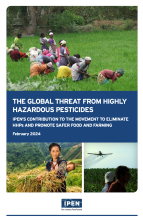
Chlorpyrifos is a highly hazardous pesticide that has been banned in several countries but remains widely used around the world. Chlorpyrifos is known to cause damage to the brain, with impacts especialy harmful for children's developing intellectual capacity. Public health experts note that exposures are linked to neurodevelopmental harm, including loss of intellectual potential and lifetime productivity, health care costs, and costs associated with care for those with resultant developmentaland learning disabilities.
IPEN supports agroecology - the science of organic farming - as an alternative to toxic pesticides and particularly highly hazardous pesticides (HHPs). These reports document the challenges and successes farmers have practicing such sustainable approaches, and the general situation around the adoption of agroecology and alternatives to pesticides in their countries and regions.