

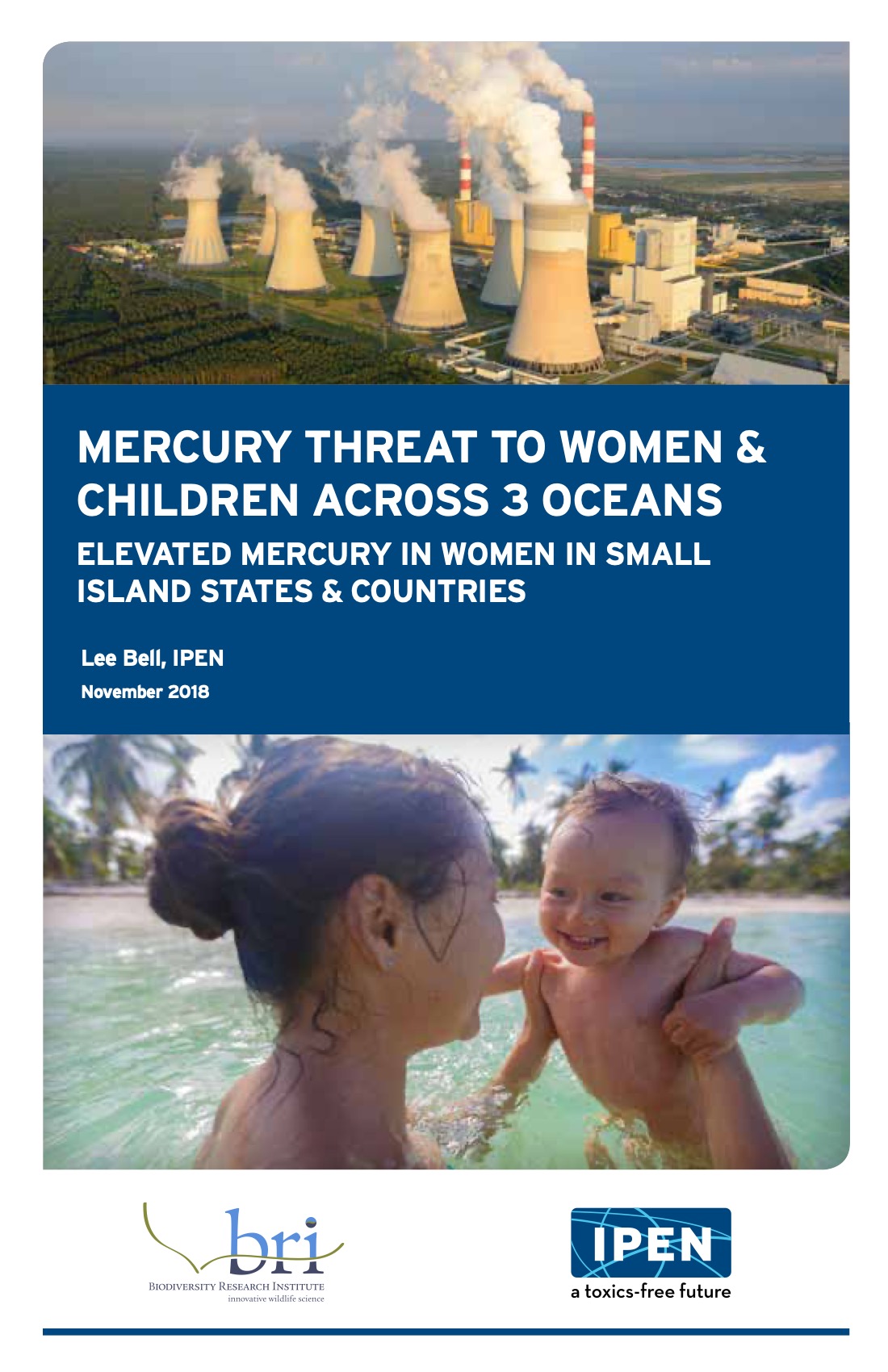
Mercury is a potent neurotoxin, especially to the developing brain, and can affect the developing fetus months after the mother’s exposure. The harmful effects that can be passed from the mother to the fetus include neurological impairment, IQ loss, and damage to the kidneys and cardio- vascular system. At high levels of mercury exposure this can lead to brain damage, mental retardation, blindness, seizures and the inability to speak. While researchers have studied mercury body burden in specific regions of the world, information on developing and transition countries is lacking.
This study builds upon previous mercury monitoring activities by IPEN and BRI and is focused on measuring the mercury body burden of 757 women of child-bearing age in Small Island Developing States (SIDS) and SIDS-like locations in the Pacific Ocean, the Caribbean and the Indian Ocean. SIDS-like locations are islands, often remote, where industrial development levels are low and the population relies on local fisheries as a major source of dietary protein. The main difference is that they don’t have political nation state status. The data indicates that there is a serious and substantial threat to women and children’s health from mercury exposure in most of the locations where sampling took place.

 English
  简体中文
简体中文  Français
  Bahasa Indonesia
  Русский
  Español
  العربية
  Shqip
Shqip  Հայերեն
  Azərbaycan dili
  Беларуская мова
  Български
  Cantonese
  Hrvatski
  Čeština
  ქართული
  Deutsch
  Ελληνικά
  हिन्दी
  Қазақ тілі
  한국어
한국어  Кыргызча
  Bahasa Melayu
  नेपाली
  Português do Brasil
  Kiswahili
  Svenska
  Tagalog
  தமிழ்
தமிழ்  ไทย
ไทย  Українська
  Tiếng Việt