

IPEN members have tested skin bleaching, lightening and whitening cosmetics from retailers and online shopping platforms for the presence of mercury, finding high levels of the toxic metal in many products. Their research supports the implementation of the Minamata Convention on Mercury, which set a global phase-out target by 2020 of certain mercury-added products such as cosmetics, including skin lightening creams and soaps, with mercury content above 1 part per million (ppm). Mercury use in cosmetics is dangerous and unnecessary and reflects racist, colonial attitudes about skin color and beauty.
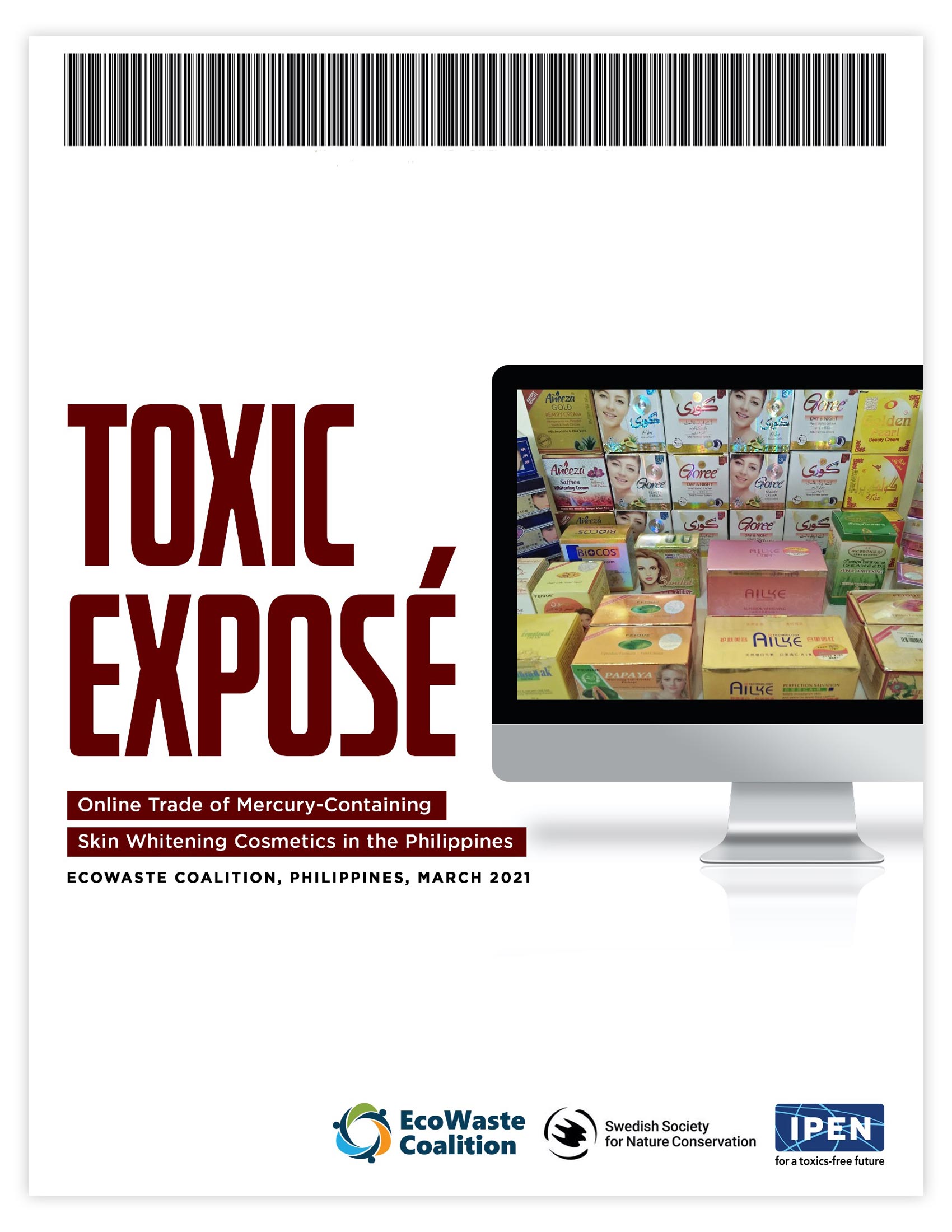
In Pakistan, research by IPEN member Sustainable Development Policy Institute in 2018 found 56 of 59 skin whitening products tested contained mercury above the safety limit (1 part per million or 1ppm). In another study from IPEN member EcoWaste Coalition in the Philippines, of the 65 samples screened for mercury, 40 were found to contain mercury above the safety limit, including 38 products with mercury above 1,000 ppm; 25 with mercury above 5,000 ppm; 19 with mercury above 15,000 ppm; and 5 with mercury above 25,000 ppm.

 English
  简体中文
简体中文  Français
  Bahasa Indonesia
  Русский
  Español
  العربية
  Shqip
Shqip  Հայերեն
  Azərbaycan dili
  Беларуская мова
  Български
  Cantonese
  Hrvatski
  Čeština
  ქართული
  Deutsch
  Ελληνικά
  हिन्दी
  Қазақ тілі
  한국어
한국어  Кыргызча
  Bahasa Melayu
  नेपाली
  Português do Brasil
  Kiswahili
  Svenska
  Tagalog
  தமிழ்
தமிழ்  ไทย
ไทย  Українська
  Tiếng Việt