

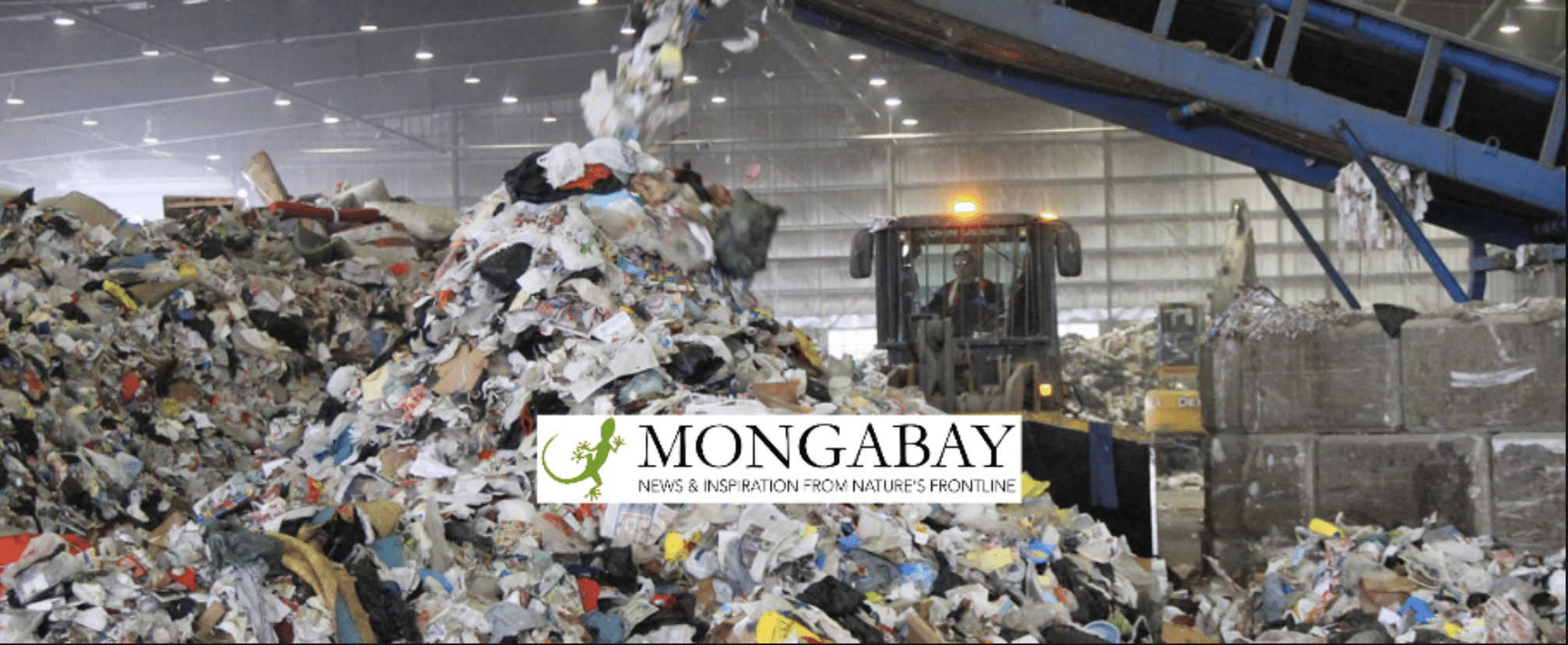
How does one responsibly dispose of plastic?
The answer to that simple question is frustratingly complex. Many plastic products are marked with seemingly helpful recycling symbols, leading consumers to believe that most, if not all, plastic can be recycled. But that’s not the case.
Traditional recycling — the process of breaking down, melting and remolding plastic to form new products — is expensive, time-consuming and limited to certain plastic types. In the U.S., for example, only types 1 and 2 are easily recyclable, while 3 through 7 aren’t. Recycling rates are also historically low; in the U.S., it’s estimated that only 5-6% of plastic is recycled.
There’s another way to deal with plastic waste, according to the world’s big petrochemical companies: It’s called “chemical recycling,” or “advanced recycling,” an industrial process that the industry claims could recycle more types of plastics and help humanity transition to a circular economy.
However, according to a recent report released by Swedish nonprofit International Pollutants Elimination Network (IPEN) and U.S.-based NGO Beyond Plastics, most chemical recycling claims have yet to be proven, while existing chemical recycling facilities are exacerbating the pollution problem they’re supposedly trying to solve.
The IPEN and Beyond Plastics report suggests that chemical recycling is not really recycling at all. Instead, it’s an “umbrella term for a range of technologies that use heat or chemicals (or both) to break down the polymer chains in plastic waste to create ‘output.’”
“We’re seeing this technology hyped [by the plastics industry] as a solution to the plastic crisis, and it’s no such thing,” Lee Bell, the report’s lead author and IPEN’s policy advisor for persistent organic pollutants (POPs), told Mongabay in an interview. “It won’t deal with very much of the plastic waste that has been generated at all. So my concern is we’re being misled into … a false solution, and that there are many regulators and decision-makers and policymakers who are confused about this.”
Read the full story from Mongabay.
 English
  简体中文
简体中文  Français
  Bahasa Indonesia
  Русский
  Español
  العربية
  Shqip
Shqip  Հայերեն
  Azərbaycan dili
  Беларуская мова
  Български
  Cantonese
  Hrvatski
  Čeština
  ქართული
  Deutsch
  Ελληνικά
  हिन्दी
  Қазақ тілі
  한국어
한국어  Кыргызча
  Bahasa Melayu
  नेपाली
  Português do Brasil
  Kiswahili
  Svenska
  Tagalog
  தமிழ்
தமிழ்  ไทย
ไทย  Українська
  Tiếng Việt