

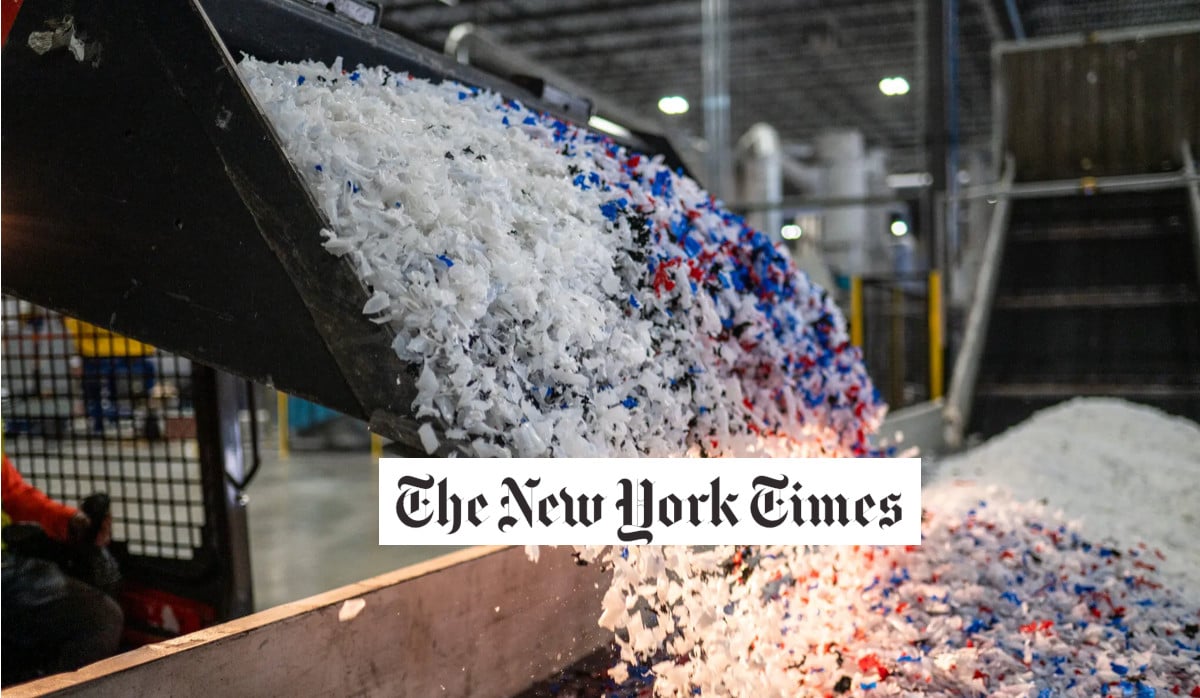
The plastic CamelBak bottles displayed in a Target in East Hanover, N.J., offer a promise to ecologically conscious buyers. On the front of each is a bright blue sticker with the words “Tritan Renew made with 50% recycled material.”
In reality, however, the amount of recycled plastic that went into making the bottles may be nowhere near 50 percent.
A methodology called “mass balance”] allows companies to build up credits for recycling plastic and then apply them to the manufacture of any number of products, regardless of how much recycled material they contain.
Critics argue that mass balance accounting opens the door to corporate greenwashing and creates a system where consumers don’t know whether or how much recycled material was used in products that claim to be sustainable or “green.”
“If you divorce the recycled content from the physical product, and just start using these accounting schemes, you destroy consumer confidence in recycling,” said Lee Bell, a policy adviser to the International Pollutants Elimination Network, a global network of advocacy groups that works on pollution issues. “It effectively destroys truth in labeling.”
See the full story in the New York Times.
 English
  简体中文
简体中文  Français
  Bahasa Indonesia
  Русский
  Español
  العربية
  Shqip
Shqip  Հայերեն
  Azərbaycan dili
  Беларуская мова
  Български
  Cantonese
  Hrvatski
  Čeština
  ქართული
  Deutsch
  Ελληνικά
  हिन्दी
  Қазақ тілі
  한국어
한국어  Кыргызча
  Bahasa Melayu
  नेपाली
  Português do Brasil
  Kiswahili
  Svenska
  Tagalog
  தமிழ்
தமிழ்  ไทย
ไทย  Українська
  Tiếng Việt