

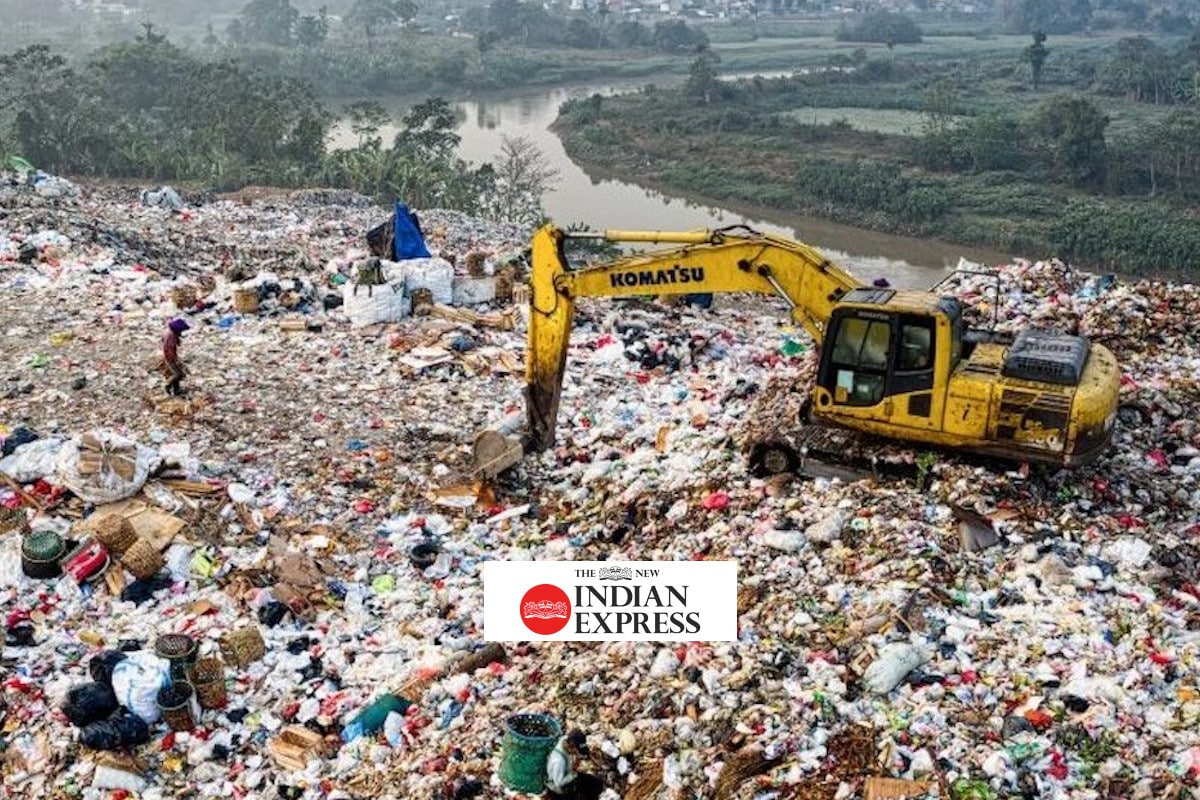
A report in the New Indian Express notes that a powerful bloc of petro-states and petro-chemical-producing countries is stalling progress on what could be a landmark global treaty to end plastic waste. At the ongoing negotiations in Geneva — the second part of the fifth session of the Intergovernmental Negotiating Committee (INC-5.2) — deep divisions have emerged. On one side are countries and experts calling for ambitious, binding commitments to curb plastic production at the source; on the other, oil-rich nations and chemical giants are fiercely resisting any attempt to regulate upstream activities.
A key point of contention is whether the treaty should include strong language on global cap or reduction on the production of virgin plastic feedstocks — the lifeblood of the plastics industry. Major oil-producing countries, including Saudi Arabia, Iran, and Russia, are lobbying hard to strike this article from the draft, framing it as an overreach that threatens their economic interests. They argue that the treaty should focus only on waste management and recycling, not on limiting production — even though just seven countries account for two-thirds of global plastic production, according to recent data. In fact, just 18 companies are responsible for over half of all global polymer production.
The resistance to upstream measures also flies in the face of scientific evidence. A report by GRID-Arendal and IPEN released a few days back during Geneva talks points out that many widely used polymers — including thermosets, fluoropolymers, and condensation polymers — cannot be recycled in an environmentally sound manner. Downstream solutions, such as mechanical and chemical recycling, remain largely unproven at scale.
Read the full report here.
 English
  简体中文
简体中文  Français
  Bahasa Indonesia
  Русский
  Español
  العربية
  Shqip
Shqip  Հայերեն
  Azərbaycan dili
  Беларуская мова
  Български
  Cantonese
  Hrvatski
  Čeština
  ქართული
  Deutsch
  Ελληνικά
  हिन्दी
  Қазақ тілі
  한국어
한국어  Кыргызча
  Bahasa Melayu
  नेपाली
  Português do Brasil
  Kiswahili
  Svenska
  Tagalog
  தமிழ்
தமிழ்  ไทย
ไทย  Українська
  Tiếng Việt