
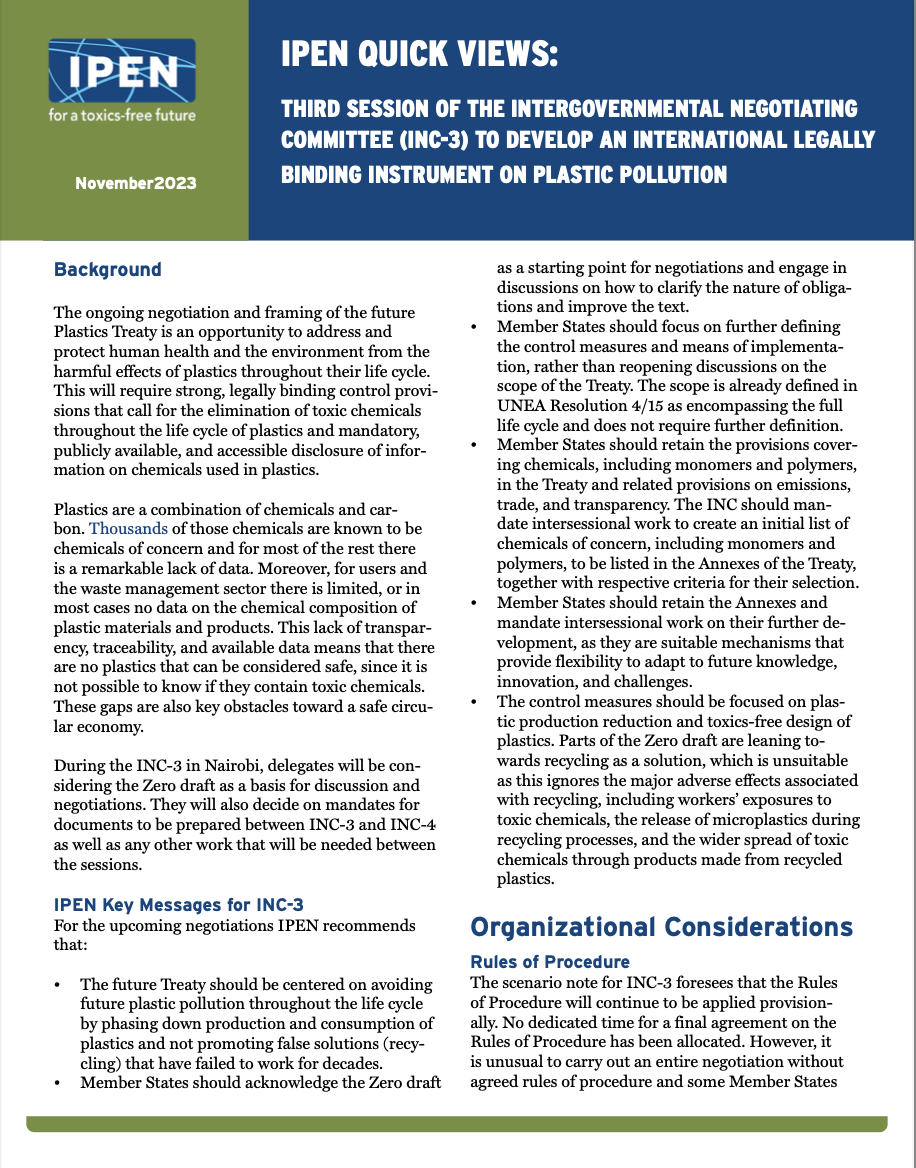
The ongoing negotiation and framing of the future Plastics Treaty is an opportunity to address and protect human health and the environment from the harmful effects of plastics throughout their life cycle. This will require strong, legally binding control provisions that call for the elimination of toxic chemicals throughout the life cycle of plastics and mandatory, publicly available, and accessible disclosure of information on chemicals used in plastics.
Plastics are a combination of chemicals and carbon. Thousands of those chemicals are known to be chemicals of concern and for most of the rest there is a remarkable lack of data. Moreover, for users and the waste management sector there is limited, or in most cases no data on the chemical composition of plastic materials and products. This lack of transparency, traceability, and available data means that there are no plastics that can be considered safe, since it is not possible to know if they contain toxic chemicals. These gaps are also key obstacles toward a safe circular economy.
During the INC-3 in Nairobi, delegates will be considering the Zero draft as a basis for discussion and negotiations. They will also decide on mandates for documents to be prepared between INC-3 and INC-4 as well as any other work that will be needed between the sessions.
Download the Quick Views below or read the text-only document here.

 English
  简体中文
简体中文  Français
  Bahasa Indonesia
  Русский
  Español
  العربية
  Shqip
Shqip  Հայերեն
  Azərbaycan dili
  Беларуская мова
  Български
  Cantonese
  Hrvatski
  Čeština
  ქართული
  Deutsch
  Ελληνικά
  हिन्दी
  Қазақ тілі
  한국어
한국어  Кыргызча
  Bahasa Melayu
  नेपाली
  Português do Brasil
  Kiswahili
  Svenska
  Tagalog
  தமிழ்
தமிழ்  ไทย
ไทย  Українська
  Tiếng Việt