

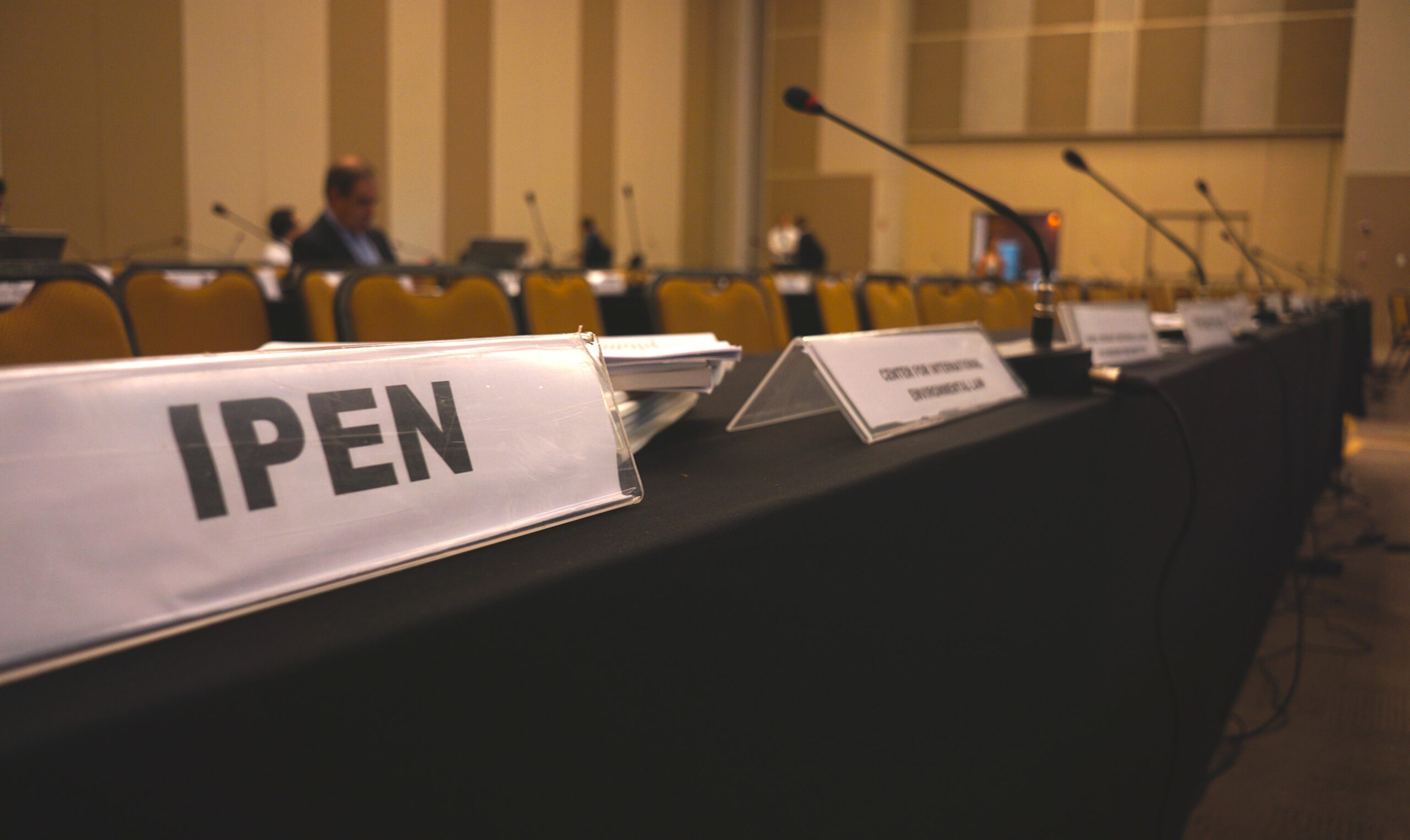
A story in Geneva Solutions note that the global Science ro Policy Panel talks this month concluded with little progress, noting that procedural disputes and geopolitical rivalries overshadowed the launch of the new UN policy forum.
The panel was created last year to fill a major gap in the global response to the pollution crisis. Modelled on the existing climate and biodiversity science bodies, the IPCC and IPBES, it is meant to assess evidence on chemicals and provide policy-relevant guidance to governments.
Geopolitics also seeped into the meeting, with Eastern European countries unable to agree on nominees for their regional bureau slots as Russia, Ukraine and the Czech Republic vied for the two available positions.
Therese Karlsson, science and technical adviser at the International Pollutants Elimination Network, who has followed the discussions, said she expected hard conversations, but not this degree of contention. “This is a voluntary panel. It’s not prescriptive,” she said. “It’s meant to give an overview of the science and ensure that countries have access to science on chemicals, waste and pollution prevention. That shouldn’t be controversial.”
IPEN and other civil society groups are also pressing for a robust conflict-of-interest policy to prevent industry-linked experts from shaping scientific assessments.
“We have seen that the IPCC did not have a conflict of interest for many years, and that really hurt their credibility,” said Karlsson. “How can you trust a recommendation from someone who gains personally from that recommendation?”
Read the full story هنا.
 English
  简体中文
简体中文  Français
  Bahasa Indonesia
  Русский
  Español
  العربية
  Shqip
Shqip  Հայերեն
  Azərbaycan dili
  Беларуская мова
  Български
  Cantonese
  Hrvatski
  Čeština
  ქართული
  Deutsch
  Ελληνικά
  हिन्दी
  Қазақ тілі
  한국어
한국어  Кыргызча
  Bahasa Melayu
  नेपाली
  Português do Brasil
  Kiswahili
  Svenska
  Tagalog
  தமிழ்
தமிழ்  ไทย
ไทย  Українська
  Tiếng Việt