
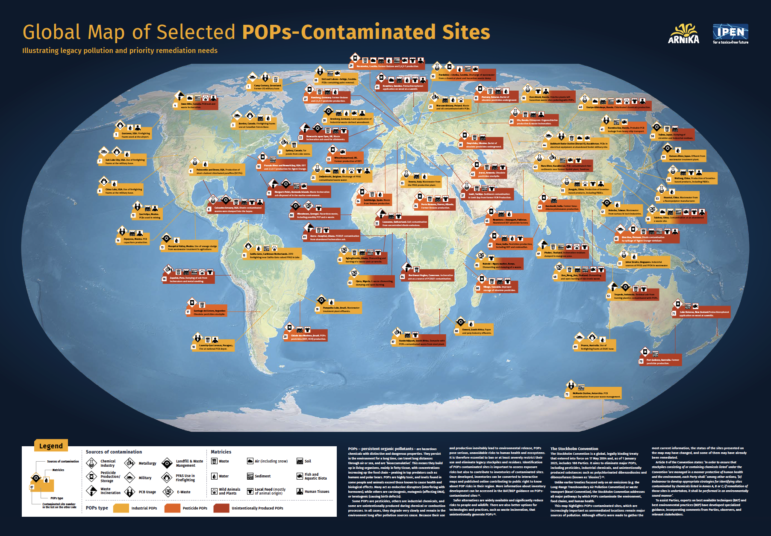
See the map with background information and references on Research Gate
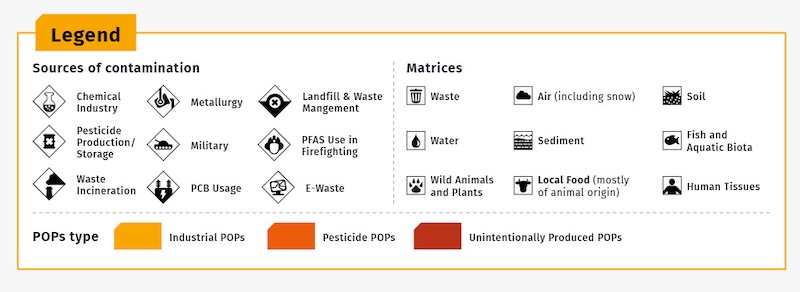
This map highlights areas contaminated by persistent organic pollutants (POPs) from industrial pollution, pesticide production, incineration and landfills, and other toxic operations. POPs-contaminated sites are increasingly important as locations that remain major sources of pollution. The map reveals just a few of thousands of contaminated areas globally.
The Stockholm Convention
The Convenio de Estocolmo aims to eliminate major POPs and calls on countries to identify and safely clean up POPs-contaminated sites. IPEN’s science advisor served as a key author of and IPEN experts and members contributed to the Convention’s guidance document that provides guidance to countries for best-practices in identifying and remediating these polluted sites.
It is important to identify contaminated sites to assess exposure risks and contribute to global inventories. Going forward, we can avoid creating more toxic sites with safer alternatives to hazardous chemicals and improved non-combustion disposal options that do not rely on incineration and other technologies that are known to produce and release POPs and other toxic chemicals.
 English
  简体中文
简体中文  Français
  Bahasa Indonesia
  Русский
  Español
  العربية
  Shqip
Shqip  Հայերեն
  Azərbaycan dili
  Беларуская мова
  Български
  Cantonese
  Hrvatski
  Čeština
  ქართული
  Deutsch
  Ελληνικά
  हिन्दी
  Қазақ тілі
  한국어
한국어  Кыргызча
  Bahasa Melayu
  नेपाली
  Português do Brasil
  Kiswahili
  Svenska
  Tagalog
  தமிழ்
தமிழ்  ไทย
ไทย  Українська
  Tiếng Việt