

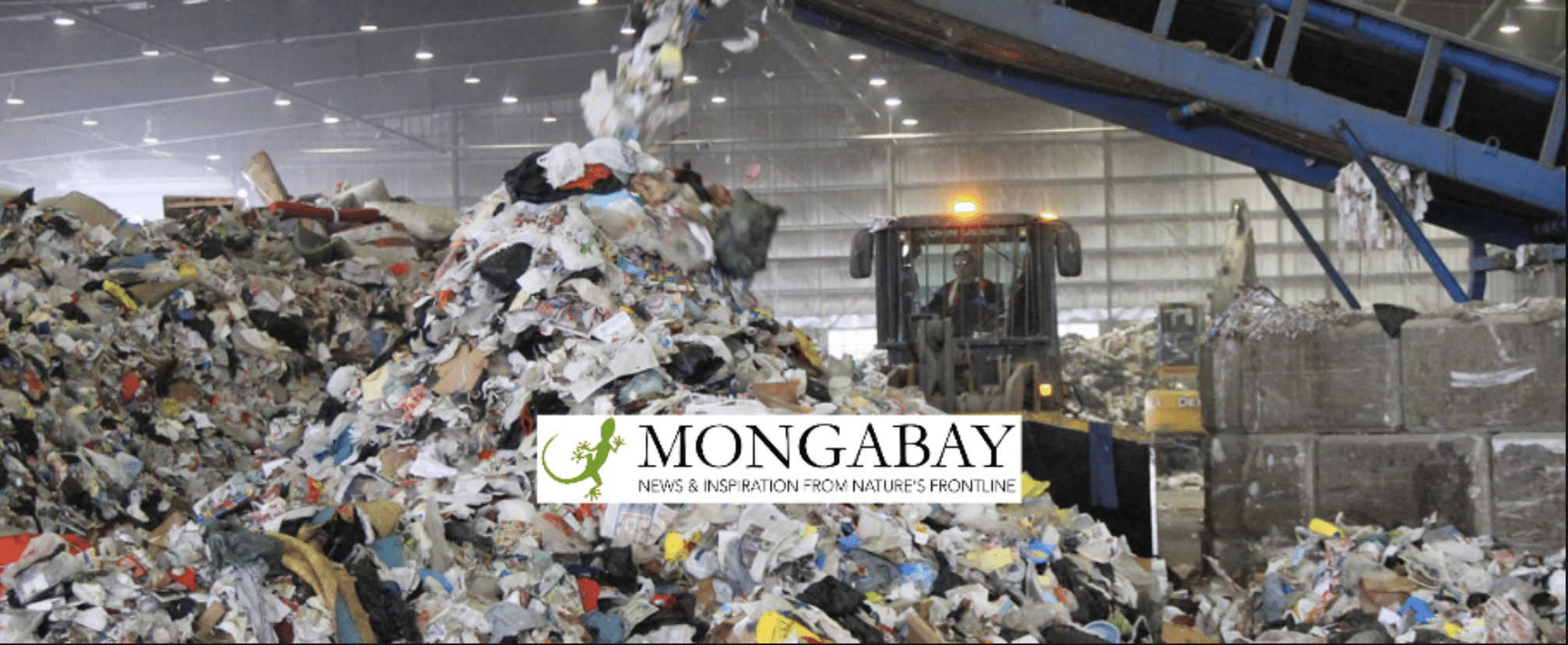
A story in Mongabay notes that representatives from 184 countries recently gathered in Geneva, Switzerland, to tackle the growing plastic crisis. The Intergovernmental Negotiating Committee meeting (INC 5.2) went into overtime but failed to produce an agreement.
Two main issues were supposed to be resolved by this, the last scheduled round of negotiations: whether the treaty should include a cap on the production of new plastic and how to address concerns about chemicals in plastic.
The U.N. meeting is consensus-based, “meaning that unless somebody rejects it, a potential decision would proceed. And all decisions for content did not proceed,” Björn Beeler, executive director and international coordinator with the International Pollutants Elimination Network, told Mongabay in a video call.
Following the collapse of the meeting, French environment minister Agnès Pannier-Runacher expressed anger, saying, “A handful of countries, guided by short-term financial interests rather than the health of their populations and the sustainability of their economies, blocked the adoption of an ambitious treaty against plastic pollution.”
Undeterred, Beeler said the push toward a plastic treaty is a marathon, not a sprint. He expects representatives to meet again but with a different process that can achieve results. “Consensus is dead,” he said.
“This is a problem that’s not going away. You can try to bury your head in the sand, but it’s just not going away.”
Read the full story aquí.
 English
  简体中文
简体中文  Français
  Bahasa Indonesia
  Русский
  Español
  العربية
  Shqip
Shqip  Հայերեն
  Azərbaycan dili
  Беларуская мова
  Български
  Cantonese
  Hrvatski
  Čeština
  ქართული
  Deutsch
  Ελληνικά
  हिन्दी
  Қазақ тілі
  한국어
한국어  Кыргызча
  Bahasa Melayu
  नेपाली
  Português do Brasil
  Kiswahili
  Svenska
  Tagalog
  தமிழ்
தமிழ்  ไทย
ไทย  Українська
  Tiếng Việt