

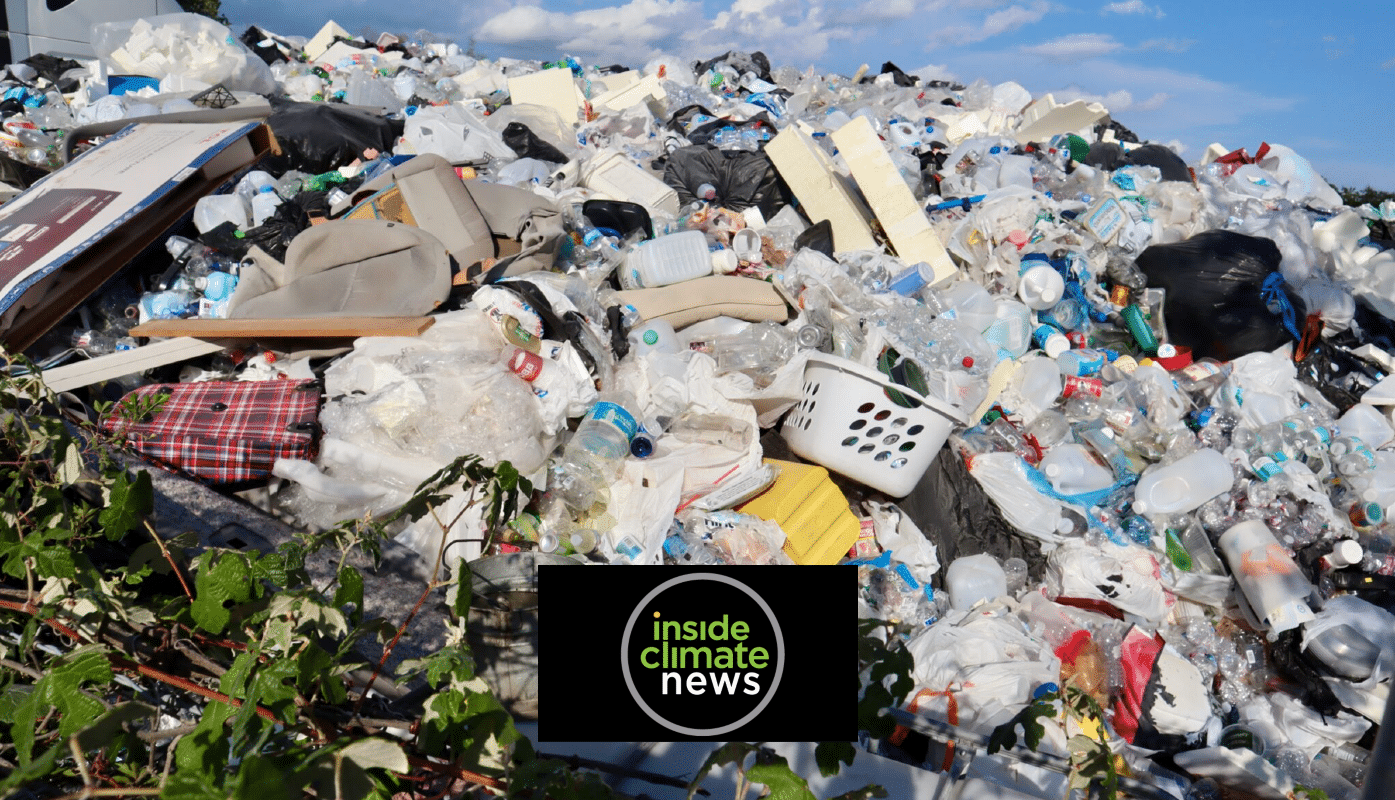
Electronic Tracking Raises Questions About Houston’s Drive to Repurpose a Full Range of Plastics
Revelations by a watchdog group reinforce doubts about chemical recycling, a technology promoted by the city in a collaboration with ExxonMobil and other companies
“All plastic, all numbers, all symbols,” proclaims one sign at the recycling site in Houston’s suburban Kingwood community, referring to the seven standard types of plastics, commonly identified on a plastic product by a number inside a “chasing arrows” icon. “Bag it and bring it,” reads another.
The goal is to boost the dismal plastic recycling rates in Houston, which are thought to be even lower than the national average of 6 percent, and—however paradoxically—turn this petrochemical and plastics manufacturing hub into a model of responsibility for other cities struggling with that problem. But the effort is opaque, and dogged by contradictions. Environmentalists fret that scaling up chemical recycling could add to the pollution burden of Houston’s low-income and minority communities and prove a successful ploy to entrench the nation’s fossil fuel economy.
There are multiple warning signs. On Tuesday, the environmental groups Beyond Plastics and the International Pollutants Elimination Network issued a report documenting decades-old challenges to the chemical recycling of plastics. Titled “Chemical Recycling: A Dangerous Deception,” the 159-page paper identifies 11 chemical recycling plants in the United States that were at least partly operating as of September, often with government support.
The challenges at those plants include a low output of recycled plastics; the production of hazardous waste like toxic chemicals and heavy metals; fires and oil spills at production units; and questions of commercial viability, the report said. The technology “has failed for decades, continues to fail, and there is no evidence that it will contribute to resolving the plastics pollution crisis,” the two advocacy groups conclude.
Read the full story in Inside Climate News.
 English
  简体中文
简体中文  Français
  Bahasa Indonesia
  Русский
  Español
  العربية
  Shqip
Shqip  Հայերեն
  Azərbaycan dili
  Беларуская мова
  Български
  Cantonese
  Hrvatski
  Čeština
  ქართული
  Deutsch
  Ελληνικά
  हिन्दी
  Қазақ тілі
  한국어
한국어  Кыргызча
  Bahasa Melayu
  नेपाली
  Português do Brasil
  Kiswahili
  Svenska
  Tagalog
  தமிழ்
தமிழ்  ไทย
ไทย  Українська
  Tiếng Việt