

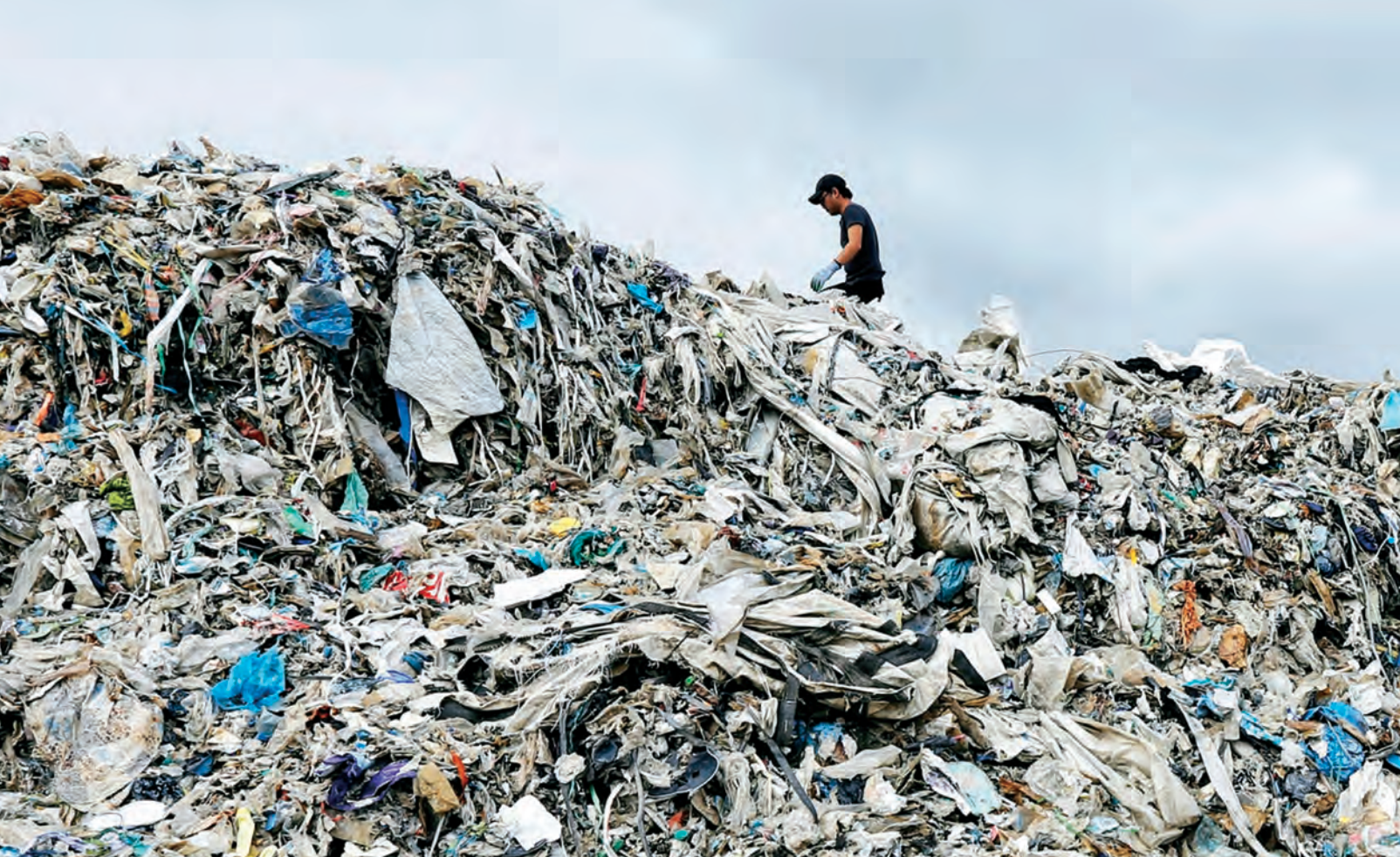
The burning of plastic waste in Indonesia, much of which has been sent there by the West, is poisoning the food chain, the BBC has learned.
Environmental group IPEN found, in one East Java village, toxic dioxins in chicken eggs 70 times the level allowed by European safety standards.
Long-term exposure to the chemicals is linked to cancer, damage to the immune system and developmental issues.
Indonesia’s government says it is sending the waste back to countries.
The BBC’s Victoria Derbyshire programme also spoke to people with respiratory issues caused by the fumes from the burning of plastics, and filmed the open burning of plastics supposedly sent to Indonesia to be recycled.
Researchers from IPEN (the International Pollutants Elimination Network) collected free-range chicken eggs at two sites near Surabaya, in East Java.
Testing eggs, the researchers said, was the easiest way to check whether the chemicals known as persistent organic pollutants (POPs) such as dioxins had made it into the food chain.
The most serious reading was taken near a group of tofu factories that burn plastics for fuel, in the village of Tropodo.
The tests found eating one egg would exceed the European Food Safety Authority (EFSA) tolerable daily intake for chlorinated dioxins 70 times over.
Researchers said this was the second-highest level of dioxins in eggs ever measured in Asia – only behind an area of Vietnam contaminated by the chemical weapon Agent Orange.
“The results of our research are some of the most shocking we have ever had. In Indonesia, we’ve never had these results before,” explained Yuyun Ismawati, a leading Indonesian environmentalist behind the tests.
Read more from the BBC.
 English
  简体中文
简体中文  Français
  Bahasa Indonesia
  Русский
  Español
  العربية
  Shqip
Shqip  Հայերեն
  Azərbaycan dili
  Беларуская мова
  Български
  Cantonese
  Hrvatski
  Čeština
  ქართული
  Deutsch
  Ελληνικά
  हिन्दी
  Қазақ тілі
  한국어
한국어  Кыргызча
  Bahasa Melayu
  नेपाली
  Português do Brasil
  Kiswahili
  Svenska
  Tagalog
  தமிழ்
தமிழ்  ไทย
ไทย  Українська
  Tiếng Việt