

From the introduction:
Australia is in the midst of the biggest waste recycling and reprocessing infrastructure build out in its history. This follows the Prime Minister’s announcement in 2019 that all waste exports would be banned from Australia, after China’s National Sword policy implementation and associated actions in other Asia Pacific countries. These policies effectively ban plastic and other waste exports from Australia to other countries and especially south-east Asian destinations.
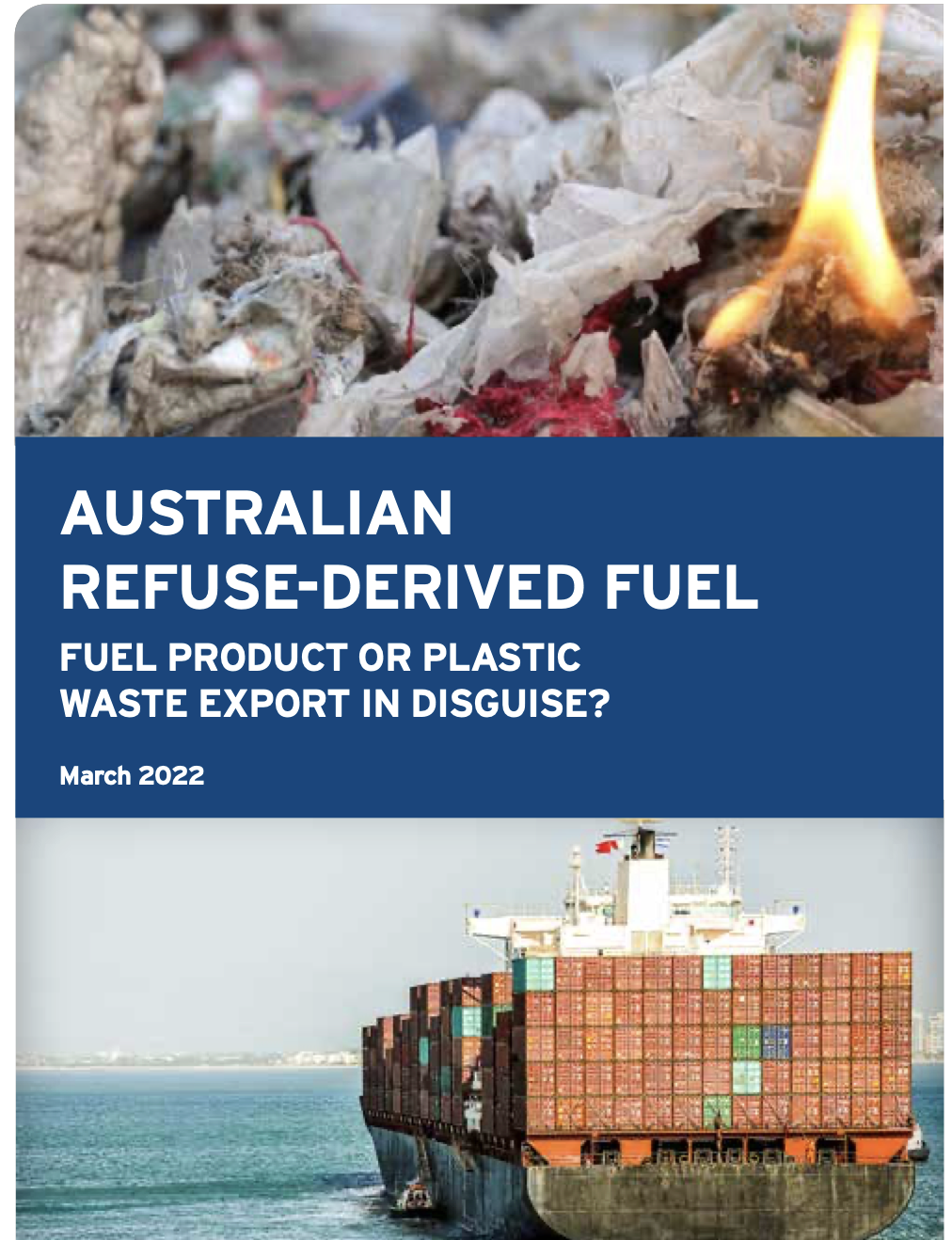
While this ‘world first’ waste export ban decision received international acclaim, closer scrutiny reveals that in fact Australia is gearing up with substantial public and private funding and plans to continue to export its waste in a new “reprocessed” format. A large part of this ‘reprocessing’ is to create refuse derived fuels (RDF) which are bales or pellets of mixed waste to be burned in cement kilns or other industrial furnaces.
This has implications the environment and human health due to the inherent toxicity risks and hazards of petrochemical based plastic wastes containing toxic additives which are amplified when burned. It also has major implications for climate change as plastic fuels are derivatives of fossil fuels. Burning plastic waste, including as a “reprocessed fuel product”, is not recycling or clean energy.
Read the full report below

 English
  简体中文
简体中文  Français
  Bahasa Indonesia
  Русский
  Español
  العربية
  Shqip
Shqip  Հայերեն
  Azərbaycan dili
  Беларуская мова
  Български
  Cantonese
  Hrvatski
  Čeština
  ქართული
  Deutsch
  Ελληνικά
  हिन्दी
  Қазақ тілі
  한국어
한국어  Кыргызча
  Bahasa Melayu
  नेपाली
  Português do Brasil
  Kiswahili
  Svenska
  Tagalog
  தமிழ்
தமிழ்  ไทย
ไทย  Українська
  Tiếng Việt