

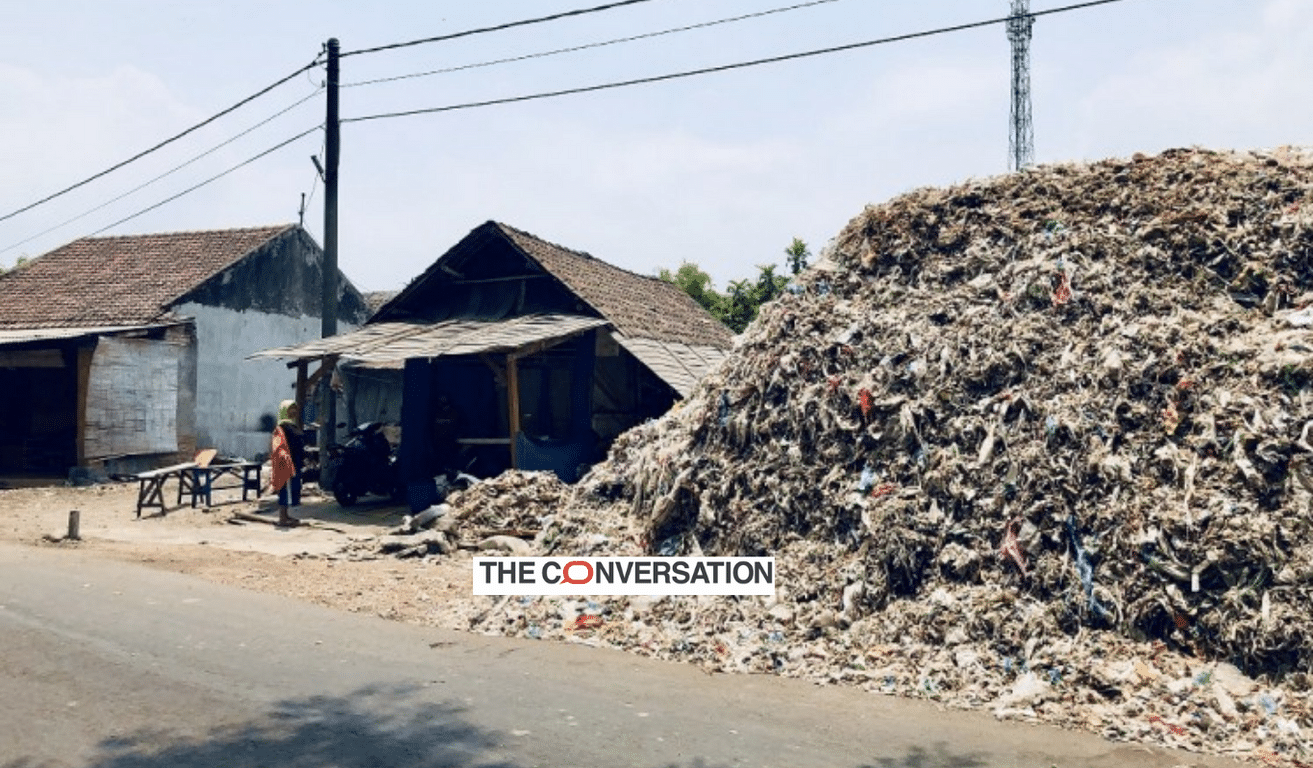
Recycling was once considered the obvious solution to the excessive amount of new (or virgin) plastic produced each year. This is no longer realistic. Global recycling capacity simply cannot keep up with the taking, making and wasting of natural resources.
The recycling process itself creates problems. A new report by Greenpeace and the International Pollutants Elimination Network has revealed how plastics which are made with or come into contact with toxic chemicals, such as flame retardants, can contaminate the recycling process by spreading these toxins through subsequent batches of plastic waste. Another recent study showed that recycling facilities can release hundreds of tonnes of microplastics into the environment each year.
A more sustainable approach would prioritise preventing plastic waste by taking action at earlier stages of a plastic product’s lifecycle: reducing how much plastic is ultimately made, reusing what exists and replacing plastic with alternative materials where appropriate.
Read the full story from The Conversation.
 English
  简体中文
简体中文  Français
  Bahasa Indonesia
  Русский
  Español
  العربية
  Shqip
Shqip  Հայերեն
  Azərbaycan dili
  Беларуская мова
  Български
  Cantonese
  Hrvatski
  Čeština
  ქართული
  Deutsch
  Ελληνικά
  हिन्दी
  Қазақ тілі
  한국어
한국어  Кыргызча
  Bahasa Melayu
  नेपाली
  Português do Brasil
  Kiswahili
  Svenska
  Tagalog
  தமிழ்
தமிழ்  ไทย
ไทย  Українська
  Tiếng Việt