
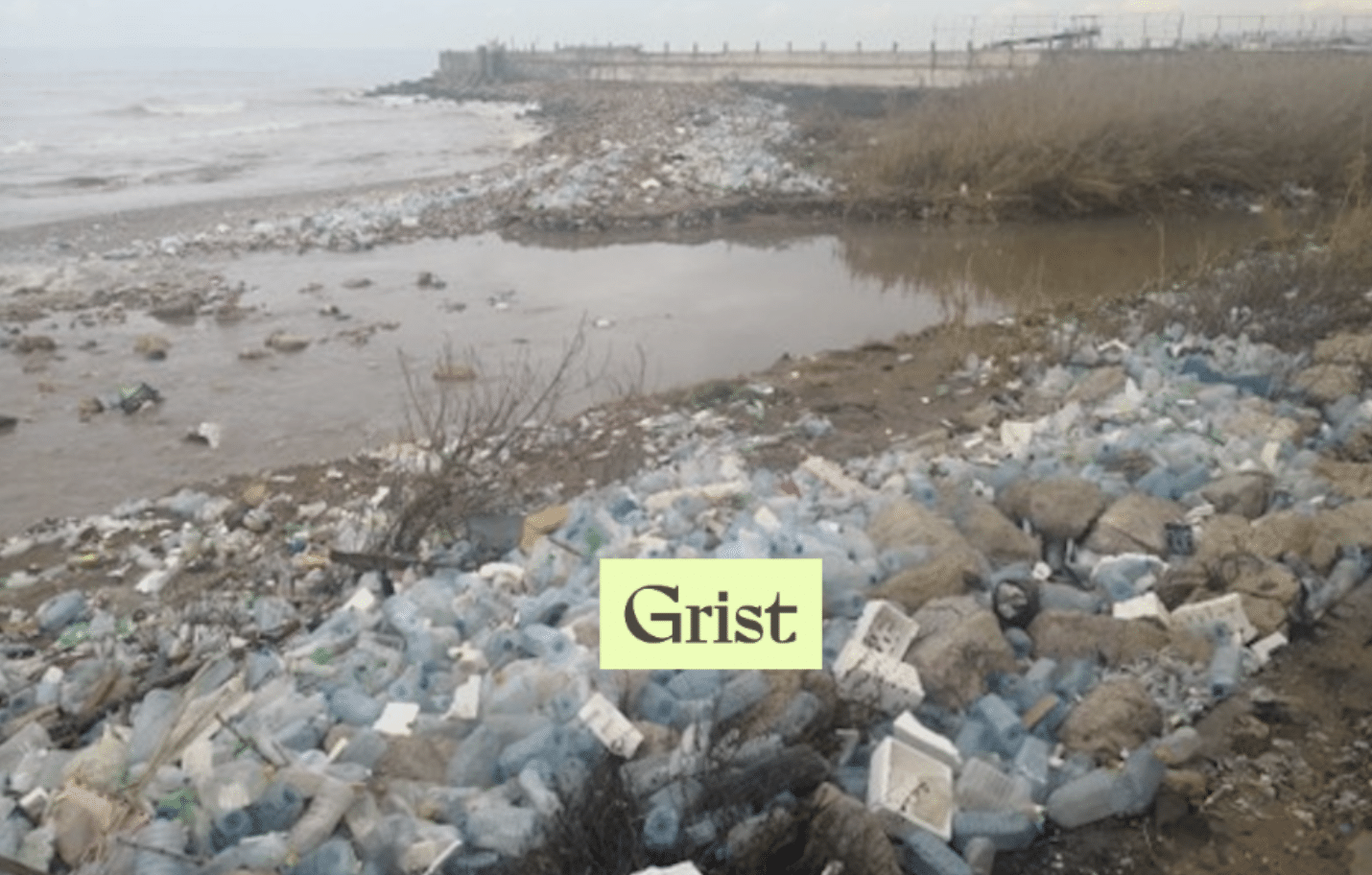
In Grist, a story notes that plastics don’t just pose a threat to the marine environment and people’s health; they jeopardize basic human rights. This is the framing that a growing number of legal experts, policymakers, and environmental groups are using in conversations about a proposed United Nations treaty to “end plastic pollution,” which is undergoing another round of negotiations this week in Geneva.
The draft of the treaty that negotiators began working on last week mentioned human rights at least twice. But the text didn’t go far enough, according to legal experts, and now, at the second part of the fifth round of treaty talks — running from August 5 to 14 — there’s been a push among civil society and some negotiators to place a stronger emphasis on human rights in order to justify specific policies, such as a limit on global plastic production.
It wasn’t until recently that experts began referring to the plastics problem explicitly in human rights terms. A primary turning point was a 2021 report from the United Nations’ special rapporteur on toxics and human rights, Marcos Orellana. Over 24 pages, Orellana described how plastics threaten human rights at every stage of their life cycle, from the extraction of oil and gas to plastics’ production, use, and disposal — largely through widespread chemical and microplastics contamination.
Under international human rights agreements, most countries have a legal obligation to safeguard their residents’ basic rights to life, health, and an “adequate standard of living.” The question is not whether to defend these rights, but how — which is usually done by zeroing in on more specific enabling rights, like the rights to clean drinking water, nutritious food, and, crucially, a clean and healthy environment, one that is not overly polluted by plastic.
Wednesday, a studim i ri from the International Pollutants Elimination Network, or IPEN — a global coalition of environmental and health organizations — explicitly described exposure to plastic chemicals as a human rights issue. The organization placed chemical-detecting wristbands on U.N. officials, delegates from Latin America and Europe, and waste workers, and found that everyone was exposed to at least 26 of the 73 plastic chemicals they tested for, with much more chemical exposure for the waste workers.
“These chemicals invade our bodies, violating our right to a healthy environment,” read a statement from one of the study’s participants, Astrid Puentes Riaño, the U.N.’s special rapporteur on the human right to a clean, healthy, and sustainable environment. “Industries must be held accountable for the harm caused by their products, and more robust frameworks are needed to stop and remediate this pollution.”
Read more in Grist.
In a related Grist article, IPEN members protesting at the INC5.2 are featured as standing for a Treaty that protects human health. See “Health was supposed to be central to the UN plastics treaty. Now it’s up for debate.”
 English
  简体中文
简体中文  Français
  Bahasa Indonesia
  Русский
  Español
  العربية
  Shqip
Shqip  Հայերեն
  Azərbaycan dili
  Беларуская мова
  Български
  Cantonese
  Hrvatski
  Čeština
  ქართული
  Deutsch
  Ελληνικά
  हिन्दी
  Қазақ тілі
  한국어
한국어  Кыргызча
  Bahasa Melayu
  नेपाली
  Português do Brasil
  Kiswahili
  Svenska
  Tagalog
  தமிழ்
தமிழ்  ไทย
ไทย  Українська
  Tiếng Việt