

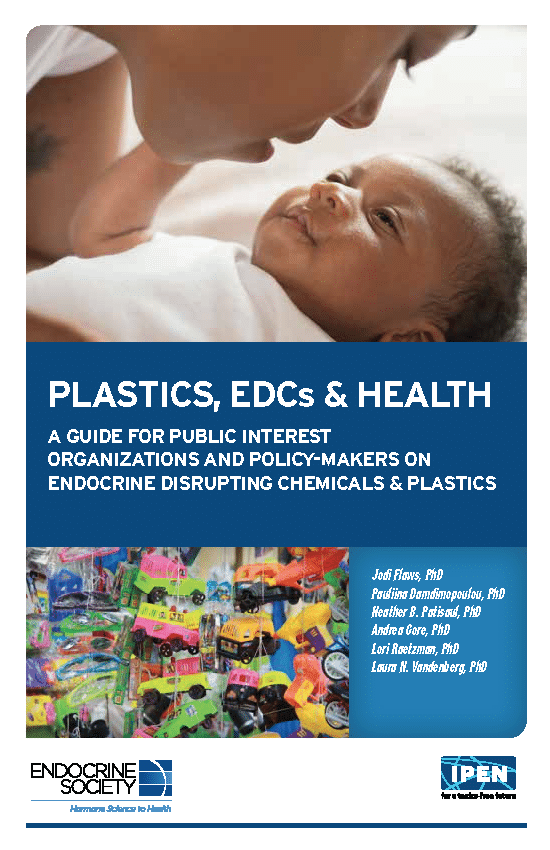
This joint report of the Endocrine Society and IPEN provides the current best knowledge about the effects of endocrine-disrupting chemicals on human health.
Key findings in the report include:
- One hundred and forty four chemicals or chemical groups known to be hazardous to human health are actively used in plastics for functions varying from antimicrobial activity to colorants, flame retardants, solvents, UV-stabilizers, and plasticizers.
- Exposure can occur during the entire life span of plastic products, from the manufacturing process to consumer contact, recycling, to waste management and disposal.
- EDC exposure is a universal problem. Testing of human samples consistently shows nearly all people have EDCs in their bodies.
- Microplastics contain chemical additives, which can leach out of the microplastic and expose the population. They can also bind and accumulate toxic chemicals from the surrounding environment, such as seawater and sediment, functioning as carriers for toxic compounds.
- Bioplastics/biodegradable plastics, promoted as more ecological than plastics, contain similar chemical additives as conventional plastics and also have endocrine-disrupting effects.
This report is a follow-up to the 2014 joint report, which is available in eight languages.

 English
  简体中文
简体中文  Français
  Bahasa Indonesia
  Русский
  Español
  العربية
  Shqip
Shqip  Հայերեն
  Azərbaycan dili
  Беларуская мова
  Български
  Cantonese
  Hrvatski
  Čeština
  ქართული
  Deutsch
  Ελληνικά
  हिन्दी
  Қазақ тілі
  한국어
한국어  Кыргызча
  Bahasa Melayu
  नेपाली
  Português do Brasil
  Kiswahili
  Svenska
  Tagalog
  தமிழ்
தமிழ்  ไทย
ไทย  Українська
  Tiếng Việt