

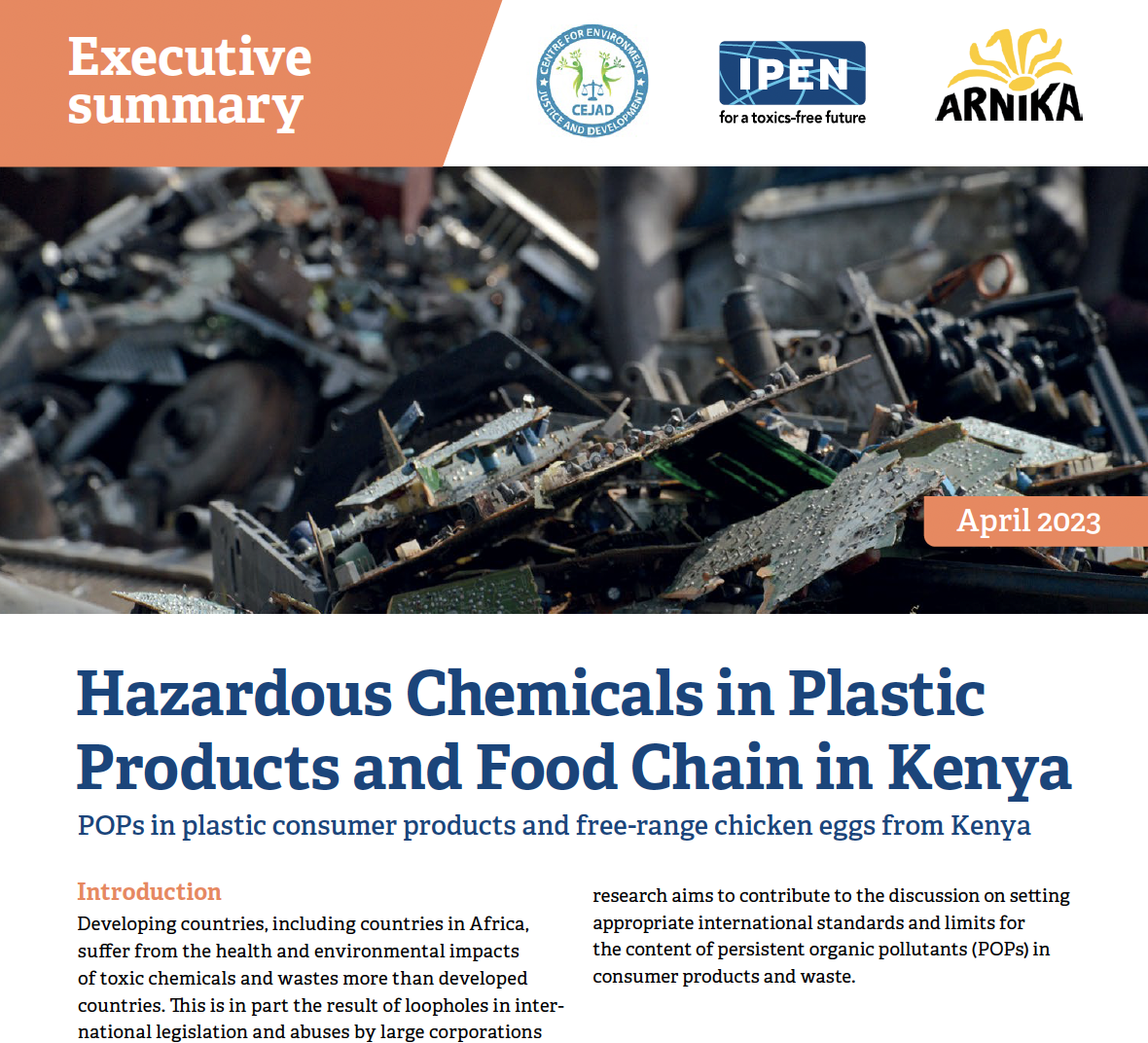
This study from the Kenyan public interest group Centre for Environment Justice and Development (CEJAD), IPEN, and Arnika shows that extremely high levels of persistent organic pollutants (POPs), including dioxin-like PCBs, likely produced from burning and disposal of plastic and electronic wastes, are contaminating the food supply in Kenya. Alarmingly, today’s study found the highest level of contamination by dioxin-like PCBs ever measured in free-range chicken eggs globally. Testing found levels of these POPs chemicals in eggs that are as much as 111 times higher than EU regulatory limits for dioxins plus dioxin-like PCBs and showed that an adult eating a single egg from one Kenyan location could be exposed to a dose of toxic chemicals that would exceed the EU daily safety limit for more than 250 days.
For this study, the researchers also purchased eighteen products made from recycled plastics in Kenya, including toys, and analyzed them for contamination by brominated flame retardants (BFRs), including highly toxic and banned POPs. The study found that 14 of the 18 products contained high levels of BFRs, exceeding the definition of hazardous POPs waste suggested by African region. One sample, a toy car, was tested for brominated dioxins and contained the toxic chemicals at higher concentrations than levels found in ash from waste incineration.

 English
  简体中文
简体中文  Français
  Bahasa Indonesia
  Русский
  Español
  العربية
  Shqip
Shqip  Հայերեն
  Azərbaycan dili
  Беларуская мова
  Български
  Cantonese
  Hrvatski
  Čeština
  ქართული
  Deutsch
  Ελληνικά
  हिन्दी
  Қазақ тілі
  한국어
한국어  Кыргызча
  Bahasa Melayu
  नेपाली
  Português do Brasil
  Kiswahili
  Svenska
  Tagalog
  தமிழ்
தமிழ்  ไทย
ไทย  Українська
  Tiếng Việt