

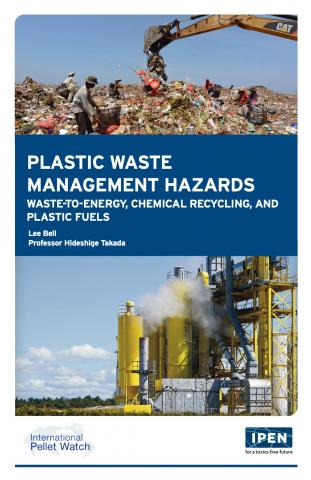
Plastic waste has become an unprecedented pollution issue around the globe. From visible plastic litter on land and in oceans to invisible microplastics in lakes, mountains, and rain, the planet is increasingly blanketed in the petrochemical remnants of plastic production. With petrochemical companies avoiding fossil fuel carbon liabilities by massively increasing plastic production, the amount of plastic waste generated is set to climb dramatically.
This report examines the current and emerging methods by which plastic waste is managed globally and questions whether any of them present a solution to the rapidly accelerating generation of plastic waste. The short answer is that recycling at the margins cannot provide a solution to plastic pollution when plastic production is set to grow exponentially. Other ‘recovery’ waste management techniques such as incineration, plastic to fossil fuel, and downcycling to incorporate plastic waste in roads, will simply generate more pollution. The only long-term answer to plastic pollution is to produce less plastic. This seems unlikely while the petrochemical industry needs plastic as a safe haven from its carbon liabilities. Increasing plastic production offsets falling demand for its fossil fuels.

 English
  简体中文
简体中文  Français
  Bahasa Indonesia
  Русский
  Español
  العربية
  Shqip
Shqip  Հայերեն
  Azərbaycan dili
  Беларуская мова
  Български
  Cantonese
  Hrvatski
  Čeština
  ქართული
  Deutsch
  Ελληνικά
  हिन्दी
  Қазақ тілі
  한국어
한국어  Кыргызча
  Bahasa Melayu
  नेपाली
  Português do Brasil
  Kiswahili
  Svenska
  Tagalog
  தமிழ்
தமிழ்  ไทย
ไทย  Українська
  Tiếng Việt