
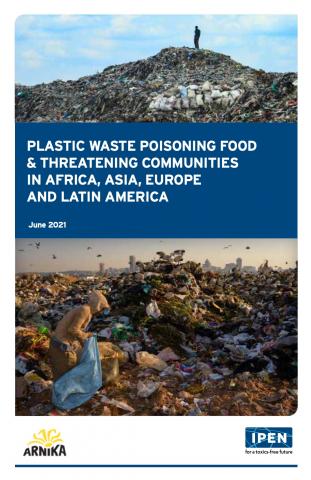
Plastics and food packaging contain chemical contaminants from manufacturing along with many additives to make them inflammable, more flexible, grease-resistant, or sterile, as well as other substances to create many other properties. Many of these additives are toxic and they leak from products during use and can be released during recycling and from recycled products.
This study focuses on persistent organic pollutants (POPs), whose releases are closely related to plastic wastes. The POPs include additives in the plastic as such, as well as unintentionally produced POPs (UPOPs) generated mostly by burning, incineration and/or other thermal treatment of plastics.
Four samples from this study are among the ten highest ever measured levels of chlorinated dioxins in chicken eggs globally.

 English
  简体中文
简体中文  Français
  Bahasa Indonesia
  Русский
  Español
  العربية
  Shqip
Shqip  Հայերեն
  Azərbaycan dili
  Беларуская мова
  Български
  Cantonese
  Hrvatski
  Čeština
  ქართული
  Deutsch
  Ελληνικά
  हिन्दी
  Қазақ тілі
  한국어
한국어  Кыргызча
  Bahasa Melayu
  नेपाली
  Português do Brasil
  Kiswahili
  Svenska
  Tagalog
  தமிழ்
தமிழ்  ไทย
ไทย  Українська
  Tiếng Việt