

Plastics are not all the same
Plastics are more than bottles, straws, and bags — more than individual products. The word “plastic” refers to many different materials with different properties that are given to them by their chemical ingredients.
What are plastics ingredients?
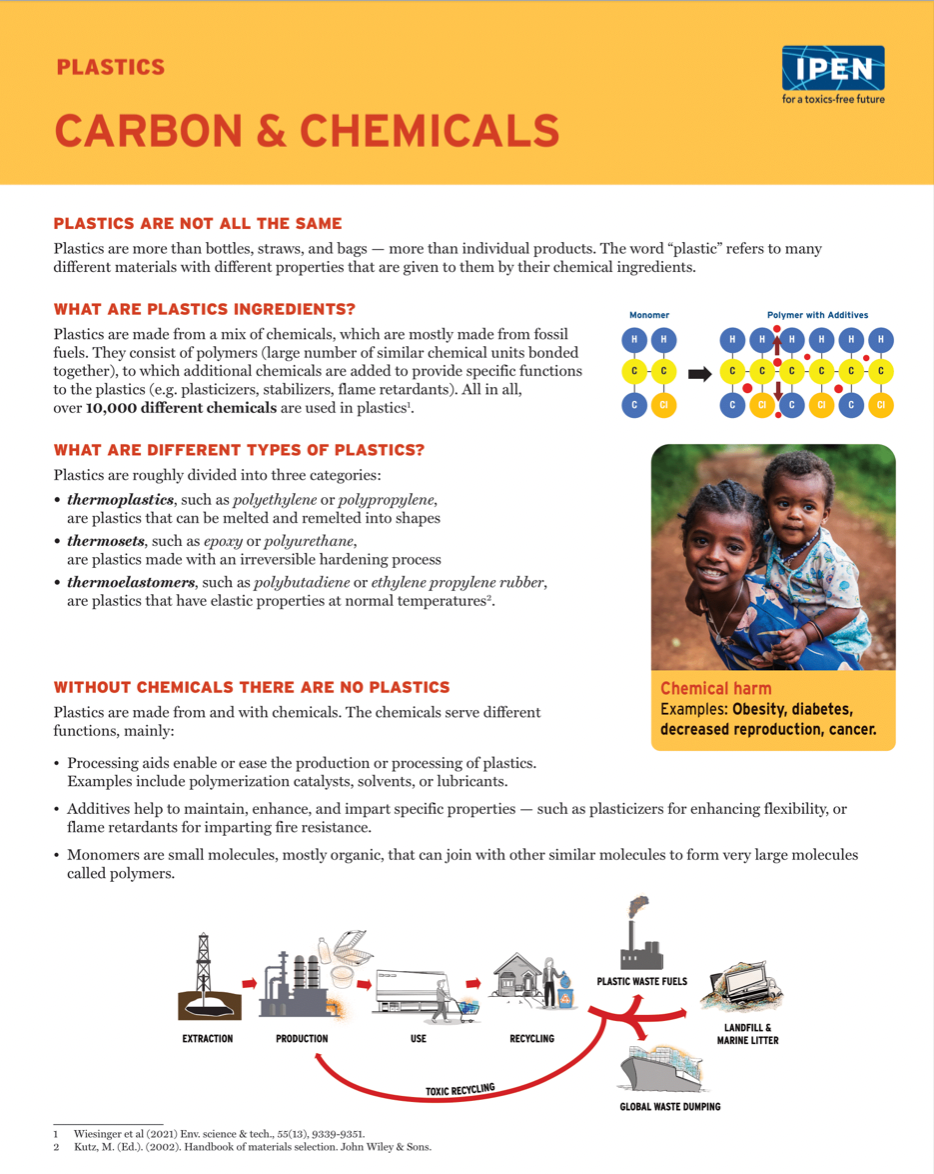
Plastics are made from a mix of chemicals, which are mostly made from fossil fuels. They consist of polymers (large number of similar chemical units bonded together), to which additional chemicals are added to provide specific functions to the plastics (e.g. plasticizers, stabilizers, flame retardants). All in all, over 10,000 different chemicals are used in plastics.
What are different types of plastics?
Plastics are roughly divided into three categories:
- thermoplastics, such as polyethylene or polypropylene, are plastics that can be melted and remelted into shapes
- thermosets, such as epoxy or polyurethane, are plastics made with an irreversible hardening process
- thermoelastomers, such as polybutadiene or ethylene propylene rubber, are plastics that have elastic properties at normal temperatures.
All plastics are made with similar polymers and they are almost always made from fossil fuels.
Without chemicals there are no plastics
Plastics are made from and with chemicals. The chemicals serve different functions, mainly:
- Processing aids enable or ease the production or processing of plastics. Examples include polymerization catalysts, solvents, or lubricants.
- Additives help to maintain, enhance, and impart specific properties — such as plasticizers for enhancing flexibility, or flame retardants for imparting fire resistance.
- Monomers are small molecules, mostly organic, that can join with other similar molecules to form very large molecules called polymers.

 English
  简体中文
简体中文  Français
  Bahasa Indonesia
  Русский
  Español
  العربية
  Shqip
Shqip  Հայերեն
  Azərbaycan dili
  Беларуская мова
  Български
  Cantonese
  Hrvatski
  Čeština
  ქართული
  Deutsch
  Ελληνικά
  हिन्दी
  Қазақ тілі
  한국어
한국어  Кыргызча
  Bahasa Melayu
  नेपाली
  Português do Brasil
  Kiswahili
  Svenska
  Tagalog
  தமிழ்
தமிழ்  ไทย
ไทย  Українська
  Tiếng Việt