

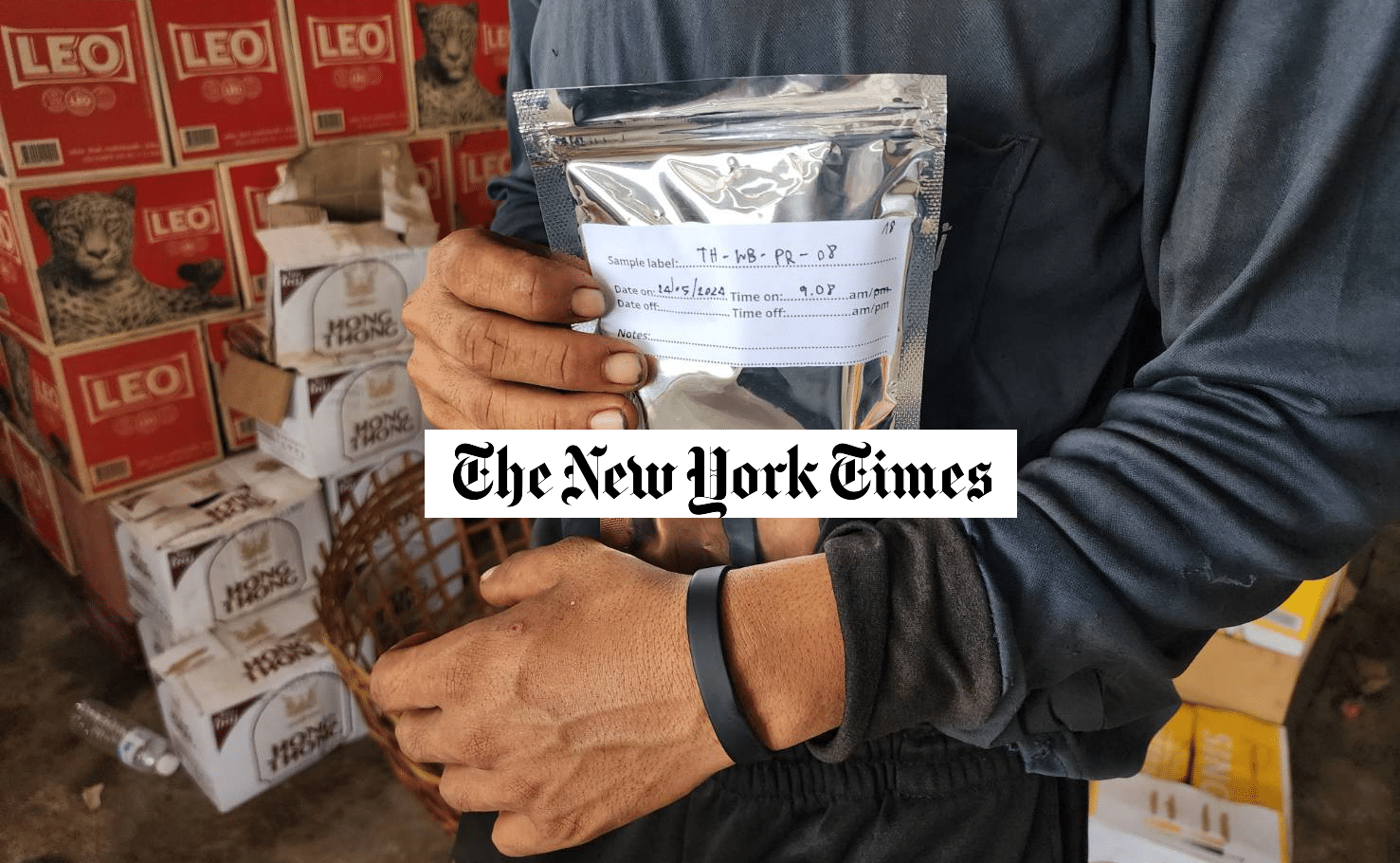
As international talks continue this week, a dozen U.N. officials reveal scientists tracked their exposure to many chemicals found in plastics.
The wristbands look like those you might find at a souvenir shop: bendy loops of silicone, in the color of your choice. But scientists are increasingly using the bands to measure exposure to toxic chemicals present in the air around us and in everyday items we use, including personal care products.
Silicone mimics the way the human body absorbs harmfulchemicals and has little pores similar in size to pores in human cells. Having people wear the wristbands, and then studying the chemicals the bands absorb, can give scientists a good understanding of the chemicals the wearers were exposed to.
As negotiations continued this week in South Korea on a global treaty to tackle plastic pollution — including restricting the harmful chemicals present in plastic — 12 high-ranking United Nations officials had worn the wristbands to measure their exposure to toxic chemicals.
The unusual experiment that included the U.N. High Commissioner for Human Rights, Volker Türk, took place for five days earlier this year. It was organized by the International Pollutants Elimination Network, or IPEN, a global network of nonprofit groups advocating for stronger chemicals regulation.
The results, which showed the U.N. officials had each been exposed to more than 30 different chemicals, were released on Thursday. It was meant to be illustrative, the group said, to drive home the fact that the treaty negotiators themselves are vulnerable to chemicals that could have health effects.
“It’s so easy for delegates sitting in these conference rooms to become removed from reality,” said Sara Brosché, an environmental scientist at IPEN and the study’s lead author. “But everyone, even the participants, is exposed.”
 English
  简体中文
简体中文  Français
  Bahasa Indonesia
  Русский
  Español
  العربية
  Shqip
Shqip  Հայերեն
  Azərbaycan dili
  Беларуская мова
  Български
  Cantonese
  Hrvatski
  Čeština
  ქართული
  Deutsch
  Ελληνικά
  हिन्दी
  Қазақ тілі
  한국어
한국어  Кыргызча
  Bahasa Melayu
  नेपाली
  Português do Brasil
  Kiswahili
  Svenska
  Tagalog
  தமிழ்
தமிழ்  ไทย
ไทย  Українська
  Tiếng Việt