

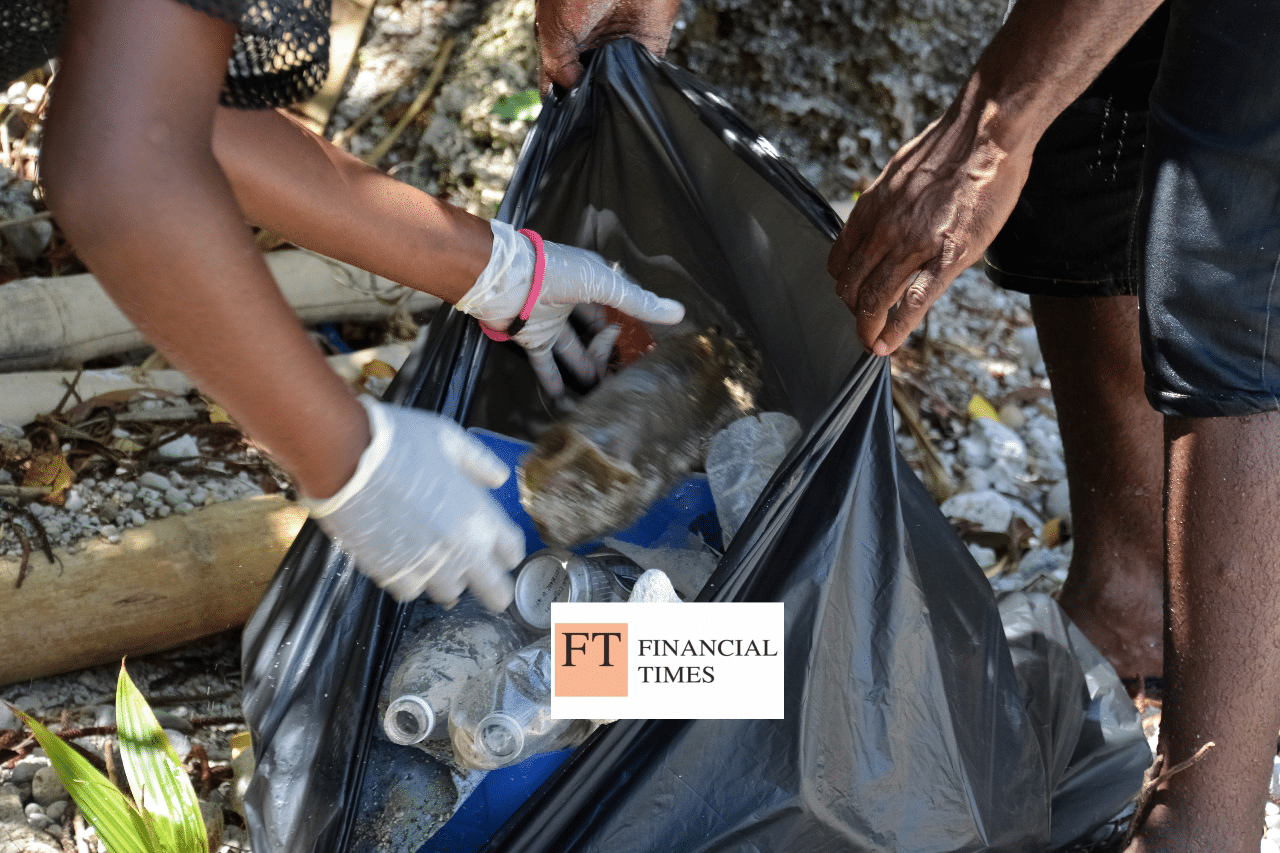
Today’s enlightened consumers may shun plastic straws and avoid plastic bags — indeed, legislators give them no choice in many jurisdictions — but they are swimming against a mighty tide. Plastic’s cheapness, lightness and versatility make it economically irresistible, even though the environmental downsides are severe. According to the OECD, global plastic production reached 460mn tonnes in 2019.
Most countries, when they talk about a circular economy, just mean recycling,” argues Vito Buonsante, a Brussels-based environmental health lawyer [with IPEN]. “If the plastics industry were to try to become truly circular, it would need to follow resource efficiency principles, whereby, like compost from food waste replacing fertilisers, something is put back into the economy that saves virgin materials, energy and money.” But it is, he says, “much more difficult” to make the economic case for resource efficiency in the plastics industry: “The fossil fuels from which plastics are produced continue to be subsidised, and recycling plastics is expensive given the number of different products on the market.”
Read the full story from the Financial Times.
 English
  简体中文
简体中文  Français
  Bahasa Indonesia
  Русский
  Español
  العربية
  Shqip
Shqip  Հայերեն
  Azərbaycan dili
  Беларуская мова
  Български
  Cantonese
  Hrvatski
  Čeština
  ქართული
  Deutsch
  Ελληνικά
  हिन्दी
  Қазақ тілі
  한국어
한국어  Кыргызча
  Bahasa Melayu
  नेपाली
  Português do Brasil
  Kiswahili
  Svenska
  Tagalog
  தமிழ்
தமிழ்  ไทย
ไทย  Українська
  Tiếng Việt