

Brominated flame retardants (BFRs) are man-made chemicals that are regularly added to consumer products to reduce fire-related injury and damage. The massive production and use of BFRs was initiated as a response to frequent fires started by cigarettes in the 1970s. This solution focused on chemical fire retardants, rather than measures to increase fire safety of cigarettes and led to the development of related fire safety standards focused on chemical fire retardance. Since the 1970s, brominated flame retardants have been used in consumer products such as electronics, furniture and car upholstery, matrasses, household textiles and building insulation.
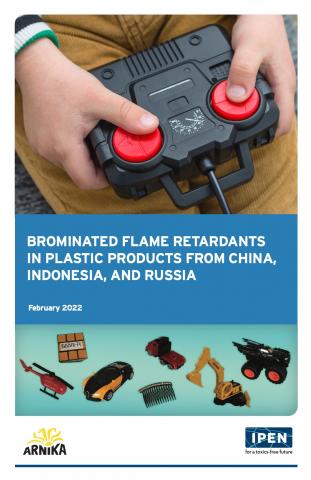
This study aimed to determine whether children’s toys, hair accessories, office supplies and kitchen utensils, sold on Chinese, Indonesian and Russian markets contained BFRs. This would indicate use of recycled, flame-retardant-containing plastics, similar to observations in previous studies.
All three countries are facing waste management challenges, at the local and national levels. One of many reasons is plastic waste imports with unknown chemical content. The data collected in this study will therefore generate information that can contribute to the setting of appropriate standards and to improve the control over circulation of harmful BFRs in plastic consumer products and waste.

 English
  简体中文
简体中文  Français
  Bahasa Indonesia
  Русский
  Español
  العربية
  Shqip
Shqip  Հայերեն
  Azərbaycan dili
  Беларуская мова
  Български
  Cantonese
  Hrvatski
  Čeština
  ქართული
  Deutsch
  Ελληνικά
  हिन्दी
  Қазақ тілі
  한국어
한국어  Кыргызча
  Bahasa Melayu
  नेपाली
  Português do Brasil
  Kiswahili
  Svenska
  Tagalog
  தமிழ்
தமிழ்  ไทย
ไทย  Українська
  Tiếng Việt