

Though they only account for 16 percent of the world’s population, high-income countries generate about 34 percent of the world’s waste. A large portion of the generated wastes are plastics, which often contain toxic chemicals.
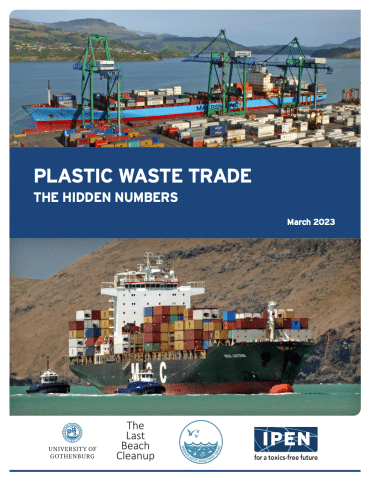
Historically, high-income countries have exported a significant amount of plastic waste under the guise of recycling. This toxic plastic waste trade harms human health and the environment locally and globally. But current reporting systems frequently underestimate the volumes of plastic wastes that are traded globally, leading to a frequent underestimation of the plastic waste trade by researchers who generally rely on this reporting system.
A recent analysis found that the overall plastic trade is more than 40% higher than previous estimates, and even this number fails to reflect the trade of plastics and wastes in textiles, rubber, plastic contamination of paper bales, and other sources. The real amount of plastics and plastic wastes, and of toxic chemicals contained in plastics and wastes that move globally via trade is likely to be even higher.
As plastic production increases, plastic wastes will also skyrocket. Estimates show we will produce 26 billion tonnes of plastic waste by 2050. We cannot manage this level of waste generation sustainably, and without global policies to reduce plastic production, there will continue to be an unequal exchange of plastic wastes from high-income countries to non-high-income countries.
Click below to read and download the full report (pdf).
| Attachment | 尺寸 |
|---|---|
 英语 英语 |
7.96 MB |
| русский (Russian) |
4.96 MB |
| العربية (Arabic) |
544.96 KB |
| español (Spanish) |
7.78 MB |
 English
  简体中文
简体中文  Français
  Bahasa Indonesia
  Русский
  Español
  العربية
  Shqip
Shqip  Հայերեն
  Azərbaycan dili
  Беларуская мова
  Български
  Cantonese
  Hrvatski
  Čeština
  ქართული
  Deutsch
  Ελληνικά
  हिन्दी
  Қазақ тілі
  한국어
한국어  Кыргызча
  Bahasa Melayu
  नेपाली
  Português do Brasil
  Kiswahili
  Svenska
  Tagalog
  தமிழ்
தமிழ்  ไทย
ไทย  Українська
  Tiếng Việt