
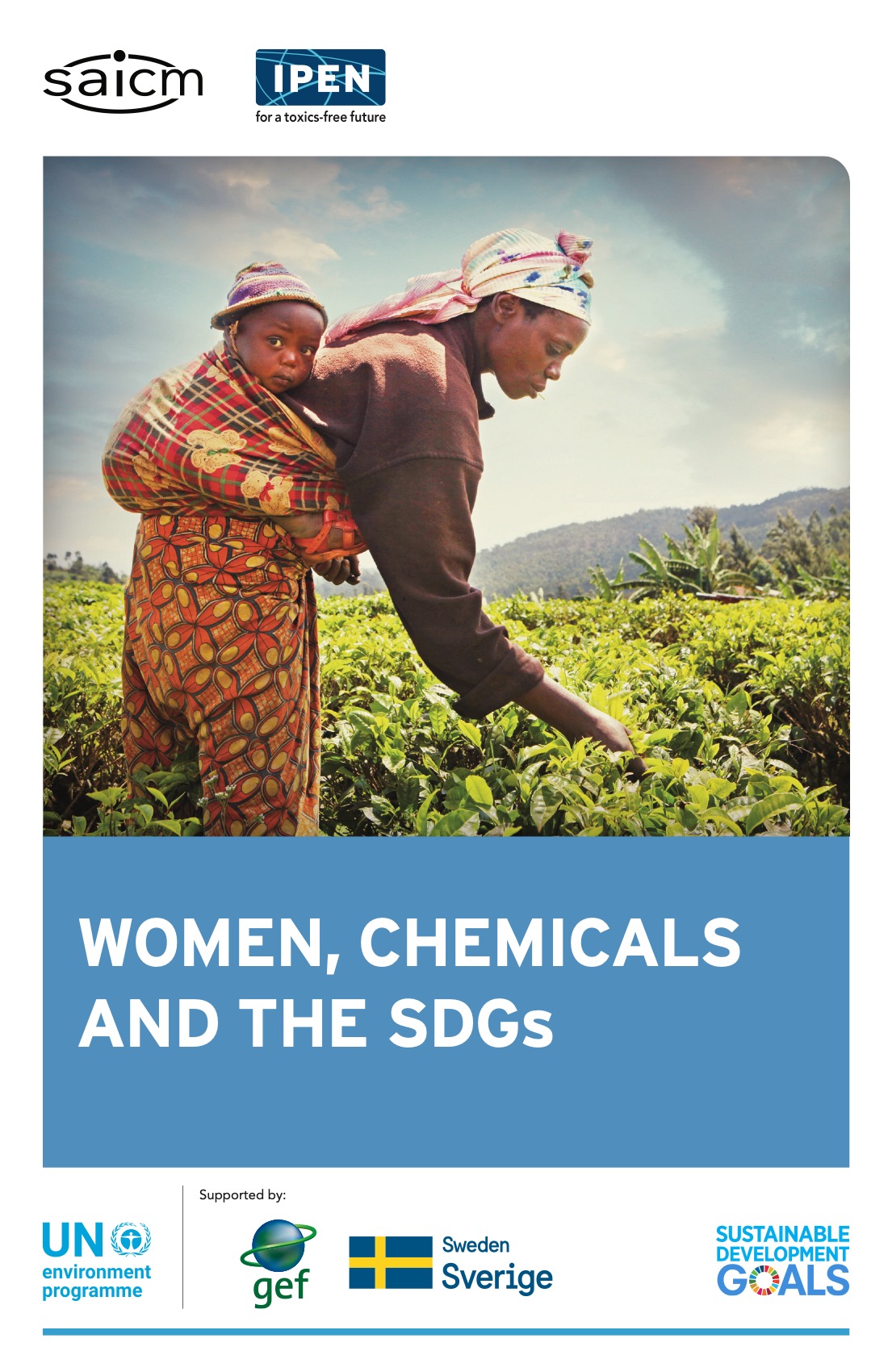
In line with the UNEP-IPEN partnership, the aim of this report is to show the impact chemicals have on women as a vulnerable group highly exposed to hazardous chemicals and gender inequalities related to decision-making around the management of chemicals and waste. The report also means to provide concrete steps that can be taken to safeguard the health of women and empower women in decision-making and in their roles as agents of change. The overall objective is to provide evidence to all stakeholders working towards sustainable development of the importance of addressing this issue for achieving the 2030 Sustainable Development Goals.
All people, irrespective of gender identity, must have the same rights, responsibilities and opportunities in order to achieve the sound management of chemicals and wastes, and both are vital to achieve the majority of the 2030 Sustainable Development Goals.
In order to identify and address inequalities, data that enable identification of impacts based on gender, i.e. the social attributes and opportunities associated with being male or female, and the biological sex is needed.
Women are generally more disproportionally impacted by exposure to chemicals and wastes and have less access to participation in decision making. Women are also key agents of change. Women and chemicals is an underexplored topic that deserves more attention.
This report analyses the issues of gender and chemicals and relates them to the SAICM Emerging Policy Issues and Issues of Concern, identfying a range of inequalities, noting gaps that exist in what we know, diffrential effects within groups, and recommendations for moving forward.

 English
  简体中文
简体中文  Français
  Bahasa Indonesia
  Русский
  Español
  العربية
  Shqip
Shqip  Հայերեն
  Azərbaycan dili
  Беларуская мова
  Български
  Cantonese
  Hrvatski
  Čeština
  ქართული
  Deutsch
  Ελληνικά
  हिन्दी
  Қазақ тілі
  한국어
한국어  Кыргызча
  Bahasa Melayu
  नेपाली
  Português do Brasil
  Kiswahili
  Svenska
  Tagalog
  தமிழ்
தமிழ்  ไทย
ไทย  Українська
  Tiếng Việt