
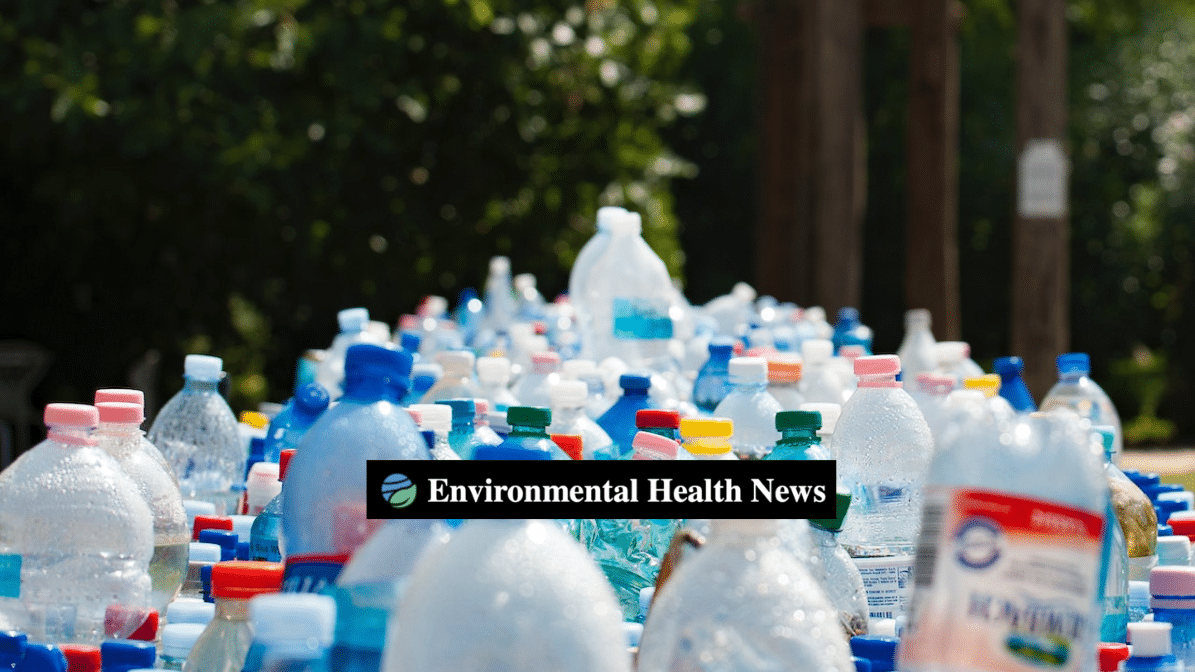
Plastics contain toxic chemicals that can enter products and interact to create new harmful substances during the recycling process, a new report from Greenpeace shows.
The report comes as negotiators from more than 180 nations meet in Paris this week to discuss a global plastics treaty, developing regulations to address the plastic pollution crisis. The backdrop is stark: Plastics production is currently on track to triple by 2060, causing harm to human health and the environment throughout its lifecycle from creation to disposal.
Plastics contain toxic chemicals, such as bisphenols (like BPA), phthalates and per- and polyfluoroalkyl substances (PFAS), and can also absorb materials from other products in the wastestream, like pesticides and pharmaceuticals, which can later leach out of the plastic. IPEN and Greenpeace advocate for limiting plastic production alongside eliminating toxic chemicals added to plastics to make safe recycled products feasible.
Roughly 3,200 of tho chemicals in plastics are considered a concern for human health, and an additional 6,000 have never been screened, according to a report from the United Nations Environment Program.
“Six thousand with no data is like driving blind,” Bjorn Beeler, international coordinator at IPEN, told EHN. Many chemicals added to plastics are linked with health risks including cancers, hormonal system disruptions and reproductive harms. Countries’ ability to agree on a treaty objective will be the measure of success for the week, Beeler said. He hopes to see an objective to protect the environment and human health from adverse impacts at all stages of the plastic lifecycle.
Read the full story from Environmental Health News.
 English
  简体中文
简体中文  Français
  Bahasa Indonesia
  Русский
  Español
  العربية
  Shqip
Shqip  Հայերեն
  Azərbaycan dili
  Беларуская мова
  Български
  Cantonese
  Hrvatski
  Čeština
  ქართული
  Deutsch
  Ελληνικά
  हिन्दी
  Қазақ тілі
  한국어
한국어  Кыргызча
  Bahasa Melayu
  नेपाली
  Português do Brasil
  Kiswahili
  Svenska
  Tagalog
  தமிழ்
தமிழ்  ไทย
ไทย  Українська
  Tiếng Việt