

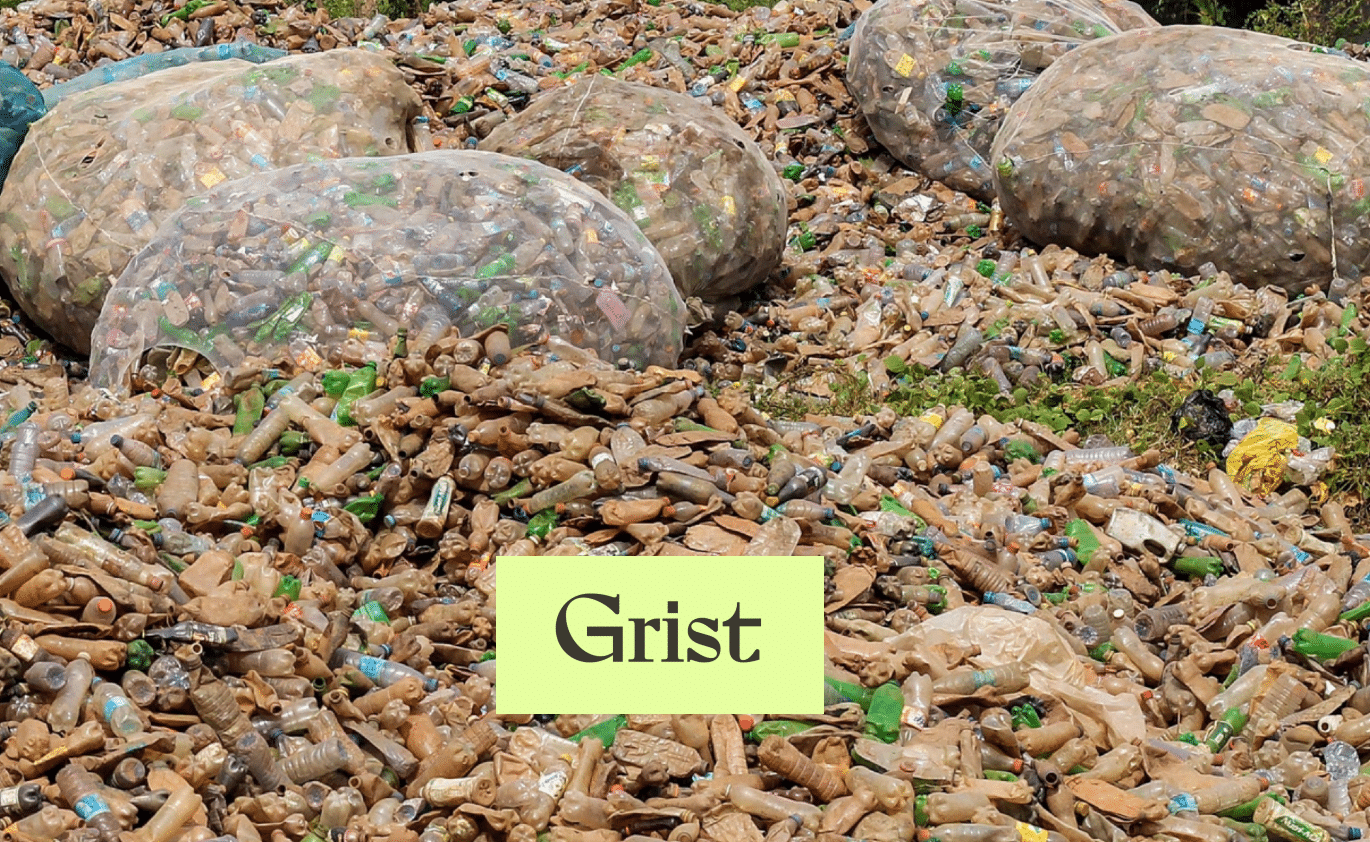
The Biden administration has backtracked from supporting a cap on plastic production as part of the United Nations’ global plastics treaty.
According to representatives from five environmental organizations, White House staffers told representatives of advocacy groups in a closed-door meeting last week that they did not see mandatory production caps as a viable “landing zone” for INC-5, the name for the fifth and final round of plastics treaty negotiations set to take place later this month in Busan, South Korea. Instead, the staffers reportedly said United States delegates would support a “flexible” approach in which countries set their own voluntary targets for reducing plastic production.
Bjorn Beeler, executive director of the nonprofit International Pollutants Elimination Network, noted that the U.S. could technically “address” the supply of plastics by reducing the industry’s projected growth rates — which would still allow the amount of manufactured plastic to continue increasing every year.
“What the U.S. has said is extremely vague,” he said. “They have not been a leading actor to move the treaty into something meaningful.”
Viola Waghiyi, environmental health and justice program director for the nonprofit Alaska Community Action on Toxics, is a tribal citizen of the Native Village of Savoonga, on the island of Sivuqaq off the state’s western coast. She connected a weak plastics treaty to the direct impacts her island community is facing, including climate change (to which plastics production contributes), microplastic pollution in the Arctic Ocean that affects its marine life, and atmospheric dynamics that dump hazardous plastic chemicals in the far northern hemisphere.
The U.S. “should be making sure that measures are in place to protect the voices of the most vulnerable,” she said, including Indigenous peoples, workers, waste pickers, and future generations. As a Native grandmother, she specifically raised concerns about endocrine-disrupting plastic chemicals that could affect children’s neurological development. “How can we pass on our language, our creation stories, our songs and dances, our traditions and cultures, if our children can’t learn?”
Read the full story in Grist.
 English
  简体中文
简体中文  Français
  Bahasa Indonesia
  Русский
  Español
  العربية
  Shqip
Shqip  Հայերեն
  Azərbaycan dili
  Беларуская мова
  Български
  Cantonese
  Hrvatski
  Čeština
  ქართული
  Deutsch
  Ελληνικά
  हिन्दी
  Қазақ тілі
  한국어
한국어  Кыргызча
  Bahasa Melayu
  नेपाली
  Português do Brasil
  Kiswahili
  Svenska
  Tagalog
  தமிழ்
தமிழ்  ไทย
ไทย  Українська
  Tiếng Việt