
GFC Civil Society Collaboration
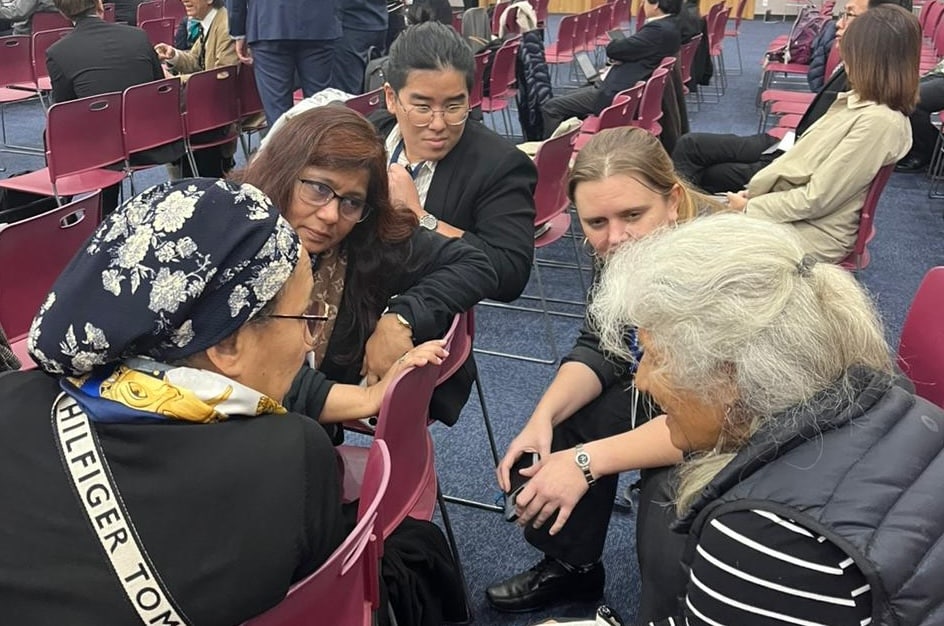
Recognizing that the UN Global Framework on Chemicals (GFC) provides an opportunity to advance the vital work to protect human and environmental health from toxic chemicals and waste, representatives from five international civil society networks – IPEN, Pesticide Action Network International (PAN), Women Engage for a Common Future (WECF), Health Care Without Harm (HCWH), and International Trade Union Confederation (ITUC) came together to develop a Common Statement, aiming to encourage other organizations globally to join us as signatories.
READ AND ENDORSE THE COMMON STATEMENT (IN ENGLISH, FRENCH, SPANISH, ARABIC AND RUSSIAN) FOR YOUR ORGAIZATION HERE.
Background
In September 2023, the Global Framework on Chemicals – For a planet free of harm from chemicals and waste was adopted by delegates from over 100 governments together with representatives of civil society and the private sector at the fifth International Conference on Chemicals Management (ICCM5) in Bonn, Germany.
The GFC is the successor of the Strategic Approach to International Chemicals Management (SAICM), a framework for global chemical safety adopted in 2006 with the intent of resolving the health and environmental crisis associated with chemical production and use by 2020. While it is widely agreed that SAICM failed to achieve this goal, civil society efforts under the SAICM umbrella made significant progress. Hundreds of civil society groups from more than 100 countries committed to developing and implementing collective, collaborative activities under SAICM and followed through with vital projects to advance protections for human health and the environment.
The GFC represents a critical opportunity for the world to work together to address the toxic chemicals and waste crisis. Its multistakeholder and multisectoral collaborative approach will be essential in promoting solutions to these urgent challenges. We invite civil society groups to join us in this Common Statement and commit to taking action to meet the aims of the GFC and forge a toxics-free future.
The GFC is accompanied by the Bonn Declaration, in which countries and stakeholders commit to “…strengthen action to tackle the crisis of pollution from chemicals and waste.” It also carries over the SAICM Emerging Policy Issues and Other Issues of Concern on an interim basis as Issues of Concern.
The scope of the Framework covers the life cycle of chemicals, including products and waste, and includes five strategic objectives and 28 targets to guide stakeholders in their efforts at all levels to address the sound management of chemicals and waste.
The aim is “to prevent or, where prevention is not feasible, minimize harm from chemicals and waste to protect the environment and human health, including that of vulnerable groups and workers.”
The GFC is a broad international policy instrument on chemicals and waste, and joins the Global Biodiversity Framework (GBF), and the Paris Agreement of the UN Framework Convention on Climate Change as humanity’s response to the triple planetary crises of biodiversity loss, climate change, and pollution.
The chemicals and waste crisis, including the plastics crisis, intersects with the climate and biodiversity crises. For example, many toxic chemicals are petrochemicals, substances produced from fossil fuels that release massive amounts of greenhouse gasses. In addition to threatening human health, chemicals also pose threats to healthy ecosystems on which biodiversity depends. An estimated 40 – 60,000 chemicals are in commerce, yet fewer than 1% have been assessed for their effects on our health or the environment. Also, due to increased cuts in independent research funding, the information deficit increases as new chemicals and formulations are introduced.
The GFC creates an opportunity for targeted, coordinated, collaborative global actions to address the chemicals and waste crisis. One measure of the success of the GFC will be how it prevents harm from chemicals and waste, as it will be critical in achieving almost all of the 2030 Sustainable Development Goals. Activities by diverse sectors from all regions will be needed to tackle these complex, global concerns.
 English
  简体中文
简体中文  Français
  Bahasa Indonesia
  Русский
  Español
  العربية
  Shqip
Shqip  Հայերեն
  Azərbaycan dili
  Беларуская мова
  Български
  Cantonese
  Hrvatski
  Čeština
  ქართული
  Deutsch
  Ελληνικά
  हिन्दी
  Қазақ тілі
  한국어
한국어  Кыргызча
  Bahasa Melayu
  नेपाली
  Português do Brasil
  Kiswahili
  Svenska
  Tagalog
  தமிழ்
தமிழ்  ไทย
ไทย  Українська
  Tiếng Việt