


IPEN’s Role: Ending Mercury Contamination
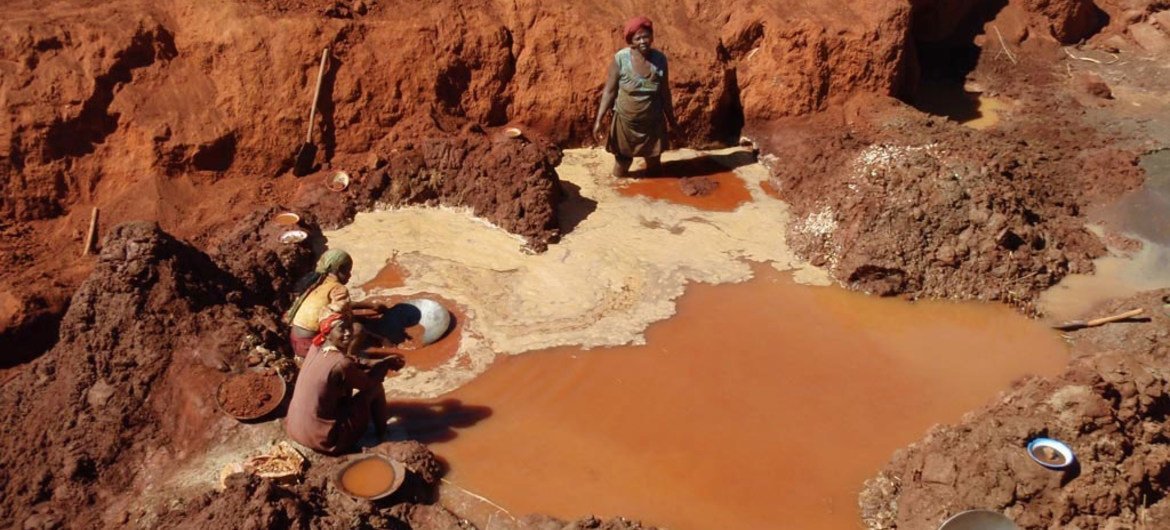
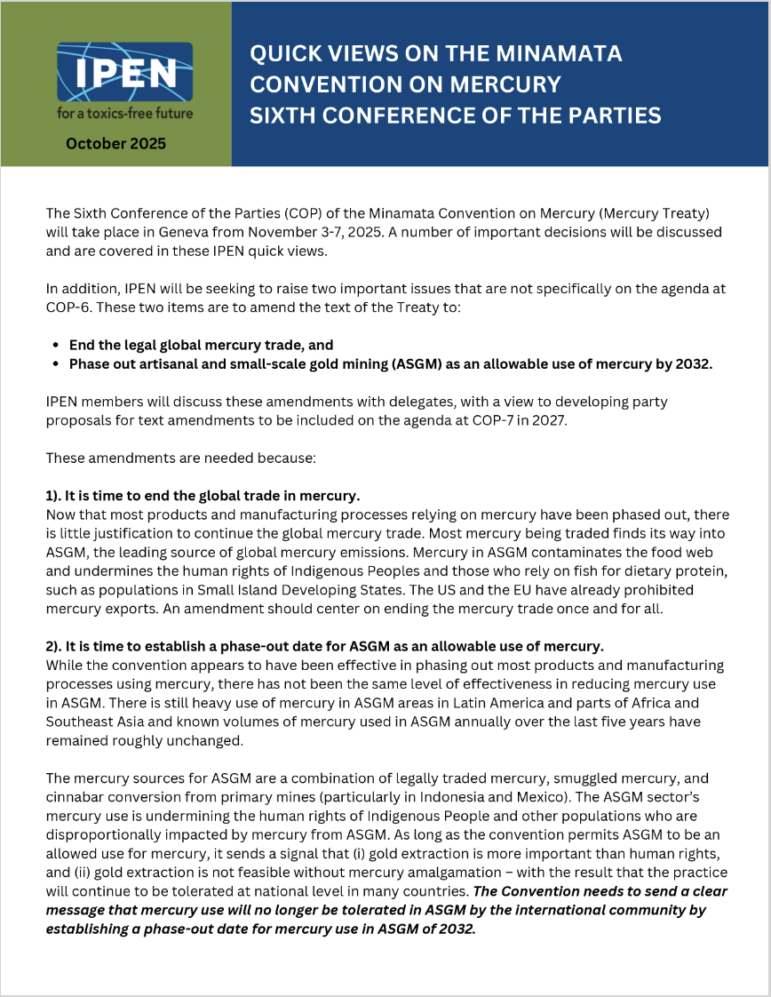
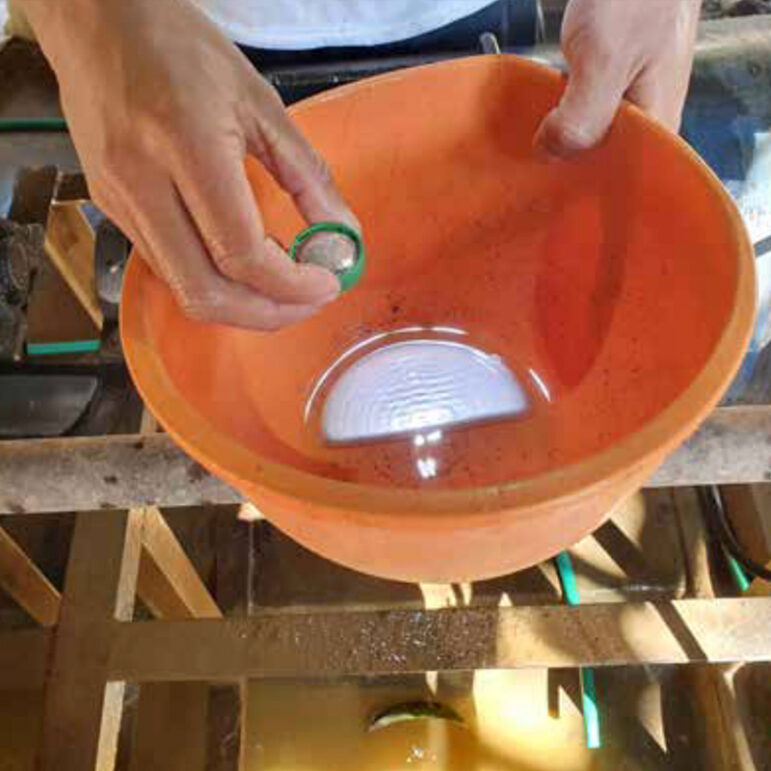
IPEN has long been the leading global network working to end toxic threats from the heavy metal mercury. IPEN’s work has contributed to global and national policies aimed to protect human health and the environment from mercury, including its use in artisanal and small-scale gold mining (ASGM).
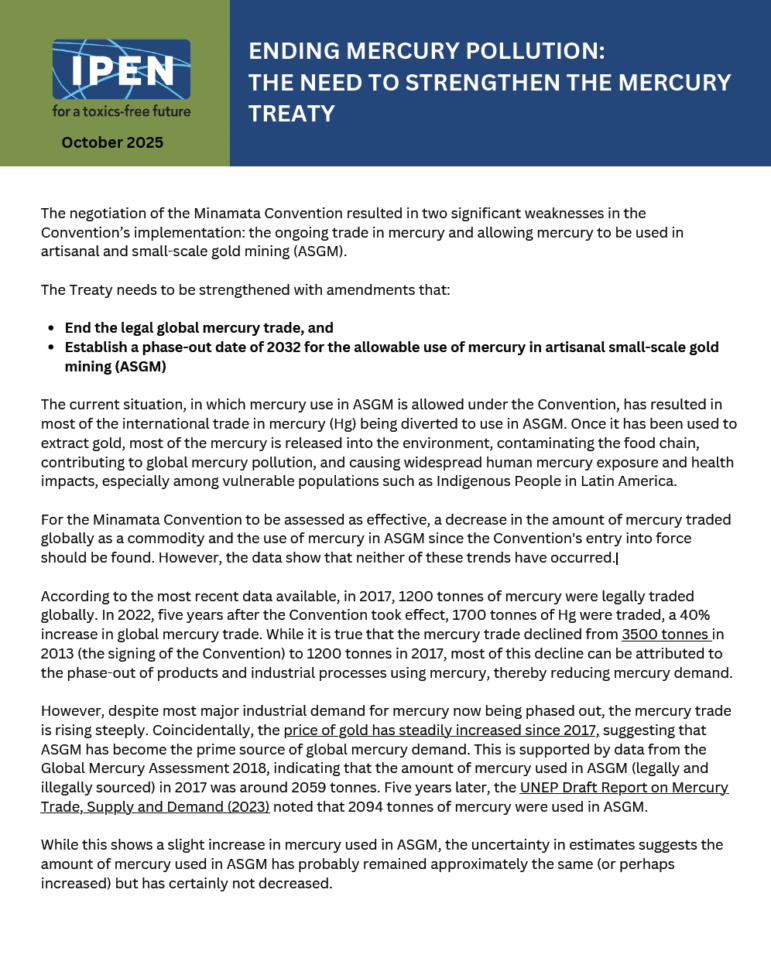
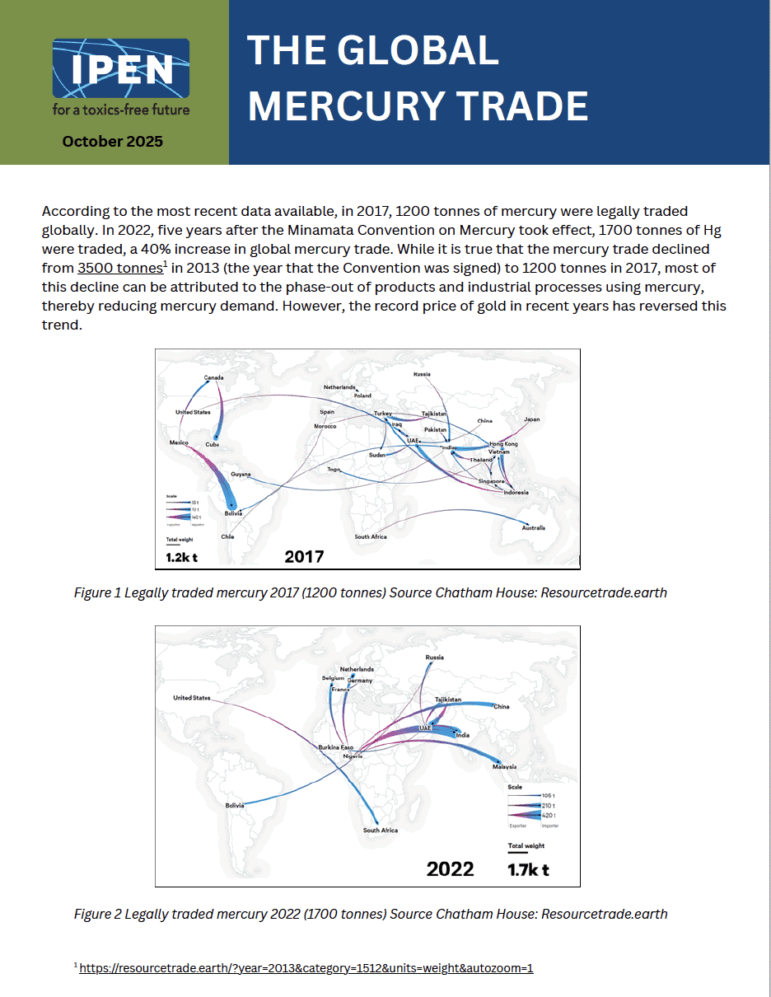
Beginning in 2006, IPEN joined in global policy work toward the development and implementation of an international treaty to prevent mercury pollution. Today, IPEN works to strengthen the Mercury Treaty, calling for a phase-out on mercury used in ASGM and an end to the global mercury trade.
From the start, IPEN actively worked with survivors of the Minamata chemical disaster in advocating for a meaningful agreement. In 1932, a Japanese chemical company, Chisso Corporation, began dumping mercury in the bay off the small southwestern factory town of Minamata. The practice lasted for more than 35 years, resulting in highly contaminated seafood, a primary source of protein for local residents.
By the late 1940s, a debilitating illness began to affect the townspeople, with symptoms of central nervous system damage including numbness, excruciating headaches, and impaired balance. In some cases, the illness progressed rapidly, leading to difficulty hearing, seeing, and swallowing, followed by convulsions, coma, and death. In 1957, doctors identified the source as mercury-tainted fish from the bay and began referring to the illness as Minamata Disease.
It is difficult to know the full impact of the contamination as both the company and the government minimized the problem for decades. A 2009 report noted that 200,000 people were affected, with hundreds, if not thousands of deaths. A 2016 report noted that 70,000 current residents of Minamata were considered “sufferers” of mercury poisoning, with more than 2,000 officially recognized as “Minamata patients.”
In 2011, nations met for the second time to negotiate a mercury treaty (INC-2) in Japan. At the meeting, IPEN released a solidarity statement with Minamata survivors calling for a meaningful mercury treaty named in their honor and that included provisions to hold polluters accountable. The Honoring Minamata statement was ultimately signed by more than 200 organizations and individuals from more than 70 countries. In 2013, IPEN released its Minamata Declaration on Toxic Metals, affirming IPEN members’ “…commitment to work toward ensuring that toxic metals such as mercury, lead and cadmium no longer pollute our local and global environments, and no longer contaminate our communities, our food, our bodies, or the bodies of our children and future generations.”
During the negotiations toward the Convention and throughout the Convention conferences (COPs), IPEN advocacy helped guide and educate delegates on the global concerns around mercury pollution. Some highlights included:
- At the first negotiating meeting (INC-1) in 2010, IPEN released “Views on a Global Mercury Treaty.” IPEN conducted hair sampling of delegates and other participants to test for mercury levels, finding high levels in excess of US regulatory standards in more than one-third of people tested, with higher average levels in people from low- and middle-income countries. IPEN also brought more than 200 servings of perch, a fish so highly contaminated by mercury that Swedish health authorities recommend pregnant women should eat no more than 2-3 servings per year.
- At the INC-4 in 2012, IPEN and the Global Indigenous People’s Caucus joined in calling for a meaningful Treaty including mandated global controls on the mercury trade, ending the use of mercury in gold mining, and holding polluters accountable, among other measures.
- At INC-6 in 2014, IPEN released An Introduction to Mercury Pollution and the Minamata Convention on Mercury. IPEN also highlighted its upcoming work to implement the Treaty under a major UN grant for IPEN’s International Mercury Treaty Enabling Activities Program (IMEAP).
- At the first Minamata Conference of Parties (COP-1) in 2017, IPEN released its report on mercury contamination of women from 25 countries from its study of hair sampling from 1044 women of reproductive age in 37 locations across 25 countries. IPEN also took hair samples of 180 COP-1 delegates from 75 countries. The findings revealed all participants had mercury in their bodies, with more than half at levels exceeding US health advisory standards.
- At COP-2, IPEN released a report on Mercury Threats to Women and Children Across Three Oceans, collecting data on 757 women from 21 countries. At COP-3, IPEN presented research and analysis on the need to address mercury-contaminated sites, elevating the issue for adoption by the Convention.
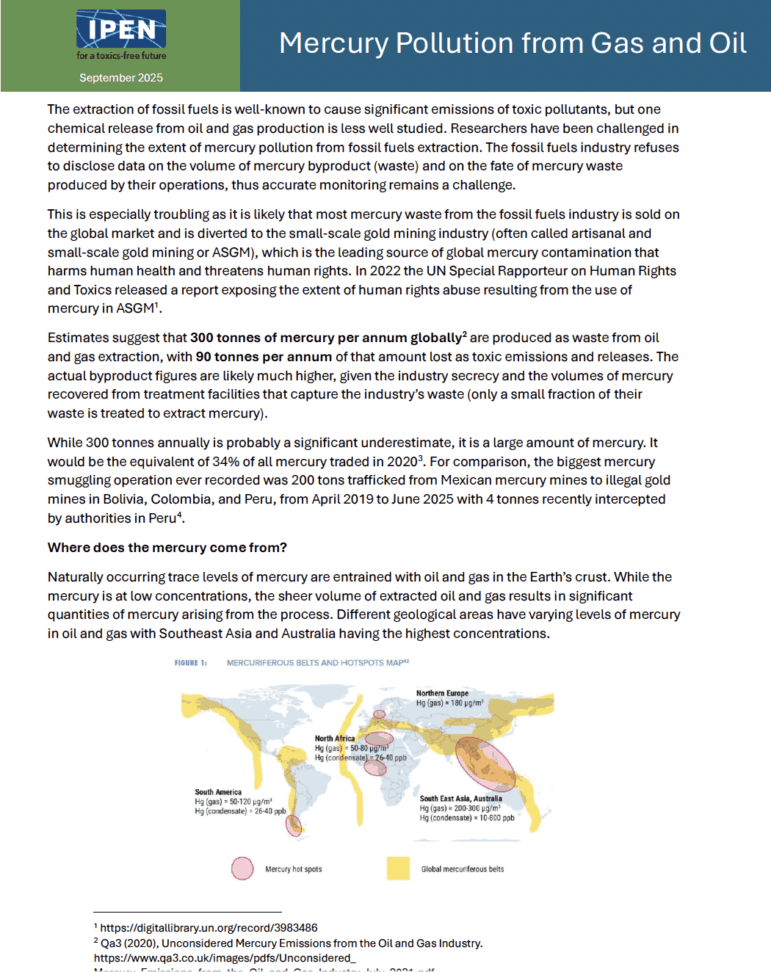
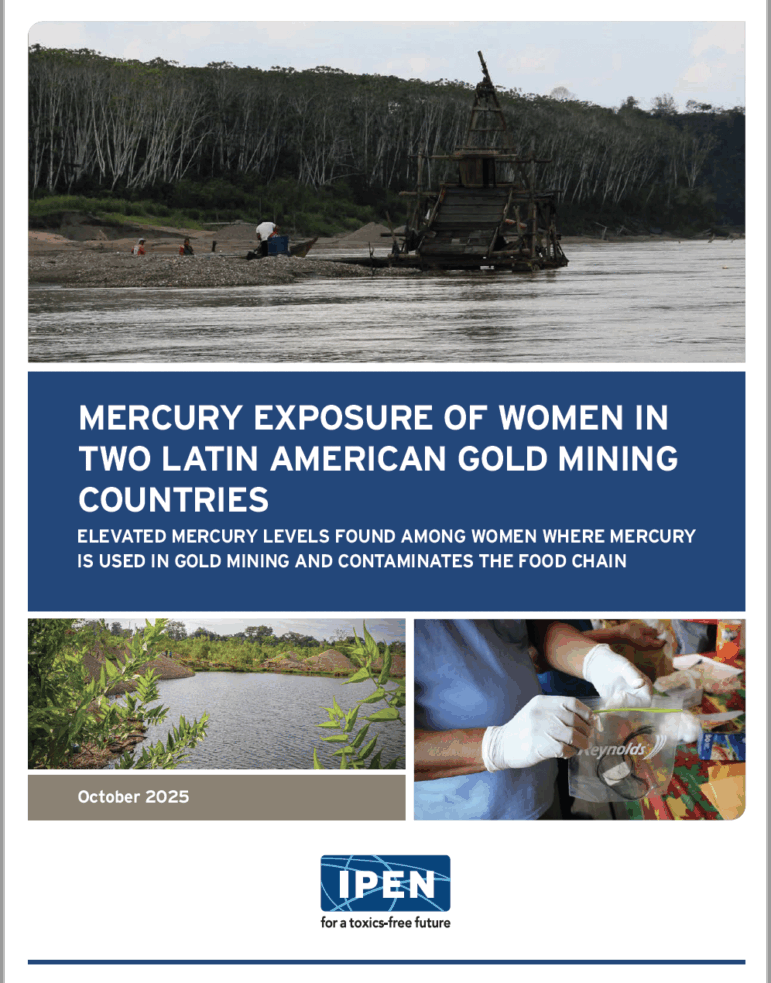
Today, IPEN remains the leading global network contributing to the Minamata Convention on Mercury, calling for strengthening the Treaty to end the trade of mercury and its use in small-scale gold mining. IPEN has also conducted mercury monitoring studies in Latin American Indigenous communities, identified global mercury hotspots, and produced studies monitoring fish for mercury, with ongoing research and scientific projects.