

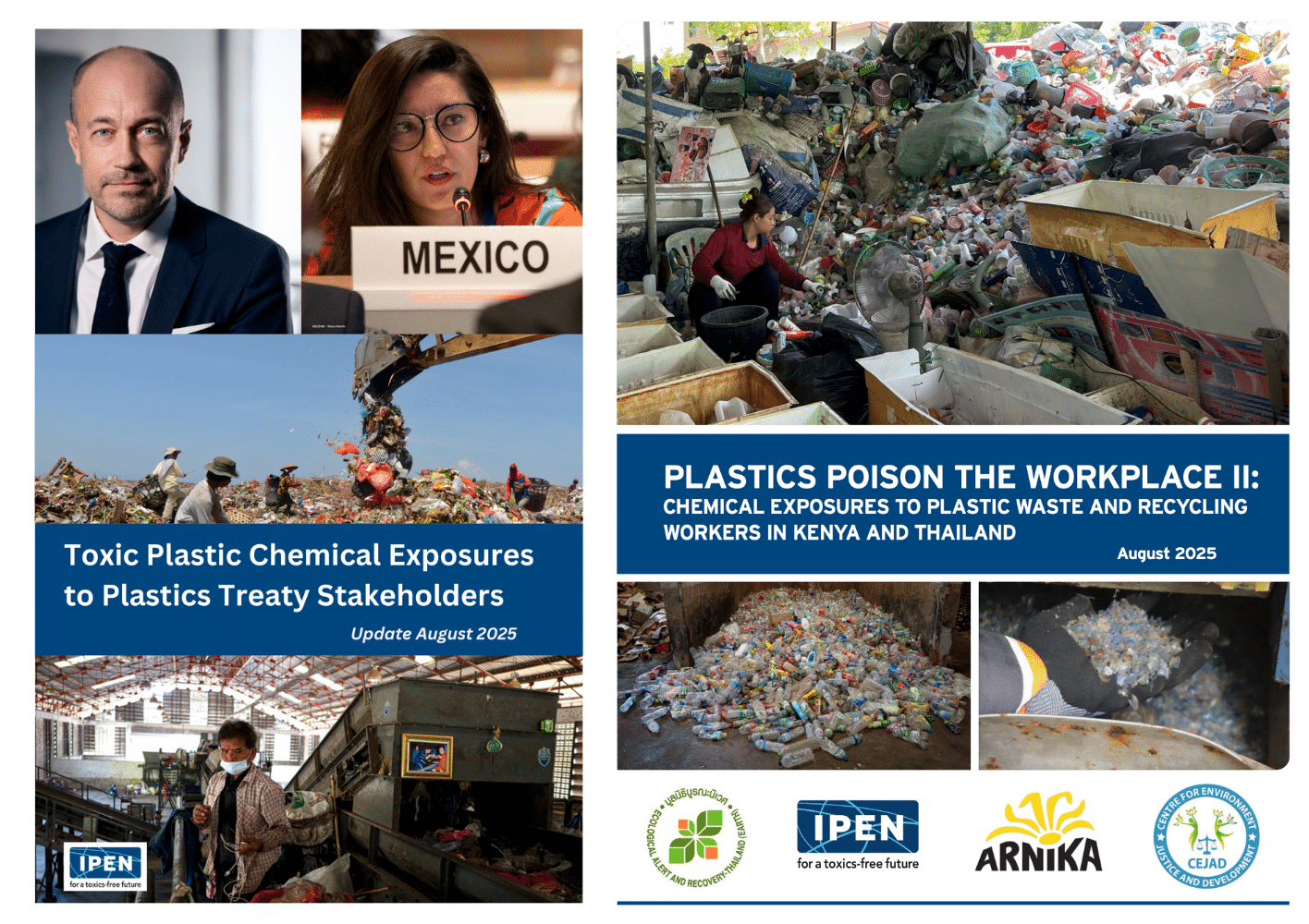
In 2024, IPEN member EARTH in Thailand coordinated with plastic recycling workers, plastic waste workers, and workers in other settings, such as office settings or other settings without occupational exposures to plastic waste to assess their exposures to chemicals in plastics. Following this work, IPEN member Centre for Environment, Justice and Development (CEJAD) in Kenya developed a similar project with plastic waste and recycling workers there.
IPEN also engaged global participants connected to the Plastics Treaty INC-5.2 negotiations who work in settings without significant occupational exposure to plastics to assess their exposures to chemicals in plastics.
Together the findings show that all workers experienced chemical exposures, with plastic waste and recycling workers exposed to more chemicals than the other workers.
See more in the plastic workers studies and the reports on the global participants, below.
See more IPEN studies and resources for INC-5.2 here.
Read about the studies in The New York Times.
See the August 2025 press release and the November 2024 press release.

 English
  简体中文
简体中文  Français
  Bahasa Indonesia
  Русский
  Español
  العربية
  Shqip
Shqip  Հայերեն
  Azərbaycan dili
  Беларуская мова
  Български
  Cantonese
  Hrvatski
  Čeština
  ქართული
  Deutsch
  Ελληνικά
  हिन्दी
  Қазақ тілі
  한국어
한국어  Кыргызча
  Bahasa Melayu
  नेपाली
  Português do Brasil
  Kiswahili
  Svenska
  Tagalog
  தமிழ்
தமிழ்  ไทย
ไทย  Українська
  Tiếng Việt