
IPEN Participating Organizations Champion Lead Paint Elimination, Children’s Health Protection in 2025 International Lead Poisoning Prevention Week
“No safe level: act now to end lead exposure”
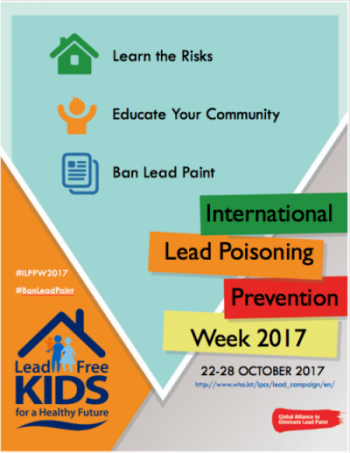
The International Pollutants Elimination Network (IPEN) and its participating organizations (POs) worldwide will join forces with their local and global partners for the 2025 International Lead Poisoning Prevention Week (ILPPW) on October 19-25. Various activities are being planned to raise awareness about the health effects of lead exposure; highlight the efforts of countries and partners to prevent lead exposure, particularly in children; and push for the completion of action to eliminate lead paint through regulatory action at the country level. IPENers, in particular, will advocate for the promulgation and enforcement of lead paint bans, and the listing of lead chromates in the Rotterdam Convention to control the global trade of these lead-based pigments and lead paints.
Below is a snapshot of the activities being planned by IPEN POs for the 13th edition of the ILPPW.

SOUTHEAST AND EAST ASIA
INDONESIA.The Nexus3 Foundation will conduct activities beyond raising public awareness to strengthen multi-stakeholdercollaboration among government, industry and civil society players to push for the elusive regulation banning lead in paint in Indonesia. Special attention will be given to regulatory advocacy, including encouraging procurement requirements for lead-safe paints in public infrastructure.
MALAYSIA. The Consumers’ Association of Penang (CAP) will hold a press conference to advocate for a legally-binding lead paint law in Malaysia, a key policy goal that is also backed by the Malaysian Paint & Coating Manufacturers’ Association (MPCMA). CAP will write to concerned government offices to insist on banning lead in paint manufacturing, as well as to promote the listing of lead chromates under the Rotterdam Convention using past lead paint studies to justify why this is a priority concern.
PHILIPPINES. BAN Toxics will organize activities in line with its campaign theme “Towards a lead-free future: Safeguarding children’s health through awareness-raising, research and policy advocacy.”
PHILIPPINES. The EcoWaste Coalition and the Environmental Management Bureau will hold a joint forum to discuss the various sources of lead exposure, their impacts on the health of vulnerable populations and ways to prevent poisoning, and to celebrate the progress of eliminating lead paint in the country as well as the prevailing challenges and the ways forward, including the proposed listing of lead chromates in the Rotterdam Convention. It will release the updated “Public Notice on Lead Containing Paints” co-published with the Philippine Paint & Coatings Association, Inc. (PPCAI) and IPEN, and launch a new lead paint study with the Lead Exposure Elimination Project (LEEP).
PHILIPPINES. The Interfacing Development Interventions for Sustainability (IDIS), in support of Davao City’s Ordinance No. 0461-18, series of 2018 (an ordinance requiring the use of lead-safe paints in construction, maintenance, and renovation projects), will conduct a community mural painting activity at Kasadya Park using certified lead-safe paints to creatively express the call for lead- and toxic-free communities in the city. Through such participatory and art-based initiatives, people are inspired to take an active role in shaping their surroundings, strengthening their connection to the place, and fostering a culture of shared responsibility toward a cleaner, healthier, and more vibrant city.
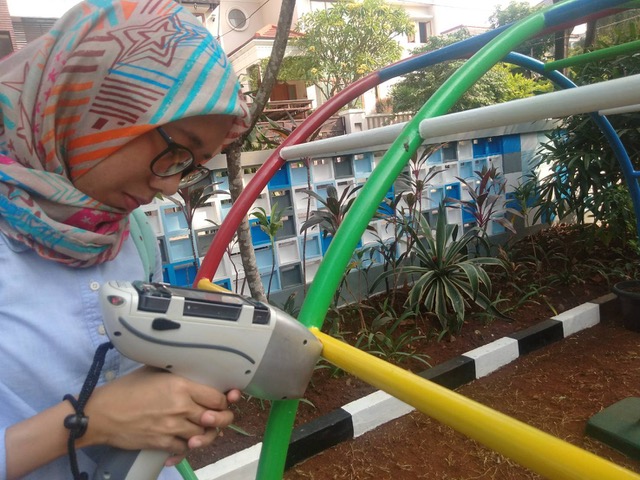
THAILAND. The Ecological Alert and Recovery – Thailand (EARTH) will measure lead in the environment of child development centers and/or kindergartens under the Bangkok Metropolitan Administration (BMA). With the aid of an X-Ray Fluorescence (XRF) analyzer, the group will check on the lead content of paints in learning, dining and play areas. The collaborative study to be undertaken by EARTH with BMA, Institute of Child and Family Development, Mahidol University and Ramathibodi Hospital seeks to enhance public awareness about the dangers of lead exposure from paints, and strengthen regulatory control on lead use in paints in Thailand.
VIETNAM. The Research Centre for Gender, Family and Environment in Development (CGFED) will organize a youth-led communication campaign on lead paint. With the participation of students from the Academy of Journalism and Communication, articles, infographics and social media posts will be developed and disseminated through school newsletters, Facebook and other platforms. The students will also co-organize a public exhibition at the Academy, showcasing their creative outputs on lead hazards and lead poisoning prevention.
SOUTH ASIA
BANGLADESH. The Environment and Social Development Organization (ESDO) will organize activities focused on raising awareness and advocating for stronger lead regulations. Key events include a human chain in Dhaka with over 100 volunteers, a media briefing to share research findings on lead content in decorative paints, and a youth event to highlight the dangers of childhood lead poisoning and increase awareness among the public and media. A policy dialogue with stakeholders from the government and the industry is also being planned to push for a standard on lead in industrial paints. Continuous social media and SMS campaigns will also run throughout the week to engage the public and promote lead poisoning prevention.
INDIA. Toxics Link will conduct an awareness campaign on lead in products. It will produce a concise policy brief compiling all existing Indian regulations on lead in products and will run a week-long information drive during the week of action using infographics, short videos, and simple messaging to inform the public, media, and regulators about the law, why it matters, and how to ensure compliance.
NEPAL. The Center for Public Health and Environmental Development (CEPHED) will organize a policy dialogue on blood lead levels with support from the WHO Country Office for Nepal; a campaign for the listing of lead chromates in the Rotterdam Convention and press event with support from IPEN; and a study on lead in cosmetic, personal hygiene and traditional products such as “kajal,” toothpaste and “sindoor” with support from the Lead Exposure Elimination Project (LEEP). CEPHED will raise public awareness on lead hazards and poisoning prevention, and reach out to government officials to advocate for necessary regulations.
SRI LANKA. The Centre for Environmental Justice (CEJ) will generate data on lead chromate imports and possible use in food adulteration; advocate for strong laws and standards against lead-containing imported turmeric powder; and raise awareness about adulterated turmeric and encourage use of home-made turmeric powder. At the same time, CEJ will urge concerned ministries to act and stop lead adulteration of turmeric powder, a widely-used spice in Sri Lanka and neighboring countries.
MIDDLE EAST AND NORTH AFRICA
JORDAN. The Land and Human to Advocate Progress (LHAP) will work with the Ministry of Environment and Ministry of Health to formulate a national legislation phasing out lead in paint. It will further work with the Ministry of Environment to support the listing of lead chromates in the Rotterdam Convention. Community consultations will also be held to raise awareness about lead toxicity and lead poisoning prevention.
TUNISIA. The Association on Environmental Education for Future Generations (AEEFG) will advocate for the adoption of a lead paint ban in Tunisia, as well as promote the inclusion of lead chromates in the Rotterdam Convention, to protect public health and the environment. It will also publicize the results of its study on lead in cosmetics and school furniture.
ANGLOPHONE AFRICA
ETHIOPIA. The Pesticide Action Nexus Association (PAN-Ethiopia) will step up its campaign to get lead chromates listed in the Rotterdam Convention. It will prepare information materials about lead chromates and the importance of having these pigments listed in the Rotterdam Convention, and organize a workshop for key stakeholders. It will also put out a press release and disseminate information using various pathways, including social media.
KENYA. With the theme “Towards a lead-free Kenya: Accelerating action on lead paint,” the Centre for Environment Justice and Development (CEJAD) will carry out a week-long awareness and advocacy campaign aimed at mobilizing the public and promoting support for the enforcement of Kenya’s lead paint regulations and the global control of the trade in lead chromates through the Rotterdam Convention.
LIBERIA. The Pollution Control Association of Liberia (POCAL) will conduct awareness-raising activities on lead paint and community involvement to prevent and end lead exposure, especially with the adoption of the country’s Lead Paint Regulations in January 2025.
NIGERIA. The Centre for Earth Works (CFEW) will organize a social media and public sensitization campaign on the harmful effects of lead exposure with focus on lead-based paints. A school engagement will also be held to educate the children on lead poisoning, exposure routes and sources, and preventive measures.
NIGERIA. The Sustainable Research and Action for Environmental Development (SRADev) will raise awareness on the specific risks posed by lead chromate in paints; develop a simplified technical concept brief on risk assessment approaches; hold a mini-consultation to validate the brief and promote action planning; and present key messages during ILPPW through small-scale media event or digital release.
RWANDA. The Association Rwandaise des Ecologistes (ARECO-RWANDA NZIZA) will raise awareness about lead poisoning risks and accelerate the shift to lead-free paints in Rwanda. Key activities include preparatory and consultative meetings with stakeholders; workshop on the dangers of lead exposure and the benefits of lead-free alternatives; and public awareness-raising.
TANZANIA. The Agenda – for Environment and Responsible Development (Agenda) will develop a plan to accelerate lead paint elimination in Tanzania through the improved enforcement of the standard adopted in 2017 in collaboration with relevant regulatory bodies. It will also organize a media event to raise awareness about the effects of lead paint to humans and the environment, the status of lead paint in the country, and the enforcement plan to achieve the envisioned “No Lead Paint” in Tanzania.
TANZANIA. The Green Planet Plan (GPP) will organize a multi-sectoral workshop in Dodoma City on October 25 to address the critical public health challenge of lead exposure through paints, cosmetics, spices, and other consumer products. Prior to the workshop, between October 13 to 24, the group will arrange for a national media tour, paint industry visits, and student awareness sessions, as well conduct a social media campaign (#LeadFreeTanzania) to build momentum and reach over 500,000 Tanzanians.
TANZANIA. The Networking for Society Development Organization (NESODO), with support from the Lead Exposure Elimination Project (LEEP), will implement a community-based project in Mwanza, to identify and reduce sources of lead exposure from paints, spices, and cosmetics. NESODO will disseminate social media awareness messages using IPEN, WHO, and LEEP materials; conduct sampling and testing of paints, spices, and cosmetics sold in Mwanza to detect lead contamination; organize a stakeholders’ workshop to share preliminary findings and discuss policy actions to promote lead-free products.
UGANDA. The Western Media for Environment and Conservation (WEMECO) will campaign for “lead-free homes, healthy futures” to protect children and families from the dangers of lead in paint in cooperation with its seven media partners.
ZAMBIA. The Children’s Environmental Health Foundation (CEHF) will conduct activities in support of the country’s ongoing efforts to set compulsory regulations and standards for lead in paint. It will raise awareness on lead exposure risks, gather stakeholders for a roundtable discussion on ending childhood lead poisoning, and reach out to policy makers and other stakeholders.
FRANCOPHONE AFRICA
BENIN. The Groupe d’Action pour la Promotion et la Protection de la Flore et la Faune (GAPROFFA) will push for the urgent signing of a pending decree regulating lead in paint to protect the Beninese people. Aside from informal advocacy, high level meetings will be arranged with three ministries to push them into supporting the enactment of the decree.
CAMEROON. The Centre de Recherche et d’Education pour le Développement (CREPD) will work with the country’s Designated National Authority to prepare for the next steps now that three countries from two regions, including Cameroon, have submitted notifications nominating lead chromates for listing as hazardous chemicals in the Rotterdam Convention.
CAMEROON. The Jeunes Volontaires pour l’Environnement (YVE) will hold a multisectoral campaign aimed at raising awareness about the health and environmental risks related to the use of products containing lead with the goal of strengthening the enforcement of regulations. Key activities include stakeholders’ dialogue, local media announcements and interviews, a digital campaign, school and community outreach, and training of youth and campaign ambassadors.
COTE D’IVOIRE. The Jeunes Volontaires pour l’Environnement (JVE) will use various social media platforms to widely disseminate advocacy messages. It will highlight the results of past studies conducted on lead-related issues to raise consumer awareness about the health and environmental effects of lead exposure, and spark a citizen movement in favor of adopting strict regulations on lead-free paint.
DEMOCRATIC REPUBLIC OF THE CONGO. The Appui aux Initiatives Communautaire de Conservation de l’Environnement et de Développement Durable (AICED) will highlight the threat of lead in paint to children’s health and ask decision makers to require transparency in paint labeling information.
DEMOCRATIC REPUBLIC OF THE CONGO. The Solidarité pour la Protection des Droits de l’Enfant (SOPRODE) will hold a hybrid campaign in Bukavu and surrounding areas to raise community awareness about the dangers of lead in paint. Educational activities in markets, schools and health centers; distribution of information materials; and mobilization meetings with local authorities and technical services are among the activities being planned.
NIGER. The Association Vie & Développement (AVD-Kowa Murna) will popularize the newly-adopted Decree No. 2025-392, which establishes a maximum limit of 90 ppm on lead in all paints manufactured, imported, sold or used in Niger.
LATIN AMERICA AND THE CARIBBEAN
ARGENTINA. Taller Ecologista will analyze enamel paints and present the results to the authorities with the goal of increasing official inspections, updating regulations, and reducing permissible lead content in paint.
COLOMBIA. Asociación Colnodo will publish a guide towards the elimination of lead in paint.
JAMAICA. The Caribbean Poison Information Center (CARPIN) will focus on strengthening public policies to prevent lead exposure, particularly for the most vulnerable, the children and their families. The group will conduct a webinar and a social media campaign, and put out press release for this purpose.
MEXICO. Casa Cem will participate in the signing event of the final draft of the Mexican Standard on Paints and Varnishes (NOM-003-SSA1-2006) regarding the environmental health and sanitary requirements for the labeling of paints, inks, varnishes, lacquers, and enamels. It will also put out a press release or organize a press conference about the standard and what this means for the people of Mexico in terms of reducing lead exposure.
EASTERN EUROPE, CAUCASUS, AND CENTRAL ASIA
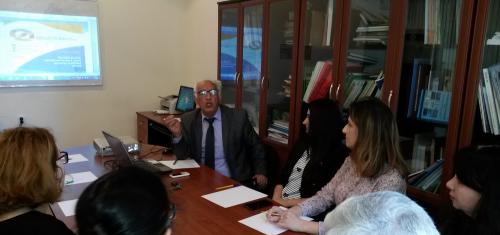
ARMENIA. To increase public awareness about lead paint and lead poisoning prevention, Armenian Women for Health and Healthy Environment (AWHHE) will translate and disseminate IPEN’s social media cards and a short video in Armenian language. Next week, AWHHE will organize a webinar for consumers focusing on mothers and teachers to highlight the negative health impacts of lead exposure to children.
GEORGIA. The Gamarjoba will undertake a national information campaign to increase people’s awareness about the dangers of lead paint and the existing lead paint regulations in Georgia, as well as advocate for the listing of lead chromates in the Rotterdam Convention.
TAJIKISTAN. Under the theme “No lead paint pollution in Tajikistan,” the Foundation in Support of Civil Initiatives (FSCI) will implement activities to promote the inclusion of lead chromates in the Rotterdam Convention, including meetings with governmental bodies, dissemination of relevant materials, and the conduct of an information campaign.
OTHER REGIONS
AUSTRALIA. At its annual strategy meeting, the Lead Group will announce the winners of the Volcano Art Prize, a yearly art/photo/short film lead-safety and climate-safety competition, and plan for the best promotion of lead testing (including with LEAD Group Kits and by portable bone lead XRF), lead poisoning treatment (including by oral EDTA) and activities organized by the Lead Exposure and Prevention Alliance UK, Partnership for a Lead Free Future, and the Lead Paint Alliance.
 English
  简体中文
简体中文  Français
  Bahasa Indonesia
  Русский
  Español
  العربية
  Shqip
Shqip  Հայերեն
  Azərbaycan dili
  Беларуская мова
  Български
  Cantonese
  Hrvatski
  Čeština
  ქართული
  Deutsch
  Ελληνικά
  हिन्दी
  Қазақ тілі
  한국어
한국어  Кыргызча
  Bahasa Melayu
  नेपाली
  Português do Brasil
  Kiswahili
  Svenska
  Tagalog
  தமிழ்
தமிழ்  ไทย
ไทย  Українська
  Tiếng Việt