

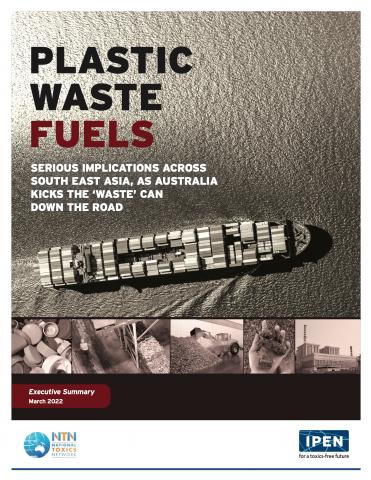
IPEN studies show how policy is driving massive investment in plastic waste-to-fuel processing, and that exports are threatening waste management in ASEAN countries and undermining the Basel Convention and climate change commitments.
Key Points
- Australia’s world-first waste export ban is a trojan horse policy to continue exporting plastic waste redefined as fuel, otherwise known as refuse- derived fuel (RDF). The country’s plastic waste-fuel export model effectively shatters Australia’s pledge to cease exports of waste to ASEAN states.
- The policy ignores South-East Asian countries’ efforts to resist international waste dumping and pollution colonisation.
- It also undermines the objective of the recently ratified amendment to the Basel Convention on the Control of Transboundary Movements of Hazardous Wastes and their Disposal to stop trade in hazardous waste from richer to poorer countries, as ‘fuel products’ are not regulated by the Convention.
- As the hazards associated with plastic waste fuel and RDF technology are not publicly disclosed, substantial risk and threats to public health and the environment are imminent.
- The burning of plastic waste as fuel releases large volumes of greenhouse gases and toxic air pollutants, exacerbating the existing global climate and plastic pollution crisis. It also entrenches the escalating production of plastic and waste.
- Indonesia, Malaysia and the Philippines have insufficient regulatory, monitoring and enforcement capacity to manage plastic waste fuel hazards. The situation in these countries is likely to reflect the picture across South-East Asia, indicating that RDF trade should be halted as it will lead to environmental contamination and public health risks for importing countries. ASEAN countries are already struggling to manage burgeoning domestic waste streams and implement standards and laws to control waste impacts.
- Australian customs regulators have instructed RDF exporters that they may require a hazardous waste export licence to ship their plastic waste fuel.

 English
  简体中文
简体中文  Français
  Bahasa Indonesia
  Русский
  Español
  العربية
  Shqip
Shqip  Հայերեն
  Azərbaycan dili
  Беларуская мова
  Български
  Cantonese
  Hrvatski
  Čeština
  ქართული
  Deutsch
  Ελληνικά
  हिन्दी
  Қазақ тілі
  한국어
한국어  Кыргызча
  Bahasa Melayu
  नेपाली
  Português do Brasil
  Kiswahili
  Svenska
  Tagalog
  தமிழ்
தமிழ்  ไทย
ไทย  Українська
  Tiếng Việt