
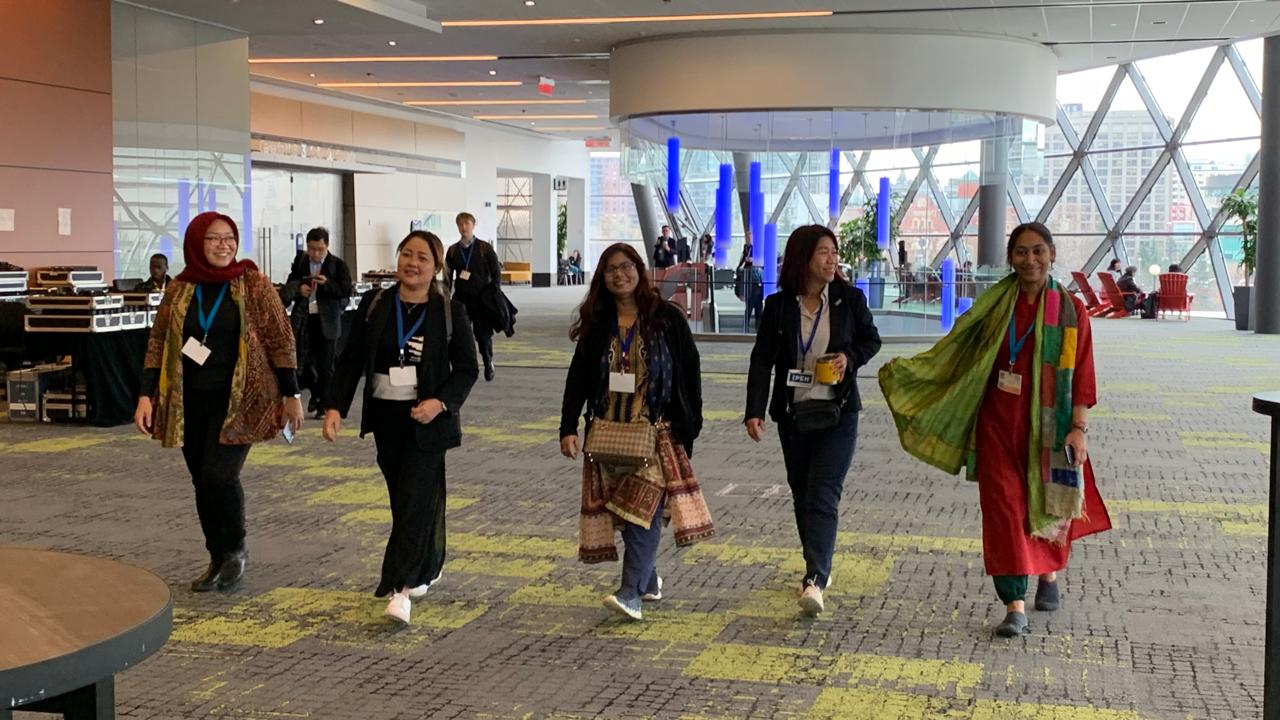
four women striding down a hall at a global policy meeting

Mises à jour des membres

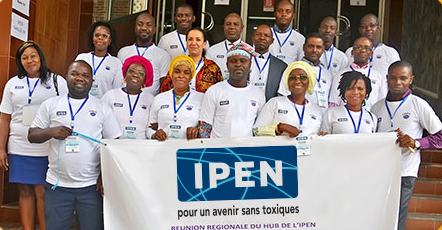
Un groupe de personnes se tient à l'extérieur d'un bâtiment, portant des chemises blanches assorties et des badges nominatifs. Ils tiennent une banderole sur laquelle on peut lire « IPEN pour un avenir sans toxiques » avec un texte supplémentaire en dessous.
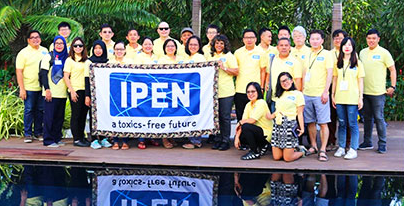
Un groupe de personnes portant des chemises jaunes se tient à l'extérieur, près d'une piscine, et tient une banderole sur laquelle on peut lire "IPEN - un avenir sans produits toxiques", avec des arbres et de la verdure à l'arrière-plan.
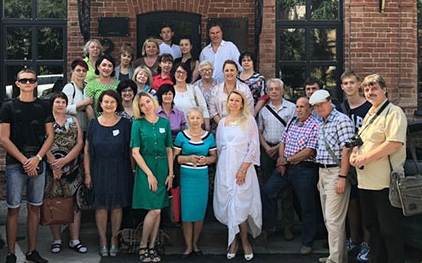
A group of about 30 people of various ages stands together posing for a photo in front of a building with red brick walls and dark doors. Most people are smiling and looking at the camera.

IPEN members, called Participating Organizations (POs), work globally and in their countries and regions to end threats to health and the environment from toxic chemicals and waste. Check this page often for regional achievements and recent highlights and see more about IPEN’s Regional Hubs.

Europe centrale, orientale et occidentale

In Bulgaria, following a long-term campaign by IPEN PO Za Zemiata, the Supreme Administrative Court ruled against the controversial plastic waste (RDF) fueled incineration plant project planned for the center of the capital city, Sofia. Following a prolonged legal battle, this ruling highlighted significant deficiencies in public participation and health risk assessments by the authorities.

Video: Hear Danita Zarichinova describe the campaign and the court victory

Asie du Sud-Est et Asie de l'Est

In Ratchaburi Province, Thailand, the community will receive 22 million baht (approx. $700,000) in compensation for health and environmental damage caused over decades by the Wax Garbage Recycle Centre Company. This landmark ruling marks Thailand’s first successful ecological class action to secure compensation from a corporate polluter. IPEN PO Ecological Alert and Recovery–Thailand (EARTH) has for many years provided scientific, legal, and advocacy support to the affected community and continues pursuing further compensation. For this work and more, EARTH Director Penchom Saetang was recognized for the 2025 MIRROR50 ‘Change Maker’ award

Amérique Latine et Caraïbes

In Colombia, IPEN PO Colnodo’s long-term efforts successfully won a national ban on the manufacture, import, and sales of lead paint. Colnodo’s work included research, advocacy, awareness-raising, and partnerships with health organizations and national authorities.

Eastern Europe, the Caucasus and Central Asia

In the Kyrgyz Republic, the government adopted regulations developed by IPEN PO Independent Ecological Expertise (IEE) to protect human health and the environment from hazardous chemicals. The policy won a Gold Award from the Future Policy Awards

Afrique anglophone

In South Africa, IPEN PO groundWork won a major victory when the Thor Chemical company was forced to send its toxic waste back to the EU for cleanup. For many years groundWork efforts included documenting toxic impacts, supporting affected communities and workers, and pressing for a national hazardous waste policy. Based in the UK, in the 1970s Thor Chemical was ordered by the British government to close or clean up its polluting mercury recycling operations. Instead, the company moved the facility to rural South Africa and for decades polluted the community and poisoned its workers, leaving four workers dead and dozens sick from mercury poisoning.

Moyen-Orient et Afrique du Nord

In Tunisia, work by IPEN PO Association of Environmental Education for Future Generations (AEEFG) helped end the use of dozens of highly hazardous pesticides (HHPs). The group’s work resulted in a ban on 24 HHPs banned and led the Minister of Agriculture to end policies allowing the use of dozens more. Prior to the AEEFG campaign, Tunisia allowed farmers to use 80 HHPs, while less than 10 are allowed today.

Afrique francophone

Advocacy efforts by IPEN POs led to the successful influence of local governance in Senegal, resulting in a draft decree to eliminate mercury from dental amalgams, promoting sustainable practices that benefit the environment and public health.

Asie du Sud

In Sri Lanka, advocacy and legal work by IPEN PO Centre for Environmental Justice (CEJ) led to a historic high court ruling ordering US $1 billion in compensation for the X-Press Pearl spill, reinforcing the ‘polluter pays’ principle and highlighting the urgent need to tackle plastic pollution and toxic chemicals. CEJ and IPEN documented effects from the 2021 spill in a detailed report and CEJ continues to pursue public policy and legal remedies to hold the shipping companies accountable for damage from the spill.

IPEN (Réseau international pour l'élimination des polluants)
Résumé de la politique de confidentialité

Ce site utilise des cookies afin que nous puissions vous fournir la meilleure expérience utilisateur possible. Les informations sur les cookies sont stockées dans votre navigateur et remplissent des fonctions telles que vous reconnaître lorsque vous revenez sur notre site Web et aider notre équipe à comprendre les sections du site que vous trouvez les plus intéressantes et utiles.