

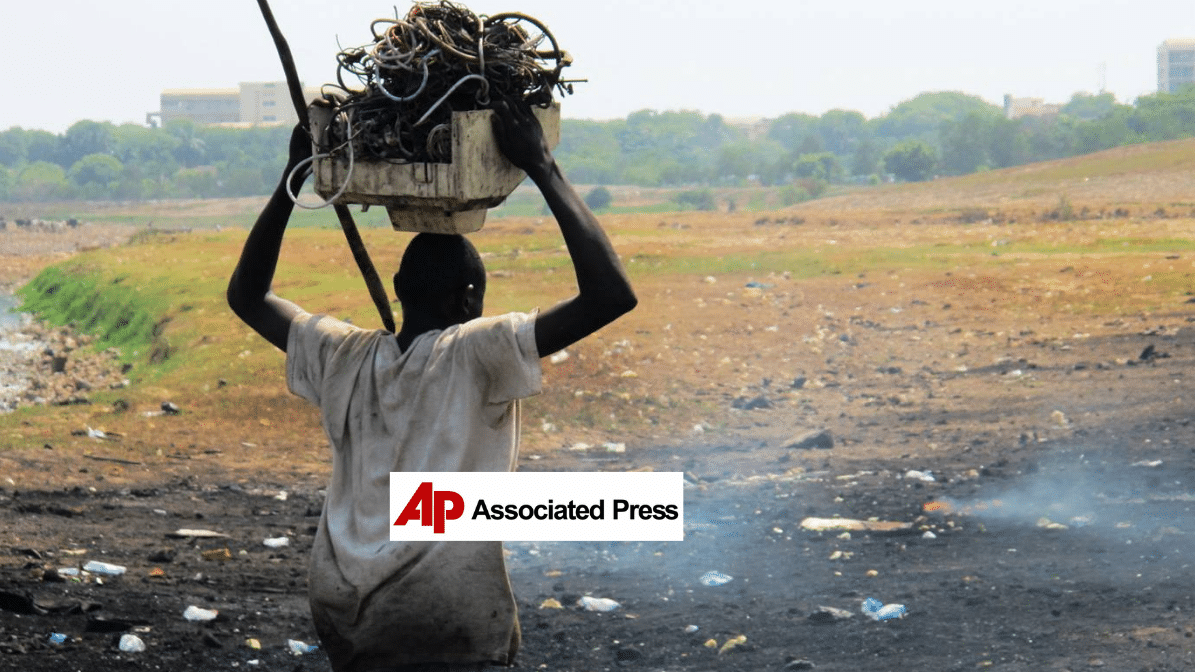
Efforts to create a landmark treaty to end global plastic pollution are advancing Monday in Nairobi as most of the world’s nations, plus petrochemical companies, environmentalists and others affected by the pollution gather to discuss draft language for the first time.
It’s the third gathering in a compressed five-meeting schedule intended to complete negotiations by the end of next year.
The current “zero” draft represents the range of viewpoints shared at the first two meetings. Björn Beeler, international coordinator for the International Pollutants Elimination Network, compared it to a large menu people haven’t ordered from yet. Nonetheless, he said, it is evident that negotiations have moved beyond plastic waste and into addressing plastic production and toxic chemicals used to make plastic.
Beeler expects the draft to grow more before it shrinks and becomes final, as delegates add in ideas in Nairobi and countries develop their positions. IPEN wants a treaty that addresses the environmental and health issues posed by chemicals in plastics as the products are used, recycled, discarded or burned as waste.
Leaders of the global plastics industry are advocating for a process called chemical or advanced recycling and said they were very disappointed the draft doesn’t have a strong focus on that. They view this as essential to solving the plastic waste crisis.
Environmental groups call it a marketing tactic to distract from real solutions like producing and using less plastic. Beyond Plastics and IPEN issued a report in October that says the process threatens the environment, the climate, human health and environmental justice.
Read the full story from the Associated Press.
 English
  简体中文
简体中文  Français
  Bahasa Indonesia
  Русский
  Español
  العربية
  Shqip
Shqip  Հայերեն
  Azərbaycan dili
  Беларуская мова
  Български
  Cantonese
  Hrvatski
  Čeština
  ქართული
  Deutsch
  Ελληνικά
  हिन्दी
  Қазақ тілі
  한국어
한국어  Кыргызча
  Bahasa Melayu
  नेपाली
  Português do Brasil
  Kiswahili
  Svenska
  Tagalog
  தமிழ்
தமிழ்  ไทย
ไทย  Українська
  Tiếng Việt