

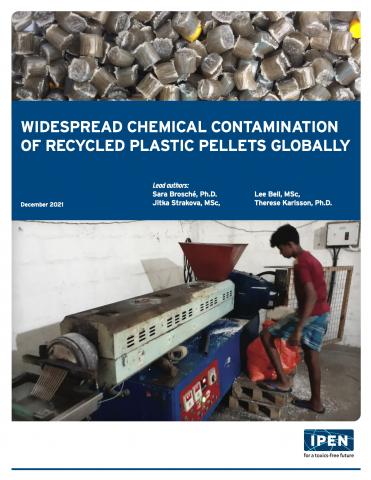
Increased recycling rates is a proposed solution to the current health and environmental crisis that is caused by the massive overproduction of plastics. However, almost all plastics contain toxic chemicals that are not removed during recycling but are carried over to the new products, and the recycling process can even generate new toxic chemicals such as dioxins. The increased recycling is intended to contribute to a so-called circular economy, but plastics containing toxic chemicals should not be recycled. Instead, they should be considered non-circular materials.
This study aimed at increasing the amount of information available about toxic chemicals transferred from plastic waste into recycled plastic pellets globally. Therefore, pellets made from recycled high-density polyethylene, intended for use in new products, were purchased from 24 recycling facilities in 23 countries. The pellets were analyzed to determine the presence of 18 substances, representing three types of toxic chemicals: 11 brominated flame retardants, 6 benzotriazole UV stabilizers and bisphenol A.
None of the samples were free from all the targeted chemicals, and 21 samples contained all three types of chemicals. More than half of the samples contained 11 or more chemicals, and 17 samples contained five or more endocrine disrupting chemicals.
Brominated flame retardants were present in 22 of the samples, with DecaBDE being the most frequently detected, despite its listing under the Stockholm Convention for global elimination in 2017 without any exemptions for recycling. Bisphenol A is increasingly being regulated in many countries because of its health impacts on children but was still detected in 22 of the samples.
All pellet samples contained the UV stabilizer UV-326. Evidence is still emerging, but there are indica- tions that it can impact gene expression related to inflammation and immune responses. The benzotriazole UV stabilizer UV-327 is classified as a Substance of Very High Concern in the EU and was detected in 19 samples. The large number of toxic chemicals in many of the samples highlights the need to also consider the potential for combination effects.

 English
  简体中文
简体中文  Français
  Bahasa Indonesia
  Русский
  Español
  العربية
  Shqip
Shqip  Հայերեն
  Azərbaycan dili
  Беларуская мова
  Български
  Cantonese
  Hrvatski
  Čeština
  ქართული
  Deutsch
  Ελληνικά
  हिन्दी
  Қазақ тілі
  한국어
한국어  Кыргызча
  Bahasa Melayu
  नेपाली
  Português do Brasil
  Kiswahili
  Svenska
  Tagalog
  தமிழ்
தமிழ்  ไทย
ไทย  Українська
  Tiếng Việt