

People of all gender identities must have the same rights and opportunities to participate fully in their communities, free from the health threats posed by toxic chemicals. It is especially important to understand the factors that put women at risk from chemical health threats.
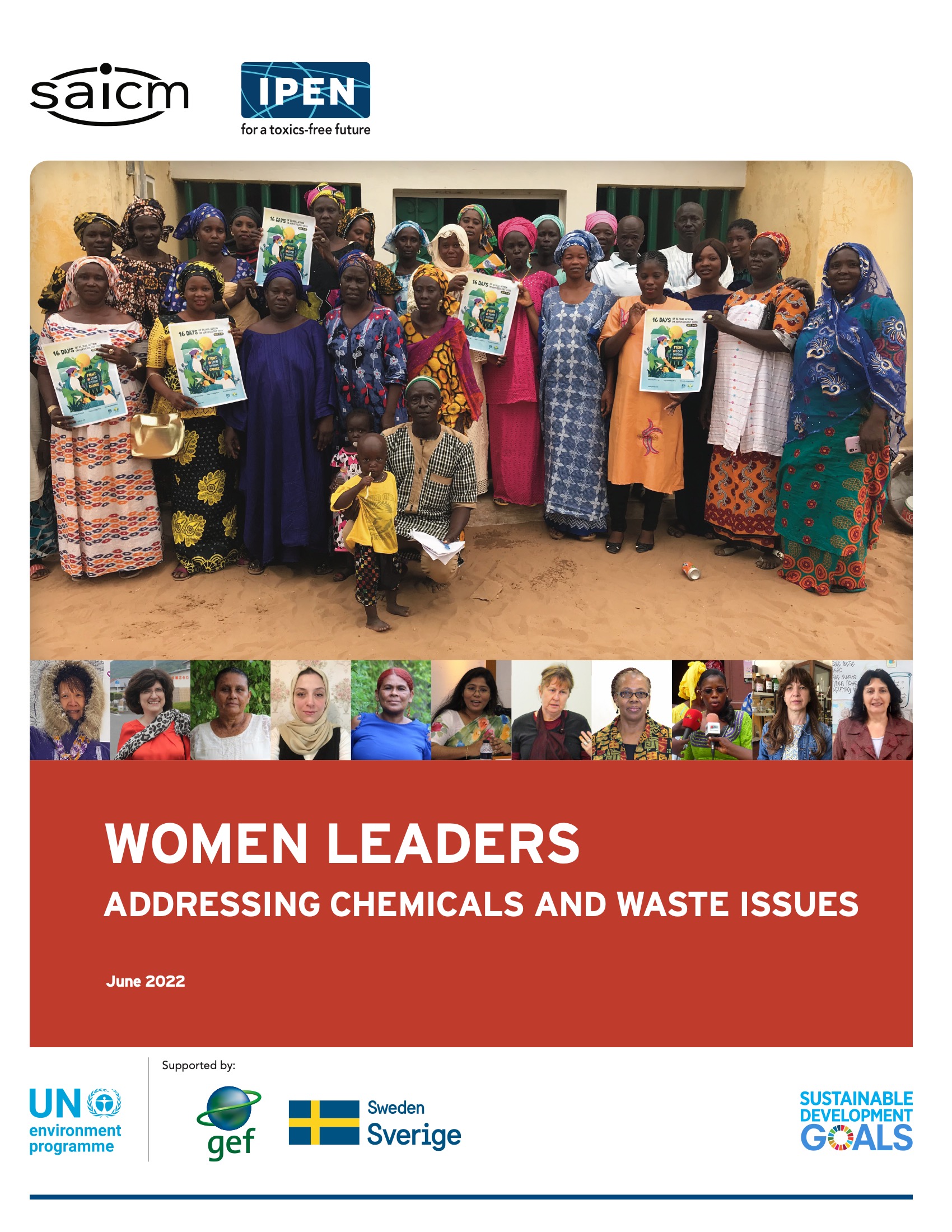
The IPEN report “Women Leaders: Addressing Chemicals and Waste Issues” highlights women’s leadership through ten organizations from around the world working to address chemical health threats. The report was developed within the framework of the United Nations Environment Program and its Global Environment Facility (GEF), under the Strategic Approach to International Chemicals Management (SAICM), executed by the SAICM Secretariat. It was produced with support from the Swedish Government.
Women face greater risks from chemical exposures and experience higher rates of adverse health outcomes because of their physiology, different types of occupational exposures, and differential exposures to chemicals, including from personal care and household products. Women are also exposed to chemicals — such as endocrine disrupting chemicals, lead in paint, and chemicals in toys — that pose health threats during pregnancy and to their developing children.
These toxic exposures can lead to serious health problems that impact women’s lives and their opportunities to participate in their communities fully and equally. This is especially so for women in low-income communities who are often managing multiple pathways for toxic exposures and multiple obstacles to gender equality.
Women cannot be empowered nor gender equality achieved while exposures to hazardous chemicals put them at risk for cancer, chronic illnesses, infertility, and damage to their nervous systems.
In 2015, the United Nations Member States adopted the 2030 Agenda for Sustainable Development, which includes 17 Sustainable Development Goals (SDGs). “Gender Equality” is one of the goals (Goal 5) and the SDGs also recognize that gender equality is a prerequisite for reaching most of the other goals. Reducing and eliminating chemical exposures will also be essential for achieving all of the 17 goals.
The stories that follow highlight women across the globe who are leading work in their communities, nations, and internationally for stronger protections from harmful chemicals. Supporting their work and the work of countless other women who are leading similar efforts will be critical for achieving the SDGs.

 English
  简体中文
简体中文  Français
  Bahasa Indonesia
  Русский
  Español
  العربية
  Shqip
Shqip  Հայերեն
  Azərbaycan dili
  Беларуская мова
  Български
  Cantonese
  Hrvatski
  Čeština
  ქართული
  Deutsch
  Ελληνικά
  हिन्दी
  Қазақ тілі
  한국어
한국어  Кыргызча
  Bahasa Melayu
  नेपाली
  Português do Brasil
  Kiswahili
  Svenska
  Tagalog
  தமிழ்
தமிழ்  ไทย
ไทย  Українська
  Tiếng Việt