

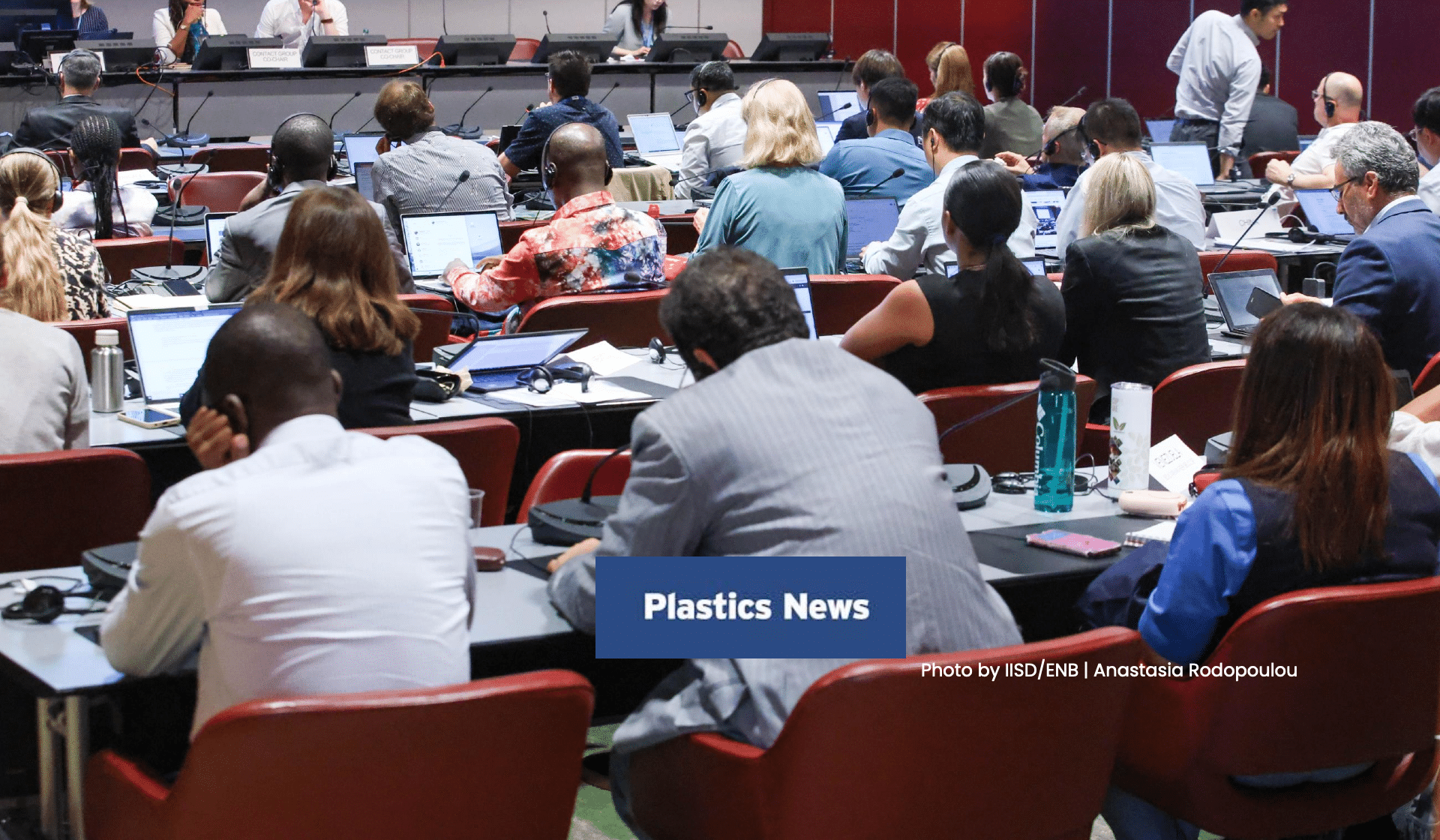
Chemical recycling of plastics could be problematic for developing countries that have limited capacity to manage and regulate waste.
That, at least, was the opinion of experts at a June 26 forum looking at how the plastics treaty should approach a technology that industry sees as crucial to improving the circularity of plastics but that environmentalists are deeply skeptical of.
The forum was held to release a study, commissioned by the environment ministry of Switzerland and prepared by Germany’s RWTH Aachen University, that aims to provide baseline data and recommendations on chemical recycling to the ongoing global plastics treaty talks.
A technical adviser to the International Pollutants Elimination Network argued that the technology should not be used either in developing or developed countries, because of hazardous waste production and low yields of useful material.
IPEN adviser Lee Bell said that putting chemical recycling plants in developing countries could increase the export of plastic waste.
“There’s a high risk of driving plastic waste exports to developing countries, which have poorer regulation, which may lead to emissions impacts and hazardous waste risks to public health,” Bell said. “If you set up these facilities in developing countries, there will be the argument that you can export under different aspects of the Basel Convention for recycling.”
Read the full story in Plastics News (subscription required)
 English
  简体中文
简体中文  Français
  Bahasa Indonesia
  Русский
  Español
  العربية
  Shqip
Shqip  Հայերեն
  Azərbaycan dili
  Беларуская мова
  Български
  Cantonese
  Hrvatski
  Čeština
  ქართული
  Deutsch
  Ελληνικά
  हिन्दी
  Қазақ тілі
  한국어
한국어  Кыргызча
  Bahasa Melayu
  नेपाली
  Português do Brasil
  Kiswahili
  Svenska
  Tagalog
  தமிழ்
தமிழ்  ไทย
ไทย  Українська
  Tiếng Việt