

Sixth Conference of the Parties (COP-6) to the Minamata Convention on Mercury
Geneva, Switzerland
3 to 7 November 2025
Contamination by mercury, particularly in Indigenous Peoples’ communities, has been recognized as a human rights violation. Global mercury pollution can only be tackled effectively by international regulation and government cooperation. Mercury is a hazardous neurotoxin that can cause many health problems in humans, and most exposure is caused by dietary impacts such as eating contaminated fish where mercury bioaccumulates.
The Minamata Convention on Mercury has been developed as the main international legal instrument to protect human health and the environment from mercury pollution with a range of controls on trade, emissions, and use of mercury.
IPEN Statement on the Conclusion of COP-6
汞条约》未能解决黄金开采危机
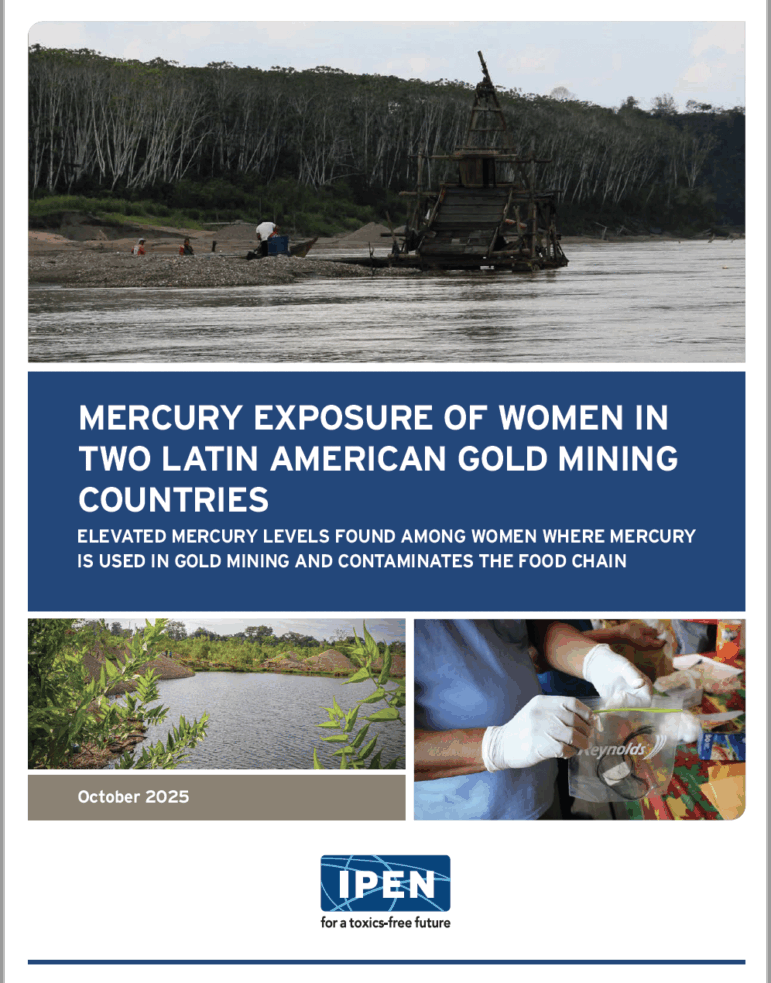
日内瓦——尽管由小规模金矿开采(也称为手工和小规模金矿开采,ASGM)使用汞造成的汞污染危机正在亚马逊、非洲和亚洲部分地区日益加剧,但本周在《米纳马塔公约》第六次缔约方大会上,代表们未能就修改公约以禁止汞的这种用途采取强有力的行动。拉丁美洲的担忧尤为紧迫,因为原住民的食物来源被ASGM的汞广泛污染。 最近的IPEN研究 在秘鲁和尼加拉瓜的土著社区对妇女的研究发现,几乎所有妇女体内汞含量都超标数倍,远高于安全标准。.
Click below to read the full statement.
COP-6 Materials
See COP-6 resources for delegates from IPEN, including:
- IPEN’s Quick Views for COP-6
- A new study on high mercury levels found in Indigenous women in Peru and Nicaragua.
- Research from IPEN members on mercury from artisanal and small-scale gold mining (ASGM) in their countries.
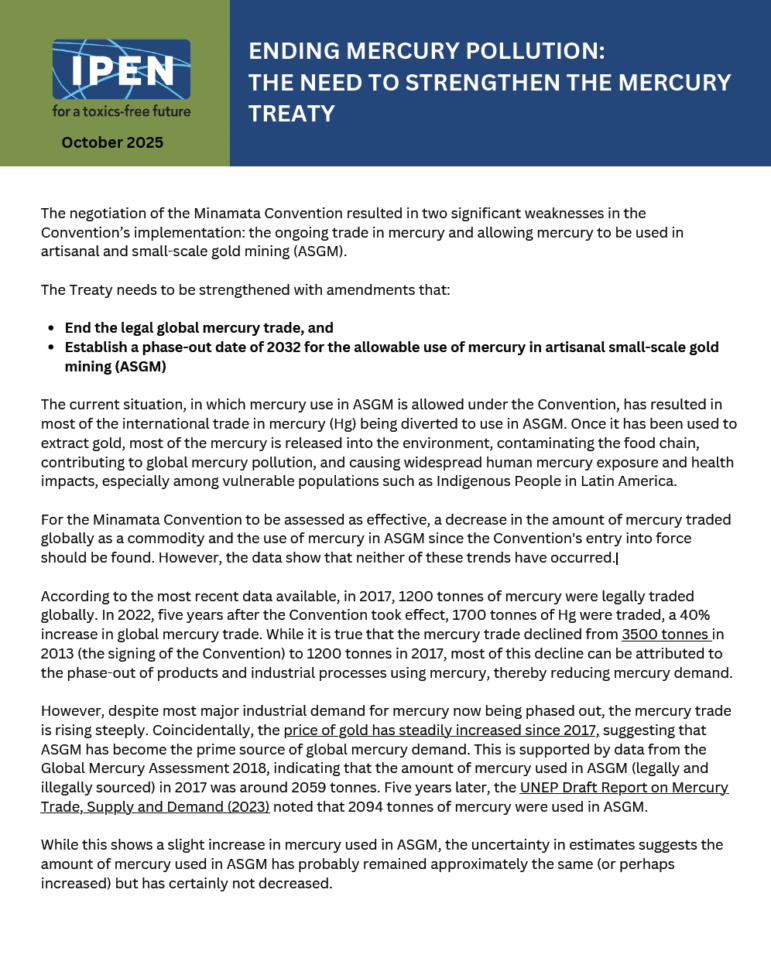
- A briefing on the need for amendments to the Convention to end the global mercury trade and phase out the use of mercury in ASGM.
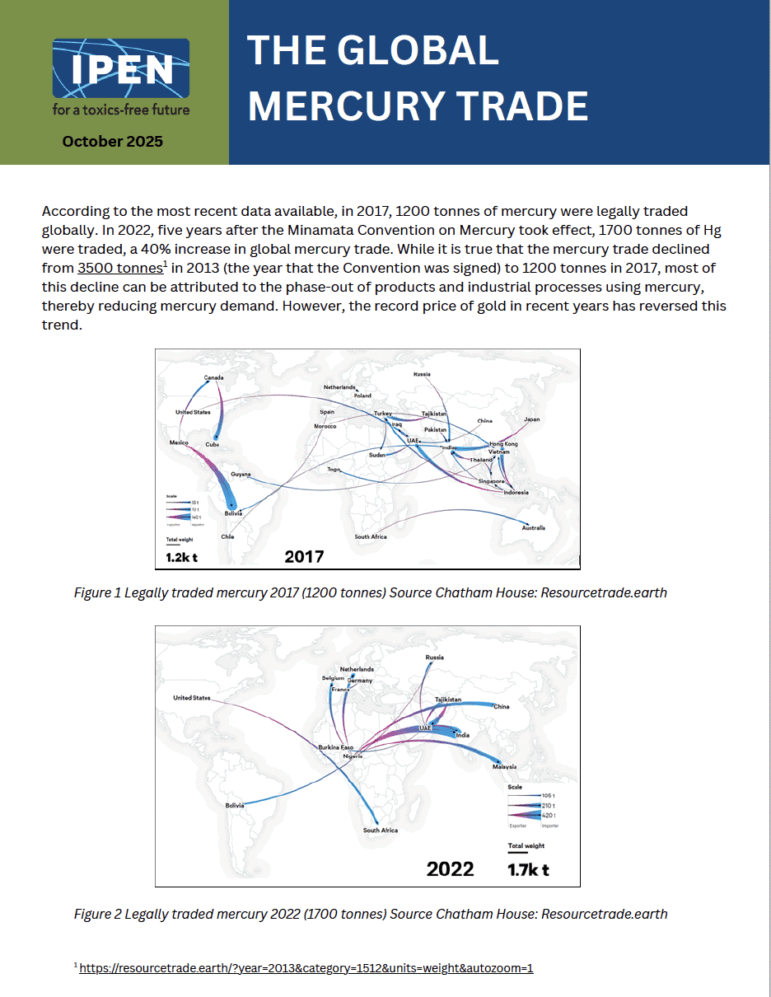
- A briefing on the global trade in mercury.
- A briefing on mercury pollution from oil and gas.